

The best-laid schemes o’ mice and men
Gang aft agley (often go awry)
To a mouse, Robert Burns
I wake with a woolly head, which is a sure sign I slept well. I just need a bit more of it. But not right now. Right now I’m craving a shower. I’m glad there’s no-one else in the bathroom, though it wouldn’t have mattered. I’m not going to sing or anything. Scraping off days of sweat, I wash myself twice just to feel thoroughly cleansed. Then I press the button for the lovely warm water. And again. And again, sleepiness filling my head. I only have one pair of walking trousers, and my t-shirt is the one I washed at Barrisdale. But everything else is clean. I put the dirty stuff into a plastic bag in the hope that I’ll be able to wash them at the hotel Nick and I will be staying at tonight. A real bed! Imagine that.
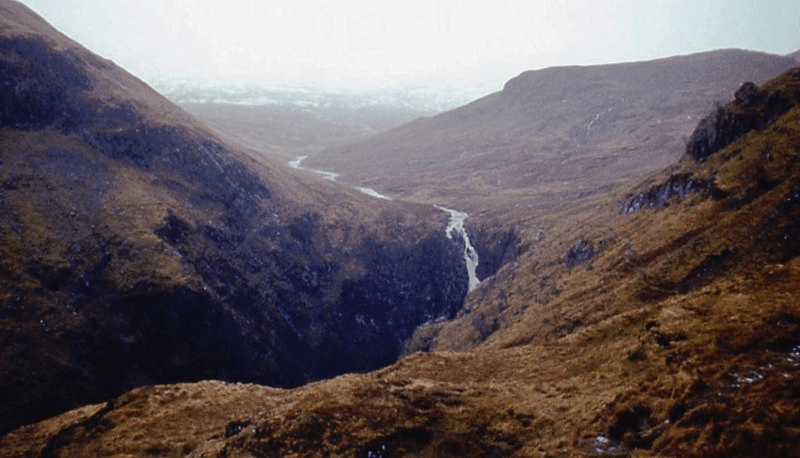
Chrissie has nearly finished dismantling her tent when I wander back in my lovely soft plastic shoes. Though the clouds are graphite grey, they’re still hovering above the ridge we came down yesterday just visible on the skyline. And it’s not raining. She’s got another hard day ahead of her, climbing up to the famous Falls of Glomach. Not that the going up is the hard part, it’s the climbing down alongside it that sounds ‘interesting.’ I’ve got that to do on Monday, but I don’t want to think about it now. We say goodbye and I wish her luck. She doesn’t need it, but I can’t think of anything else to say. I’d like to think I’ll see her again, but I most definitely won’t catch her up unless something untoward happens, like a river in spate. I actually doubt anything will stop her, so I look forward to hearing of her adventures once we’re both back home.
I’ve still got some pain beneath my armpit, but it’s not really getting in the way of anything. I wonder if Nick’s left yet. It’s a good five hours from home to here, but I’m pretty sure he’ll be eager to get going. I hug that thought to me as I start packing up. It’s a luxury to have nothing much to do, to drift along peacefully – the chocolate shop not two minutes away doesn’t open till ten. How strange not to be walking today. It feels almost sinful. Almost, but not quite.
It’s painful hoisting my pack onto my back, but not once it’s up there. That’s reassuring. I wander down to the chocolate shop which is already packed. I stow my pack near the door, hoping it’s sufficiently out of the way, and approach the counter. It’s the same lovely lady who welcomed us to the campsite. She laughs, says she’s everywhere. I order a hot chocolate and some fruit loaf, settling myself on a sofa in the middle of the room. I’ve got some writing to do in my diary, untouched since Barrisdale.
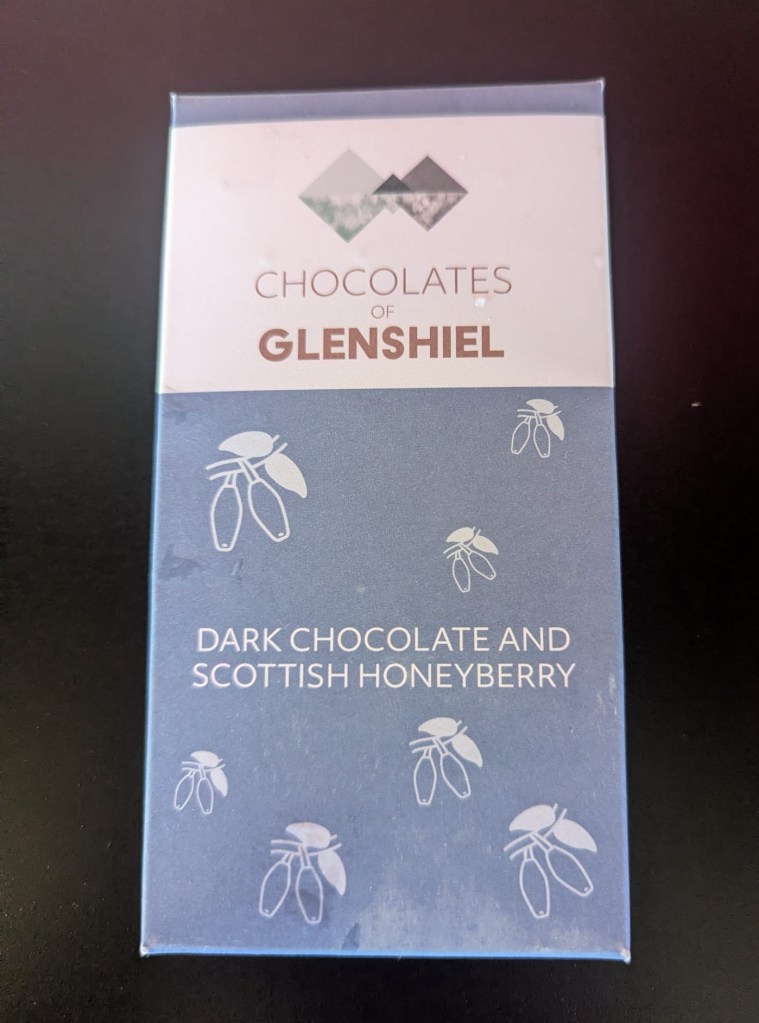
The chocolate arrives and is so rich, but not too sweet. I try to drink it slowly, but that’s a big ask. The fruit cake is lovely, but not as lovely as the chocolate. I read the poster on the wall, about Finlay, the young man who set up his chocolate-making business at only sixteen. He did it because he loves doing it, but also because he wants to stay in Kintail, which he loves too, for its beautiful scenery and its community. And of course, he credits his grannies with giving him a love of cooking and baking. But he’s also giving employment to other young people who don’t want to have to move away because there’s nothing for them at home. That’s still happening far too frequently in some parts of the north-west highlands, even as the population ages at a phenomenal rate, in part because it’s such an attractive place to retire to.
And all the while businesses, particularly in hospitality, are facing huge problems in recruiting staff, often because there’s nowhere affordable for them to live. Thankfully, there are small shoots of optimism, as some young people, having gone out into the big, wide world, decide it’s time to go home.[i] I have no answers, though I suspect it requires more than just grand top-down policy gestures – like the fishing that was supposed to ‘save’ the north-west highlands 200 years ago – welcome though things like more housing and better health and educational provision would undoubtedly be. But it’s a joy to read about Finlay doing it for himself.
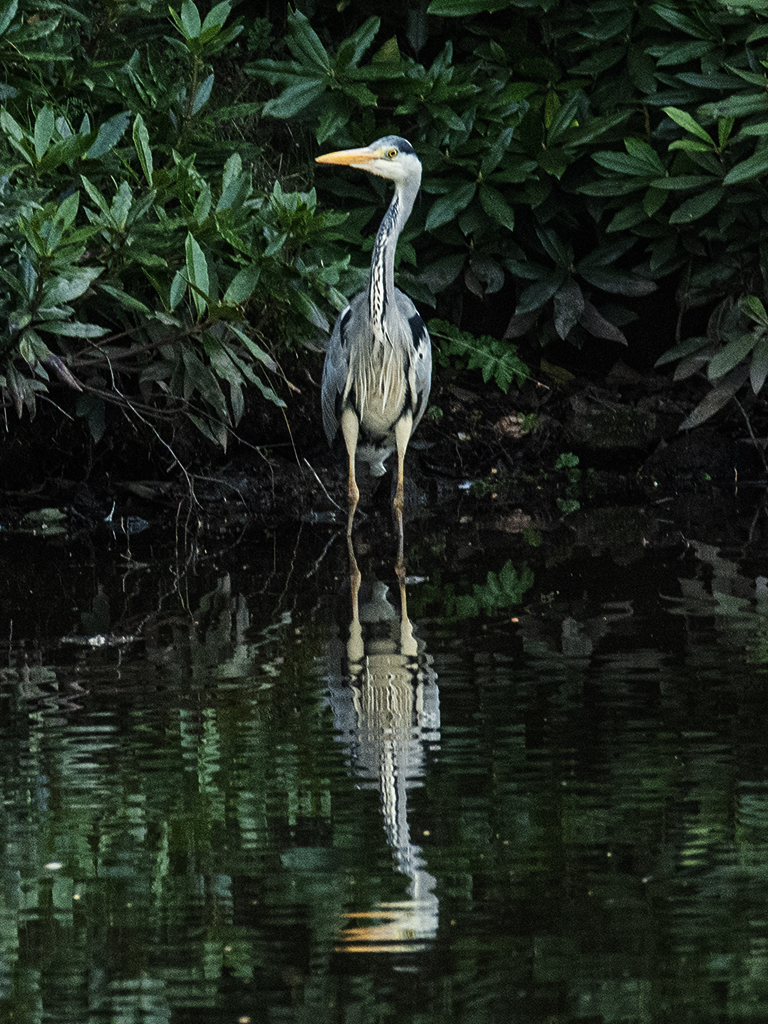
Inevitably they’re playing Scottish music. I’m not a big fan, I must confess. Some of it I find incredibly innovative, exciting and beautiful. But the hardcore traditional stuff does very little for me. I’d blame my mum’s Sunderland roots, but my southern English husband is a bit of a devotee. And then a beautiful song comes on, a quiet, powerful evocation of the return of spring and hope after loss, Karine Polwart’s Follow the heron home. I feel the tears spearing me. For goodness sake, I’ve only been away for five days.
And yet, what I feel, sitting in the middle of a clattering, chattering café is an extraordinary peace. Right now, in this particular moment in time, I feel as if I’ve reached nirvana, however unlikely it is to endure. I want for nothing and I need nothing (though it helps that I’ve had my hot chocolate and fruit cake, and I know Nick will be arriving sometime soon). A family – elderly parents, middle-aged daughter – eases onto the sofa opposite. I smile, still bathed in my smug peace aura. They settle down, talk among themselves about where they’ve been and where they’re about to drive to.
The conversation peters out. We start chatting. I tell them about the trail. I’d say they’re more bewildered than anything. ‘So why are you doing it,’ the mother asks. It’s the first time for a while that I’ve had to answer that question. No-one I’ve met on the trail talks about it, though Chrissie and I may have given each other hints. I trot out the usual answer about turning sixty and wanting to challenge myself. All true, but still. Maybe I won’t truly know till I’m done. Maybe I’ll never know. Maybe there isn’t an answer. It’s just a really satisfying thing to do with nothing deep and meaningful attached to it.
I decide I’ve hogged a sofa for long enough. And if I head down to the hotel, I’m quite a few steps closer to Nick’s arrival for no reason other than that’s where we’re meeting. My feet are enjoying not being in my boots and I’ve already learned how not to aggravate the pain under my arm, but otherwise I’m in fine fettle. It’s quiet in the bar, so I settle at a table and peruse the menu, enjoying the thought of pouring yet more tasty calories into me.
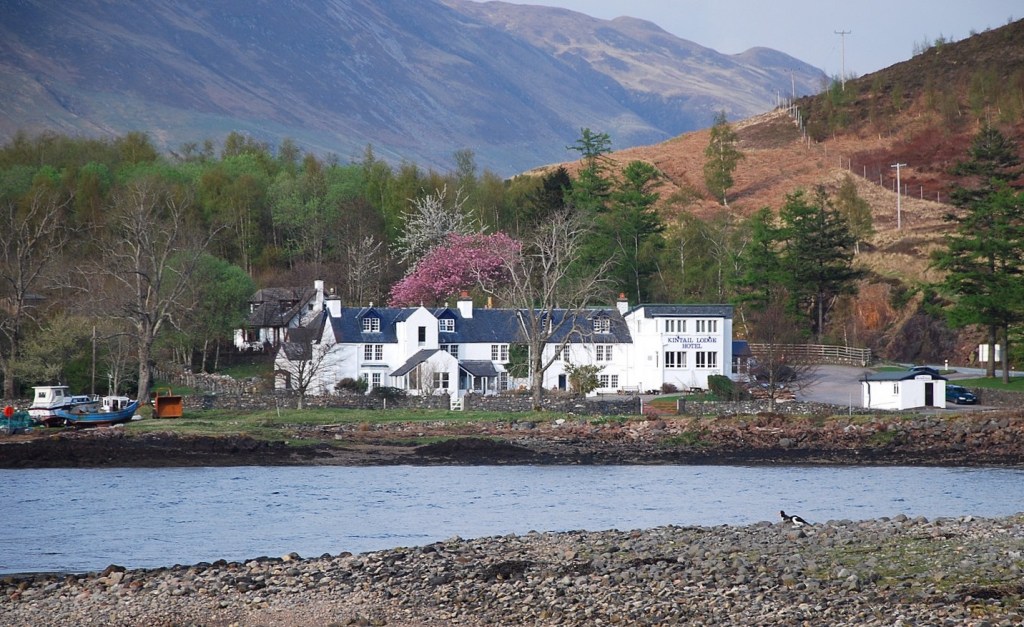
The Kintail Lodge Hotel is a very fine establishment set right down beside Loch Duich with mountains all around. We’ve stayed there a few times, though it’s becoming hard to get into these days, and lightens the wallet significantly if you do. That’s not a great surprise, given that it’s on the road to Skye and only a few miles from an essential Instagram stop at Eilean Donan castle. But the food is fabulous and the atmosphere in the bar just as warm and welcoming as it’s always been, with locals mingling with tourists, which is always a good sign.
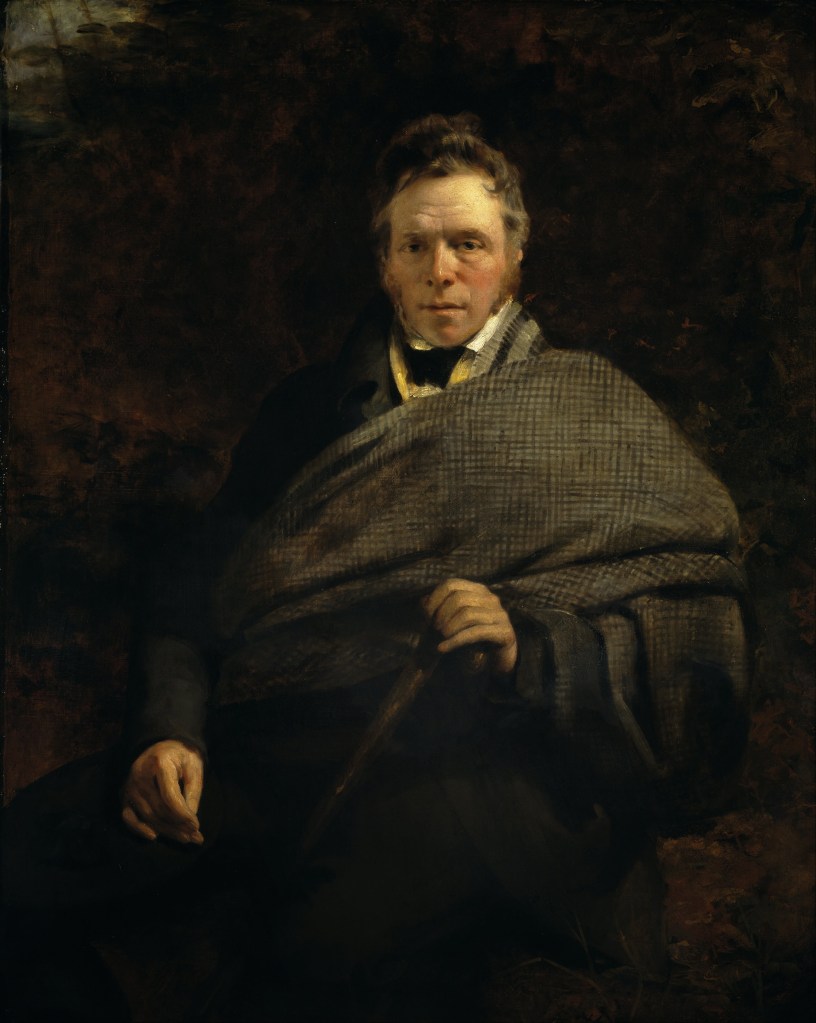
It wasn’t always thus. In 1803 the Ettrick shepherd (from the Scottish eastern borders) and poet James Hogg took a trip to the Highlands, heading west down Glen Shiel. He was in a bad mood even before he got to the Shiel Inn – as it was called then – since: ‘The road down to Glen Shiel is entirely out of repair and remarkably rough and stony, and I was quite exhausted before I reached any other house, which was not until about the setting of the sun.’
By then Kintail had, like Knoydart, been largely cleared of its people, and Hogg ‘at length came to a place where there had been a great number of houses, which were now mostly in ruins, the estate being all converted into sheep-walks.’ Having with difficulty begged a little food from one that was still occupied to give him the strength to keep going, ‘Before it was dark I reached the inn of Invershiel, or Shiel-house, held by a Mr Johnston from Annandale’ (Annandale is in south-west Scotland, so another incomer seeking economic opportunity in the north-west). But however relieved Hogg might have been to get there, he soon realised he wasn’t out of the woods yet.
‘It is a large, slated house, but quite out of repair, and the accommodations are intolerably bad. The lower apartments are in utter confusion, and the family resides in the diningroom above. Consequently, they have only one room into which they thrust promiscuously every one that comes. The plaister of this being all discoloured, and full of chinks, the eye is continually tracing the outlines of monstrous animals and hobgoblins upon it. I got the best bed, but it was extremely hard, and the clothes had not the smell of roses. It was also inhabited by a number of little insects common enough in such places, and no sooner had I made a lodgement in their hereditary domains than I was attacked by a thousand strong.’
That was bad enough, but hell had not yet broken loose entirely.
‘But what disturbed me much worse than all, I was awaked during the night by a whole band of Highlanders, both male and female, who entered my room, and fell to drinking whisky with great freedom. They had much the appearance of a parcel of vagabonds, which they certainly were, but as the whole discourse was in Gaelic I knew nothing of what it was concerning, but it arose by degrees as the whisky operated, to an insufferable noise … I bore all this uproar with patience for nearly two hours in the middle of the night, until, either by accident or design, the candle was extinguished, when every one getting up a great stir commenced, and I heard one distinctly ransacking my coat which was hanging upon a chair at a little distance from the bed.’
Hogg seized his thorn-staff and ‘bellowed aloud for light,’ by which time most of the company had vanished. He complained to the landlord, who retorted that ‘all would be quiet now.’ But, despite having taken the precaution of stashing his watch and money in his waistcoat under his head, the next evening the poet realised he’d ‘lost a packet of six letters which I carried, to as many gentlemen in Sutherland (as letters of introduction), and which prevented me effectually from making the tour of that large and little-frequented country.’[ii] I’m not sure which of the parties involved would have been the more disappointed.
I needn’t worry about nefarious goings-on or even beasties, though I’m sure the whisky still flows here on occasion. I order some food, but almost immediately my phone rings. It’s Nick. And he’s only about twenty minutes away. I’m suddenly as giddy as a teenager, constantly up and down to see if I can spot his car coming into the car park.
And, inevitably, because that’s how these things work, on one occasion he really is there. I rush outside, waiting to see where he’ll end up, dashing down towards him. We’re both grinning fit to burst, both eager to be careful of each other, since we have rediscovered how precious we are. We eat and talk, talk and eat, time passing in an instant, entirely unnoticed. But it is passing all the same, and Nick suggests we drive on to check in at the Dornie Hotel and maybe go for a little walk somewhere. I couldn’t care less what we do, though my legs could do with a bit of a stretch. It’s quiet at our hotel. I ask about washing my clothes and am shown out the back, though I have to take my turn, given that it’s heavily used for hotel laundry. I’m also furnished with the necessary number of pound coins, which takes me back to student days more than thirty years ago, though I can’t say I’ve missed trips to the laundrette.
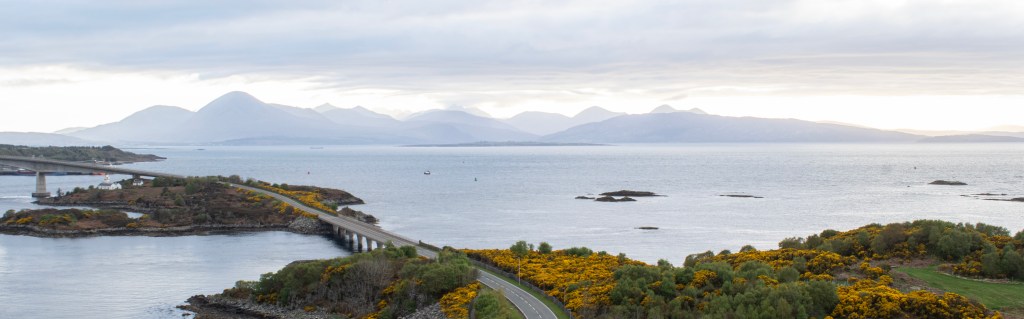
We decide to go on to Kyle of Lochalsh, where there are some lovely community woodlands by the shore near the Skye bridge. It’s not exactly raining, though the clouds are holding tight even to the lower slopes of the mountains. The Saddle has completely disappeared and I hope Chrissie is well on with her journey. And then my mind turns to supplies of various kinds, including the right connector for the tracker, which Nick couldn’t find in the resupply box before he left. We visit the supermarket, then the chemists, which is one of those highland shops that stocks just about everything, from all types of cable to lavender oil through to wool and bamboo socks. If they haven’t got it, you probably don’t need it.
When we get back, I have a proper look in my resupply box and there indeed is the tracker connector. To be fair to Nick, he didn’t know what he was looking for. And there’s nothing wrong with having two. I manage to sneak my washing in and go for another long luxuriate, this time in the bath, which has nothing to do with getting clean. I even put on proper clothes, jeans and a clean t-shirt. We go down to the bar, which is filling up with the local shinty team, ruddy-faced and muscular young men, their bonny girlfriends holding forth just as knowledgeably on the ins and outs of the game. They’ll be taking up the hotel’s entire restaurant capacity, so we have to stagger across the road to the sister pub. I’m feeling a bit woozy now, my glass of wine more than sufficient to get me yawning.
It’s weird sleeping in a proper bed, wrapped in an expanse of smooth sheets with nothing crammed around me to bump into. I sleep fitfully, adjusting myself carefully to the pain in my left side. When I finally wake properly I try not to think about tomorrow morning, when I’ll say goodbye to Nick and set off again. A part of me relishes that thought, but another part of me understands, in a way I didn’t even a week ago, just how physically and emotionally demanding it will be.
After an excellent breakfast spent chatting with an American couple we met at dinner last night, we head off for another woodland walk further down Loch Duich at the National Trust for Scotland estate of Balmacara. And then it’s time for coffee – such luxury! – but the place advertised on the way to Plockton on Loch Carron is so full it’ll be lunchtime before we get a seat. We pick up a takeaway coffee from an ice-cream shop in Plockton and sit by the loch. It’s what’s usually described as ‘atmospheric,’ wispy clouds wafting around the water’s edge and weaving through stands of pine.
Across on the other side of Loch Carron my sister-in-law is burying her mother. I hope the funeral is cathartic, a comforting goodbye. I know that the death itself was a release, after a long battle with cancer, but funerals are for the living, not the dead.
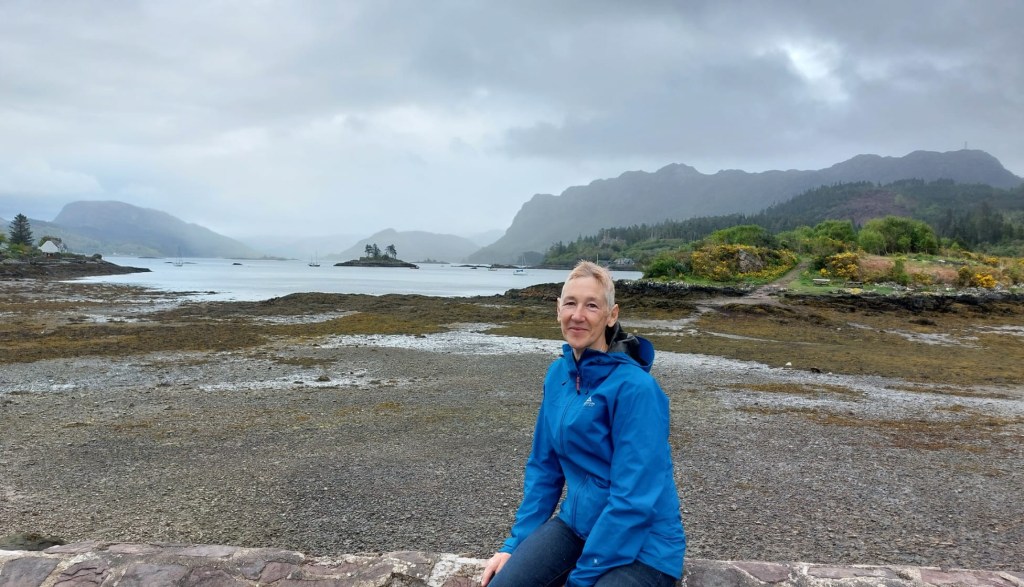
We book a table in a restaurant for 1 o’clock and wander about some more. It feels a bit aimless after the clear daily targets on the trail, but I’m prepared to enjoy almost anything without a heavy rucksack on my back. Eventually we find a path moving uphill, towards a rocky outcrop that marks Plockton’s highest point. We take an imaginary journey around the 360o map pointing out all the mountains, lochs and islands we would have seen if the clouds weren’t smothering them. But time is marching on, or at least Nick is ready for his fish. We reach the little rock face I’d found no problem negotiating on the way up. I slow down, suddenly anxious, feeling my way carefully with my feet. When I’m done with it, I realise that each breath is painful. How am I going to manage tomorrow? Maybe it’ll have gone away by then. Why has it got worse? I am caught in a maelstrom of impotent thoughts, disbelief holding me tight.
We reach the restaurant and are seated at a corner table on the edge of the front window. Nick is gleeful, perusing the menu, wishing he could have it all. I slink in behind him, not remotely interested in food or anything other than the shaft of pain in my left-hand upper chest that has become the most insistent thing in my life right now. I no longer have questions, entirely swallowed by a billowing fog of despair. I sit down on the window seat, hugging the wall. Nick orders some drinks, comes back to sit down at right angles to me. Edging towards the abyss, I get up and go round the table to sit next to him, tears burning. ‘Nicky,’ I whisper,’ it’s so sore.’ The words are out, and I let go, tears uncontrollable.
Around us, the rest of the diners continue their conversations – discussion of their Scottish itinerary for the Americans further down the window seat; the two girls on tablets in pretty dresses sullenly engaging with their grandmother to our right. Nick’s smile is instantly eclipsed and I feel his arm drawing me to him, my head bowing towards his shoulder. ‘Ssh, shh,’ he says. ‘It’s alright. Is it your ribs?’ If people are staring, I don’t care. I nod, another wave of tears flooding in. But I haven’t answered the only question that needs one. What does this mean for tomorrow and the rest of the trail?
But I know the answer and curse that fraction of a second, that silly stumble, when everything – so it turns out – changed. My only hope, that I cling to like a sore-throated opera singer with a cough sweet, is that it is, for some unlikely reason, very temporary. ‘Yeah,’ says Nick, oblivious to my last tiny sliver of optimism, ‘you’ll have bruised your ribs. That’s what bruises do. You think you’re okay and a day or so later you’re in agony. I had that once [he’s usually had something sometime]. It took ages to get better.’
It’s all so unbelievable. So much planning and preparation. So much angst and self-doubt, which I’d successfully put to rest on the trail. I’d known, since Day Three, that I was perfectly capable of getting to Cape Wrath, and the sprint from Kinloch Hourn to Shiel Bridge had proved it beyond all doubt. That didn’t mean I’d make it – shit happens. But I really didn’t expect to face failure after the first stage. Is it really that bad? Am I actually trying to find an excuse after a night in a comfortable bed with Nick? But that’s easily settled. Every time I move, the pain leaps through my shoulder blade from front to back.
But I’m not ready to let go, the tears subsiding, only to cascade once more as I imagine not heading north, not fulfilling a dream that is now five years old, not reaching that damn lighthouse on the very edge of the world. How can I live with that? What will all my friends and the rest of my family think of me? And then there’s the book. Doesn’t my publisher want a success story, a gritty determined epic that both starts and finishes where it’s supposed to?
‘Shhhh,’ says Nick, perhaps aware of the fact that we are in a restaurant crammed full of Sunday diners who want to enjoy their food. ‘It’s alright.’
No, it isn’t. But acceptance is already creeping in. I sniff, wipe my eyes, look around. Apart from the waitress who throws me a concerned smile, everyone else is getting on with the important business of eating and chatting. I catch Nick’s hand, kiss it, and go back to my seat in the window. I sit back, face still damp. But really, what do I have to be upset about? I have friends enduring the torment of the protracted death of their loved one from cancer or the aftermath of a child’s suicide. I had a dream, sure, that I’ve been lucky enough to have the time and money to follow. And I’ve completed one of the hardest bits, negotiating Knoydart all by myself. What more do I need to do?
We finish our lunch and drive back to Dornie. But before we get there Nick suggests we just pack up and drive down the road today. I shift uncomfortably. If we do that, then it really is over. I’m still not ready, mentally at least. We climb the stairs to our room, the hotel enjoying some afternoon peace and quiet. But before we even open the door, I take the next step. ‘Let’s just go home.’
We sweep down the loch and over the Clachan Duich bridge, pass the Kintail Lodge Hotel and swing up Glen Shiel beneath mountains smudged with cloud. It’s done.
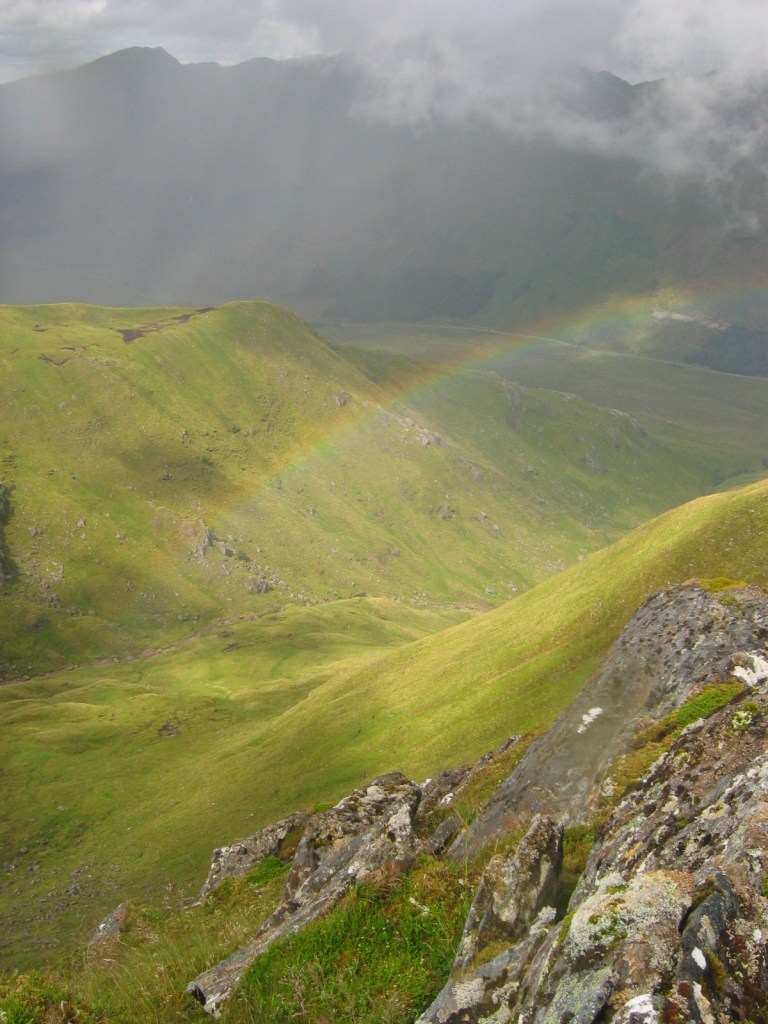
When we get some signal at Dalwhinnie, I phone Finn. ‘Oh, no!!’ He sounds distressed.
I hadn’t expected him to be so shocked. ‘I’m really sorry if I’ve disappointed you.’ I feel wobbly again. But that’s not where he was coming from. He knew how much I wanted it, walked with me on a few of my training walks, hadn’t imagined I wouldn’t finish. ‘It’s okay,’ I tell him. ‘I’m over it.’ It feels true. But now, as we glide along the lonely road through Drumochter Pass, I need to think about what I want to do instead. And then I need to do it.
[i] https://www.pressandjournal.co.uk/fp/lifestyle/food-and-drink/6483561/chocolates-of-glenshiel-highlands/; https://www.nts.org.uk/stories/meet-the-makers-finlay-from-chocolates-of-glenshiel; https://www.heraldscotland.com/news/24069849.depopulation-scotlands-highlands-threat-new-clearances/; https://www.thenational.scot/politics/25011289.islands-putting-brakes-rural-exodus-scottish-youth/?show-onboarding=yes
[ii] https://www.trove.scot/place/275620; James Hogg, Highland Tours (Hawick, 1982), 81-2
[iii] https://www.forestry.gov.scot/sustainable-forestry/tree-health/tree-pests-and-diseases/phytophthora-ramorum; https://www.facebook.com/BalmacaraEstate/posts/we-are-happy-to-say-that-following-a-successful-program-to-manage-an-outbreak-of/1412646222189868/


Leave a Reply