

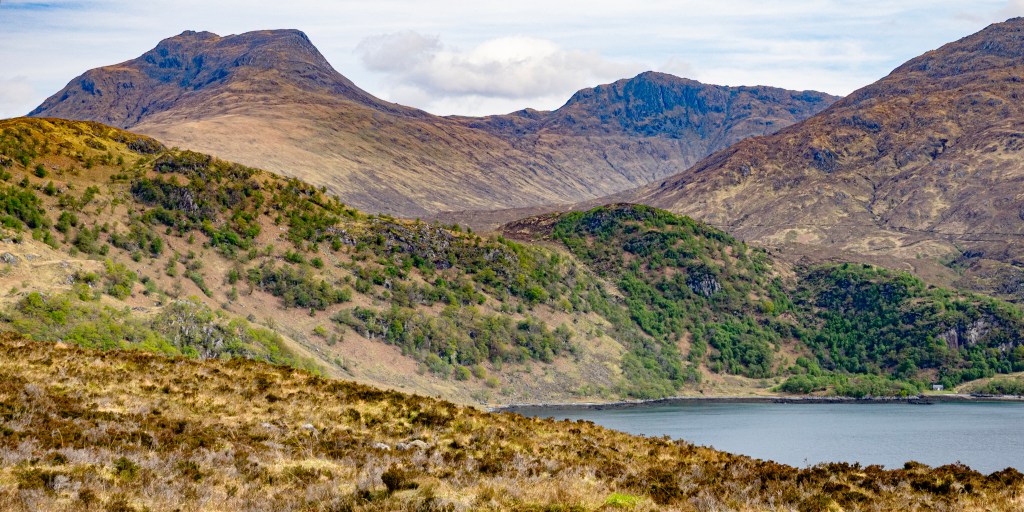
I say farewell to Skiary, beginning yet another wee climb. But I’m pleased to find I’m not going as high as I thought, the path beginning to contour round the front of the headland. I wonder if that means I really am getting closer to Kinloch Hourn, still magically – and annoyingly – invisible. I pass a young couple with their dog, which is eager to say hello. Smiling, I give him a good stroke, and we humans remark, as we so often do in this part of the world, on how amazing the weather is. I reach an avenue of rhododendrons, knitted tightly together with only a small tunnel to pass through. I feel the excitement mount – rhododendrons mean a big house, or some sort of designed landscape – tempered only by the thought that the café might not be open. I doubt very much I’ll get a phone signal other than by using their wi-fi. Presuming they have wi-fi. Surely they have wi-fi.
A few boats bob around together like a group of friends vehemently agreeing with each other, the loch much narrower here. Suddenly I emerge out of the trees. I have indeed arrived in the metropolis of Kinloch Hourn. I pass a car park on my right, presumably used by those heading out to Barrisdale or otherwise into Knoydart. There’s a campsite on the other side of the loch. Should I stop there? I resolve to look at the weather forecast to help me make up my mind. The café should be the first building on the left. I follow a wall to a gate, heart in mouth, feeling vulnerable in a completely different way to anything I’ve experienced on the trail. Now the world of home and family is within reach, the ties that bind pulling tight.
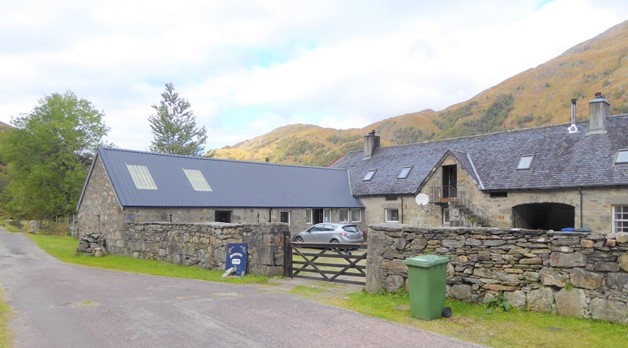
It’s open and I rejoice, suddenly feeling unbelievably happy. I stride through the gate into a courtyard surrounded by beautifully restored stone buildings that must once have been a farm. As I walk towards the café part on the left, I pass a young man sitting at one of the outside tables. I smile and nod a greeting. ‘Hi, I’m Fiona.’
‘Charlie,’ he says, before impressing upon me that he’s only taken a day and a half to get here. I don’t tell him that I’ve taken four. I’m entirely happy with my progress, but I can see I’m not even in the race, so far as he’s concerned. He tells me he’s not sure where to go next, but whatever he does, speed is obviously of the essence. I don’t like to mention it, but he has a plaster across the bridge of his nose. And he’s taken off his shoes, his feet well-bandaged. There’s obviously a story there, but I’m in need of real food and real wi-fi and my family.
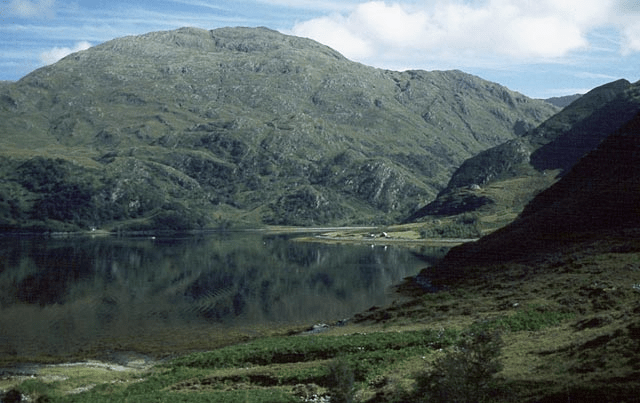
A young woman greets me with a beaming smile inside the café. I order some tomato and pepper soup, lemon cake, a cola and a real coffee that actually tastes good. I rarely drink cola, but sometimes I just need some ice-cold effervescence with extra added oomph. She hands me the wi-fi code and I sit down, nerves jangling right down to my fingertips. I dial Nick’s mobile. He takes a while to answer, and though there’s nothing unusual in that, I can’t help thinking how ironic it would be if I walk all this way to get here and he’s out.
But suddenly his face, alight with an enormous grin, spreads across my phone. I can feel a similar grin take me over. We squawk some hellos, or at least I do. I prop the phone up on my coffee cup, so I can have my cake and eat it, or at least my soup, which has arrived already. It’s so good my taste buds are almost overwhelmed. Between spoonfuls, I relate a few tales from the trail, ask how everything is at home, which mostly revolves round the tense relationship between the dog and the cat.
And then we get to the practical. I have a few things I need him to bring, including a very old pair of Hokas that have very little tread left but have never given me even a sniff of a blister. Oh, and I need some new walking poles, since one of them won’t screw into place properly anymore and I can’t do without them. And then Nick gives me the bad news. The forecast for tomorrow is rain with some showers forecast for later this afternoon. I guess that means there’s no point in camping in Coire Mhàlagain tonight for a photography extravaganza over Knoydart and Loch Hourn. I wonder about going over this afternoon. It’s only 1 o’clock, after all.
Nick and I say goodbye, but only till tomorrow. I video-call Finn too. ‘He-llo,’ he says, singing it from high to low, his smile as happy as mine. I want to hug him. I’m onto my cake now, the sugar rushing into my bloodstream along with the caffeine. Out of nowhere, I feel a tap on my shoulder. Looking up, I see Chrissie smiling down on me and am truly delighted to see her. She tells me not to hurry my call, she’ll be sitting outside.
I take the remains of my coffee out to sit beside her. Sean, the young man who camped on his own at Barrisdale, is sitting opposite Charlie of the many plasters. They’re deep in talk. Chrissie and I catch up as she tucks into her lunch. It feels like a long time since we walked to Glenfinnan. I ask if she had a good birthday on Thursday. It takes me a second to realise that was yesterday. She did, though she had a very similar bothy experience to me. But it’s easy to shrug off tiredness when you’re outside and active. ‘It’s going to rain tomorrow,’ she says, matter of factly. I nod. ‘So I’m thinking I’ll go over to Kintail after this.’ That’s another twelve miles. She’s just done a hard fifteen up and over the Inverie bealach to my eight, but looks as fresh as the proverbial daisy.
That settles it. ‘Would you mind if I came with you?’
She seems delighted and I hope she is. I imagine it’s going to be tough up there and I don’t want to slow her down too much.
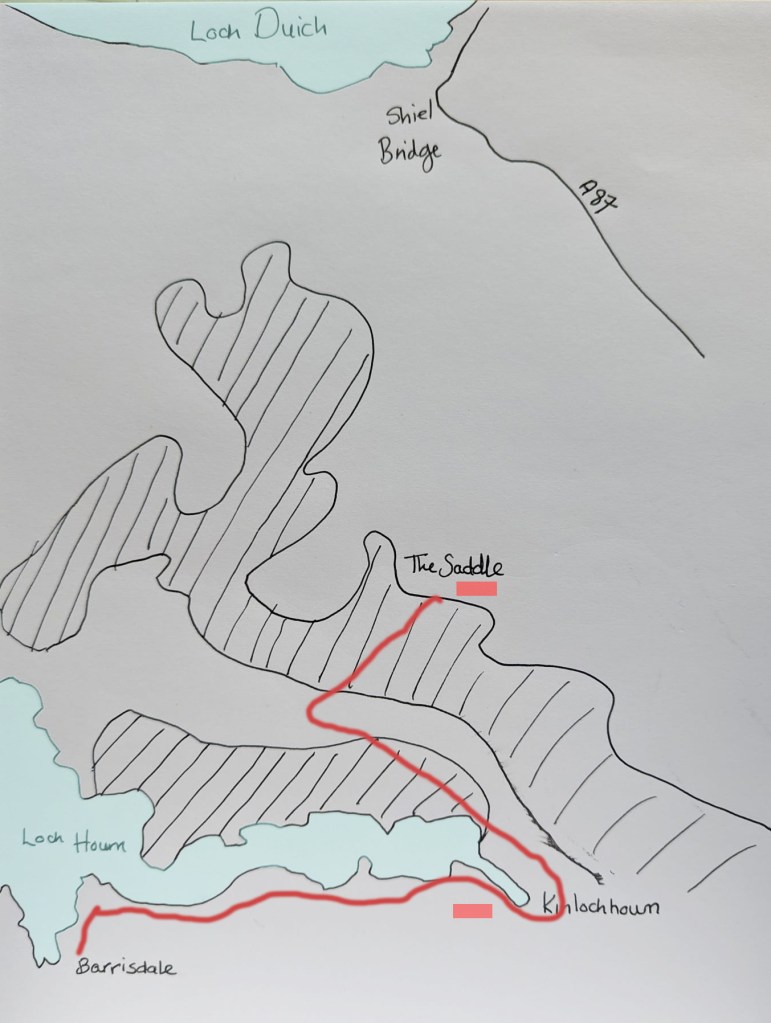
We leave at 2.15, passing a field plenished with neat rows of Boys’ Brigade tents. I wonder where the boys are, for there’s neither sight nor sound of them. But we pass on, turning left and crossing over the Coire Sgoireadail river. And then we begin our ascent. The road climbs quite gently at first, joined by the drives of some rather nice-looking houses peeking through the trees.
Chrissie was listening to the conversation between Sean and Charlie. Much of it was effectively a pissing competition, both of them clearly intent on going as far as they can as fast as they can. But they’re not doing anyone any harm. On the other hand, Charlie has definitely done some harm to himself. He’s well blistered on his feet, his nose brutally sunburned.
He’s trying to get to Inverness so Chrissie recommended the Glen Affric Way, an extremely scenic route that begins at Morvich in Kintail, where our journey ends today. But Charlie was determined to go by the road that hurtles up Glen Shiel, past Loch Cluanie before heading to Invermoriston and Loch Ness. I know that road. Given that it ultimately reaches Skye going the other way, it’s a busy thoroughfare and the Loch Cluanie section a slog through a rough, almost blasted, landscape. He complained he’ll get to Inverness three days ahead of schedule, but that sounds more like a boast to me. Still, each to their own.
But I soon have no breath left for talking. The road ends and we head straight up – and I mean, straight up – a loose, stoney track obviously connected to the line of pylons that stride up the hill. I can feel my heart pounding, but there’s nothing else to be done but get on with it as fast as I can without knocking myself out completely. Chrissie waltzes ahead, stopping occasionally to let me catch up. And she does this as if it were the easiest, most natural thing in the world. I still wish I were faster, or at least twenty years younger, but there’s not much point in comparing myself to her. Sean catches us up, smiles a greeting and goes past. I doubt we’ll see much more of him.
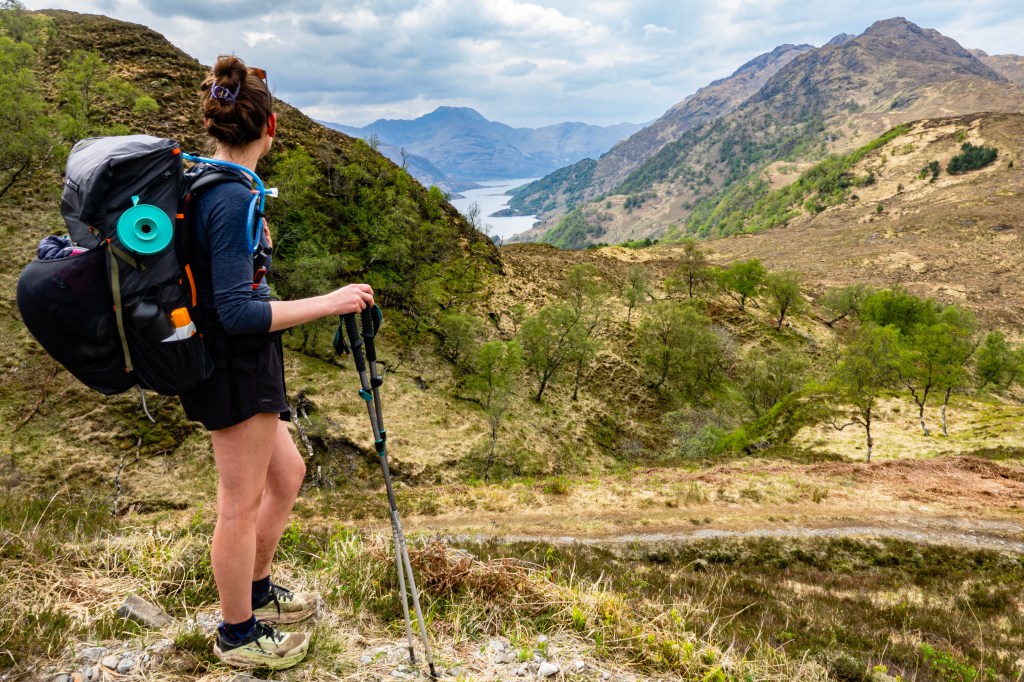
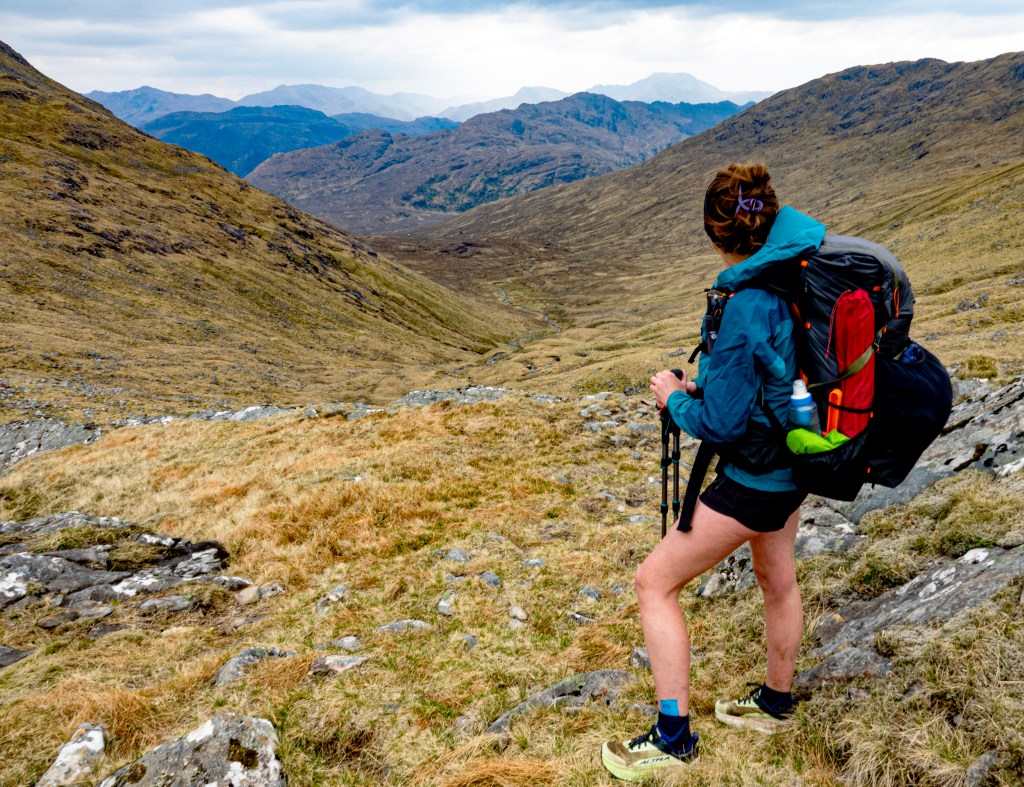
And suddenly, after about half an hour, the track flattens out and I can catch my breath. The hills below us on the northern bank of Loch Hourn obscure our view, but it’s still glorious looking west, the far reaches of Knoydart stretching its serrated edge towards the sky in the far distance. But we must move on, attacking the hillside, which is far easier than slipping and sliding up a loose vertiginous pylon track. We contour up and across a monotonous expanse of grass on a decent path and we’re soon coming round a corner into Coire Mhàlagain. Sean is still up ahead of us, but not as far away as I thought he would be. We’re making good time. Chrissie still stops occasionally, but my progress is steady and we eat up the hillside even without a path. I can see the line of the ridge above us, though the Saddle itself has congealed into an indistinct rocky pile disappearing into the gathering clouds.
What a glorious moment it is to reach the bealach, to look back across Loch Hourn for the last time. If I ever doubted my ability to keep going well beyond what I thought I could do, merging two days into one, then I have most definitely put those worries to bed. Right now, I am as strong as I’ve ever been. Hah, take that, sixty! The view is awesome, as we look out across Loch Hourn towards Barrisdale, Ladhar Bheinn hanging immensely above the bay. I wonder how Duncan and Nick are getting on over there. The clouds are definitely glowering far more than they’ve done all week and I wouldn’t be surprised if we had some rain before the evening’s out. I take a photograph and lean on my sticks for a moment to contemplate Knoydart, which has given me so much pleasure these past few days. I couldn’t have imagined thinking that before I set out, but now I feel as if I’ve slain a dragon.
And yet, part of me feels the disconnect between what Knoydart is now and what it used to be. We take it for granted, this wildness, the rugged insouciance of these great bare peaks, those ancient majesties. They seem to tolerate our presence so long as we’re just passing through for the thrill of it, the human presence reduced to a few crumbs on the western coast. And perhaps that’s as it should be. But the damage has been done even on the slopes of the high peaks, as Coire Mhàlagain makes abundantly clear, the hillsides a poor mix of grasses, dull, monotonous up close. I wish I could have seen it three, four hundred years ago, even though I know perfectly well how lucky I am, especially as a woman, to be living now rather than then.
I don’t know the specific damage, of course. Unless certain scientific studies have been done right here – pollen analysis, for example, that can provide some information on what plant communities flourished in these soils through time as an indication of past biodiversity – we can only presume that the intensive grazing over the last few centuries has changed the landscape, and not for the better. It’s true that Knoydart came comparatively late to the great sheep revolution. But the Macdonells of Glengarry soon made up for lost time.
There’s also no doubt that Duncan Macdonell of Glengarry inherited a complete mess in 1761, his estate weighed down almost to breaking point by the debts incurred by his grandfather – the one who sat out the ’45 despite playing host to Prince Charlie at Invergarry castle – in particular. Duncan was not alone in being in this predicament. And the methods he used to try to escape it were also scarcely unusual at the time. But it still makes uncomfortable reading.
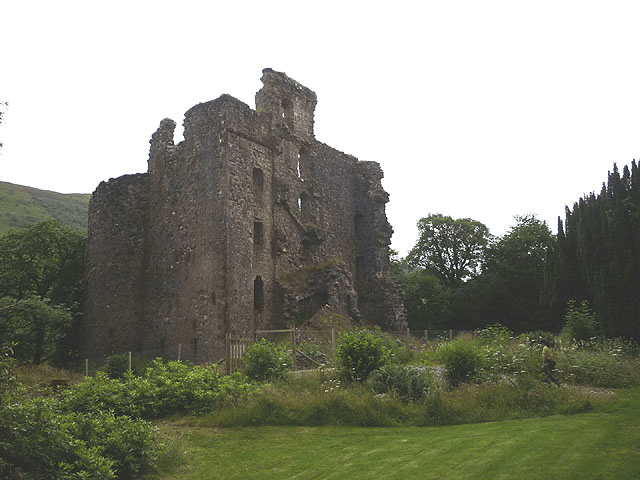
As we’ve already seen, Glengarry was able to use the law to recover the lands wadset to his junior cousin, Archibald McDonell of Barrisdale. And by 1788 Duncan was also playing legal hardball with his Knoydart tenants. He was very eager to revise the conditions under which they held their farms – in part to make it easier to introduce sheep-farming – demanding that those who were tenants at will without a lease should agree to take one and those who already had a lease should renounce theirs so he could issue them with new ones. The tenants sent a counter offer to Glengarry, but their chief had already turned to the courts, which, on 21 May 1788, upheld the evictions he’d scheduled.[i]
I don’t know where the tenants went, but their instincts would have been to look for a new tenancy somewhere else, though they weren’t likely to get one from their chief. Perhaps some travelled far to the south, effectively to another country where the inhabitants spoke the Saxon language (English) but where these Gaels might find work in the burgeoning factories of Scotland’s central belt. Or the wealthier ones would emigrate.
Glengarry didn’t live much beyond his victory in the courts. His eldest son Alexander was only fifteen when his father died, but he soon found that the next lot of tenants were still far too uppity. In February 1793, as Britain embarked on yet another war against France, young Alexander joined the army as a captain and was commissioned to raise men to join the Strathspey Fencibles. An obvious place to start was among his own tenants.
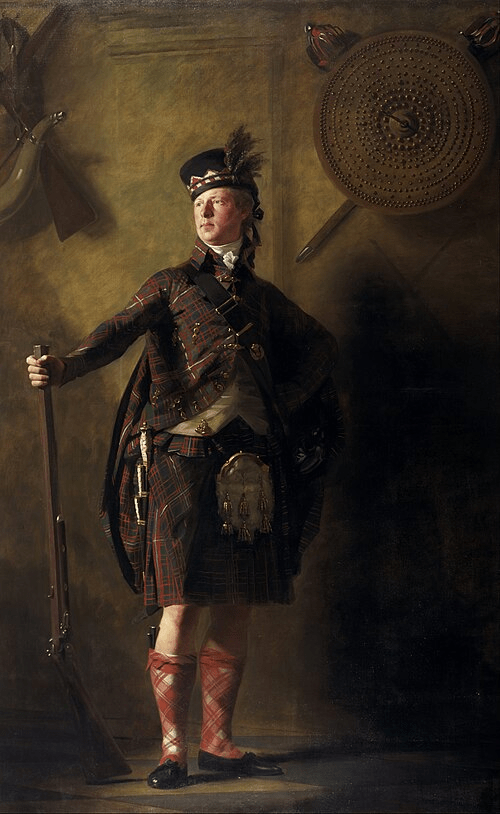
The response was extremely disappointing. Indeed, it was so disappointing that the chief decided to evict any tenant who hadn’t given up himself or a son or a brother to the army. Glengarry wanted them out, and he wanted it to happen ‘without loss of time.’ He even threatened his own agent, adding that ‘as this is the first order of the kind I have given you since I came of age, I have only to add that your punctuality and expedition on the present occasion will be marked by me.’ By now he was no mere captain, but a colonel with zero tolerance for dilly-dallying.[ii] As yet, Glengarry didn’t want rid of all his tenants, but he did want ones who would do as they were told.
By the 1850s it was a different story. Colonel Alexander’s son died mired in debt, his own son still a boy. His widow, Josephine, decided it was time for drastic action. Exhibiting a formidable lack of sentiment, she let it be known that she intended to get rid of the last portion of the estate still in Glengarry’s hands, its most westerly holding, Knoydart. Given that she lived mostly in Edinburgh, rather than Inverie House that was technically Glengarry’s residence on the Knoydart peninsula, this wasn’t much of a sacrifice on her part.
The methods employed were, not to put too fine a point on it, brutal. We have an account of them from Donald Ross, secretary to the Glasgow Celtic Society, who travelled to Knoydart in 1853 and wrote about the terrible things he saw there. Though his journey by road from Invergarry ‘passes through scenery which, for wild grandeur, cannot be surpassed by that of any other district in Europe,’ he was afflicted with a fascinated abhorrence for the dense mountainous landscape of Knoydart itself, describing Loch-hourn-head [Kinloch Hourn] as:
… a place where the scenery is remarkably wild and full of stern grandeur. The freaks of nature are here seen in full magnitude and in unique perfection. Rocks are piled upon rocks, with chasms, fissures, caves and ravines regularly intervening. For nearly two miles the road descends zig-zag like a circular stair. A wild mountain torrent sweeps along, dashing from rock to rock and from ledge to ledge, tumbling into pools dug into the solid rock, emerging again through dark and ugly channels, covered with birch, hazel, alder, and other bushes. Huge mountains, whose summits were covered with a dark mist, rose up on each side; the waters of the loch down below were agitated by gusts of wind, which sent waves up against the rocks and through caves and crevices, creating mournful and strange sounds. The noise from the waterfalls is hard and sharp, that from the waves dolorous and melancholy.
He’d clearly been reading too much Romantic literature, perhaps only now realising the difference between experiencing the sublime on the page and experiencing it in real life. But at least the footpath or bridle-track going to Barrisdale and on to Inverie was decent enough, having been constructed by General Wade in 1723. Or so Donald Ross said. If it’s true, my experience this morning would suggest it’s in need of an upgrade.
Mr Ross didn’t use it anyway, preferring to hire a boat in Kinloch Hourn, which he describes as ‘a small fishing village near the head of the loch, with a public house or “inn,” a few patches of corn, and several small plots of potatoes.’ The inn was a black-house beside the loch, perhaps only a few feet away from where the cafe is now. At least ‘travellers to and from Knoydart get here potatoes and fish or eggs, with “a real drop of mountain due [I presume he means uisge beatha, or whisky].” Anything else in the way of luxuries need not be asked for in this remote locality.’ Oh, I don’t know.
He then sailed some thirty-four miles west to the far end of Knoydart, where he was confronted by an entirely ‘heart-rending’ scene.
The ruins of these habitations of men, and the silence and solitude that prevailed, rendered it unnecessary for any tongue to tell me that here humanity was most cruelly sacrificed to the god of sheep-farming and expatriation. The blackened rafters lying scattered among the grass, the couple-trees cut through the middle and thrown far away, the walls broken down, the thatch and the cabers mixed up together, and grass beginning to grow on the threshold and hearthstone, told a tale which required neither tongue nor pen to unfold.
He knew the fate of those who’d lived here only a short time before, for this time they didn’t disappear across the country looking for another tenancy or work in a lowland factory. This time they boarded the Sillery moored at Isleornsay, a small tidal island on Skye opposite the mouth of Loch Hourn, and were ‘packed off to North America like so many African slaves to the Cuban market.’
Not all the inhabitants were prepared to board that ship, nor was there room for them anyway. But they must have known they wouldn’t be left in peace for long. The factor soon arrived, ordering his men to dismantle the houses of those who’d already gone. Then they set to work on the houses of those who were still there. ‘There was no mercy shown, no delay given.’ Having been ordered out of their houses, they watched their belongings scattered all over the place and their houses pulled down so that they could never return to them. Some of them were seriously ill, or too old to contemplate such a drastic uprooting, or with small children. All were turfed out into the October frosts.
Donald Ross met some of them the following year, still camped out in ditches where they’d made a turf shelter or sleeping out on the open hill, though some had their shelters destroyed more than once by estate workers. Some of the neighbouring farmers provided supplies, even letting a few sleep in outhouses, though they were threatened for doing so. It was a miracle no-one died, though many were very sick indeed and unlikely to recover. ‘In 1847 there were upwards of 600 souls in Knoydart, and, from removals of one kind or other, they have now dwindled down to less than 100.’[iii]
As I look across to that quiet peninsula, I have no real notion of the depth of the heartbreak visited on its people, who were told, without any consultation whatsoever, to leave it forever, to sail across the vast ocean to a place they couldn’t even begin to imagine. All I know is that I have fought long and hard, against myself as much as anyone else, to be in control of my own life. And how lucky I am to be able to do so. Just for a moment, I feel a frisson of anger and despair pass through me, imagining myself as one of them. They put down roots in Canada, and their descendants are no doubt happy they did so, rejoicing in their Scottish heritage but proud to be Canadians. I salute them all.
[i] SC29/10/868/A; SC29/10/868/B; SC29/10/868/C; SC29/10/868/D; SC29/10/868/15; SC29/10/868/17; SC29/10/868/18; SC29/10/868/ 19; SC29/10/868/20
[ii] Charles Fraser-Macintosh, Letters of Two Centuries (Inverness, 1890). 328-9
[iii] Donald Ross, The Glengarry Evictions; or Scenes of Knoydart, in Invernessshire (Glasgow and London, 1853)


Leave a Reply