

A plague on all their houses. The romance of the bothy is well and truly dead. I’ve just spent eight nightmare hours in the thrall of incessant snoring. I seem to be sharing a room with both a growling tiger and someone being strangled. My ear plugs are absolutely useless. It’s the tedium I can’t stand, for there’s nothing else to do but lie there and try to believe that this will surely have to end sometime. I wonder if murder is totally out of the question, on the hopeful basis that no juror would convict. And surely the rest of the room would break out in wild applause. I wish I’d slept in the tent. But I do eventually sleep, wake again, curse the snorers for however many eons it takes to fall back asleep. Repeat.
To add insult to injury, the culprits are up and at it by 6, blissfully unaware and well rested. I go on strike – not that anyone would notice – refusing to get up until 6.45. It’s still cool outside, but promising more heat later on, the clouds already gently disintegrating. Now that I’m throwing myself into the new day, last night becomes funny, a story to tell, if a somewhat inevitable one. The larger Glaswegian group are first to get themselves organised and out the door, lining up for a photograph before they fan out along the road I came down yesterday. They’ll soon turn right up the track that goes over the high pass and down to Inverie, where they’ll get the boat over to Mallaig and the train line. It’s instantly quiet without them, leaving behind the loss of their easy company and exuberance.
Duncan and Nick are next, shouldering their day packs. I give Duncan my email address and he promises to send my best wishes to his uncle, whom I haven’t seen in decades, when he visits St Andrews in August. He emails a few weeks later, telling me it took them ten hours to do Labhar Bheinn, which sounds seriously epic.
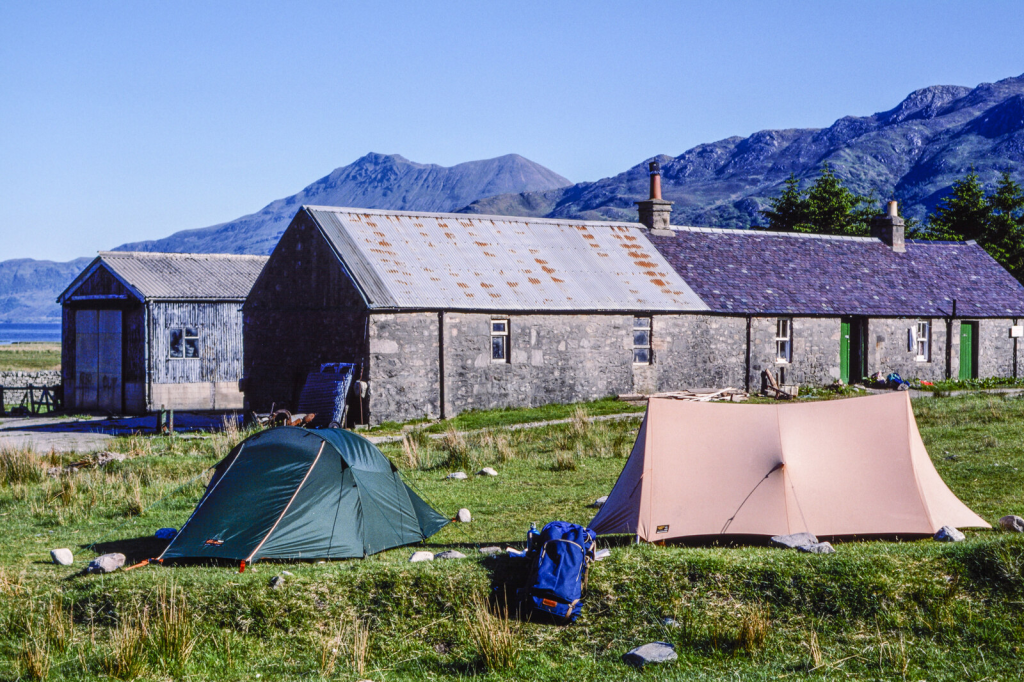
That just leaves Sarah and me. Once I’m all packed up, I go over to her tent where she’s eating her breakfast. We swap notes about the night before. I tell her about the snoring, which doesn’t surprise her. It’s why she always camps. But then, she was woken up every hour by the wind, which seems to funnel up to Barrisdale from the loch. So it was one of those nights and you just need to suck it up.
I hesitate, but only for a moment, to tell her about the life lesson she gave me yesterday, gabbling out how panicked I’d been when I realised we wouldn’t be going through Knoydart together, how amazingly capable and serene she is. ‘But so are you,’ she says with a smile. That shocks me. I say again how scared I was. She tells me she only began to go out hiking by herself in lockdown back in her native Canada, that to begin with she’d been terrified of bears and coyotes. I don’t say so, but that sounds entirely reasonable. Anyway, each time she went out, the terror receded a little, and she became more confident of her ability to cope with whatever the trail might throw at her. But that doesn’t mean, she says seriously, you can lose sight of the risks.
It can be extremely illuminating, on the rare occasions it happens, to see yourself as others see you, to catch hold of the possibility that you might also possess a modicum of whatever you admire in someone else. And that they too have their demons. We hug and I head off, thankfully remembering about my damp t-shirt still hanging on the bush.
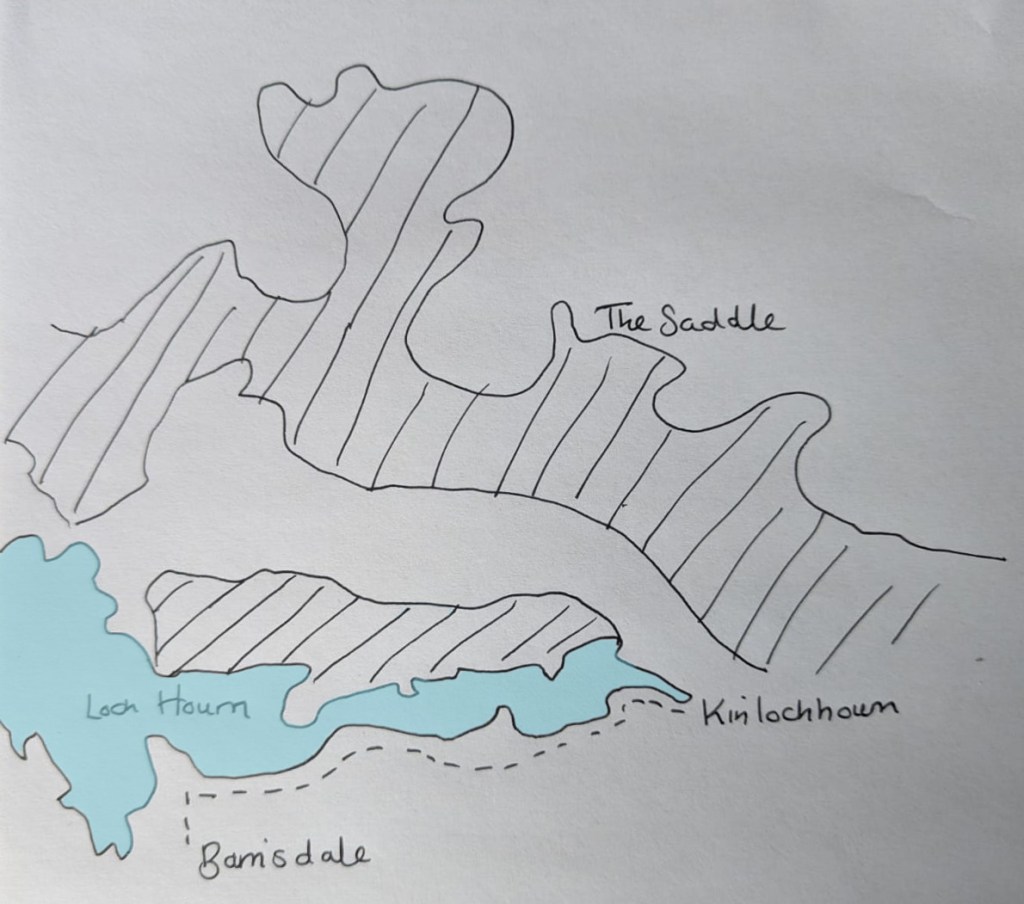
I’m not sure when I’ll see her again. We were both planning to walk to Kinloch Hourn and camp somewhere around the village. But now I’m starting to wonder, in the interests of potentially dramatic photography and a shorter day tomorrow, if I should climb part of the way up toLwards Bealach Coire Mhàlagain that links the Saddle (An Diolaid) with Sgurr na Sgine, two fine peaks in Kintail. It’s tempting to imagine that the weather will continue as fine as it has been until now – the view down Loch Hourn from the north side could be pretty special with a rosy sunset to set it off. I suppose it might also depend on how I’m feeling once I get to Kinloch Hourn. The guidebook says that, though it’s only seven/eight miles along the lochside, there’s quite a bit of climbing to do. I really can’t decide, so I think I’ll just wait and see how I feel.
I pass the estate office, but fail to catch a glimpse of Barrisdale House, thanks to the line of trees flanking the road. The current building was constructed around 1815 for Coll McDonell, Archibald’s son, to replace the one belonging to his grandfather and namesake that was burned down by government troops in 1746. Those remains are nearby but I can’t see them either. It must have hurt, when the first Coll McDonell heard the news that both his houses – the original one here and the magnificent one at Inverie – had gone up in smoke, all those years of wheeling and dealing, his wealth and status so hard and dubiously won, snatched away in a matter of weeks.
Barrisdale wasn’t forfeited, perhaps because it was rented directly from Glengarry by Coll himself (who wasn’t attainted) or his father, Archibald, who died around 1753. And so there’s very little information about it, compared to Sourlies and the rest. But in 1769, the current chief, Duncan MacDonald of Glengarry, looked into selling off the Knoydart part of his estate. The previous chief, Duncan’s uncle, Alastair Ruadh Macdonald, eventually went down in history as Pickle the Spy, a government mole inside the Jacobite camp whose identity was kept secret for over 150 years until it was dramatically revealed in 1897. It was thanks to Alastair Ruadh that Dr Archibald Cameron of Lochiel was captured, becoming, as we’ve already seen, the last Jacobite to die on the scaffold in 1753.[ii]
It was partly poverty that tempted Glengarry into betraying his fellow Jacobites, and Duncan, the new chief, was well aware that, if he wanted to hoist the family out of debt, he needed to do things differently. To begin with, he thought very differently indeed, planning to get rid of the estate entirely. His friends strongly advised him against such a drastic course of action, so he looked into selling the western portion, including Barrisdale. By this time our old friend Archibald McDonell, Coll’s son, was living here, even if he was also renting Carnach on the other side of Knoydart.
Alexander, 4th Duke of Gordon – whose grandfather Coll had served as factor – was interested in buying it, sending a surveyor, Andrew Macpherson of Banchor, secretly to Knoydart in 1768 to establish exactly what was out in those western fastnesses and how much it might be worth. But the inhabitants were less than thrilled to see him and wouldn’t give him the time of day. Macpherson wasn’t the first or the last surveyor to discover that those living on the lands he was charged with describing viewed him as a harbinger of doom, or at least of a change in their lives that was bound to be for the worse.
This posed a huge problem for Macpherson, who admitted he ‘would have been exceedingly at a loss upon the west coast had it not been for the friendship and assistance given me by one Capt.[iii] McDonnell of Barasdale.’ Even Archibald was suspicious of him at first, but after some stiff questioning forced Macpherson into revealing he was there at the behest of the Duke of Gordon, not of Glengarry, Barrisdale changed his tune ‘and I found him to have so warm an attachment to the family of Gordon’s interest and so much less concern for Glengarry’s interest than any other in that country that not being able to do without the aid of some one who knew the country I, notwithstanding of your injunctions, ventured to communicate the whole secret to him, and indeed I had no reason to repent of it.’
Clearly there was no love lost between Barrisdale and his chief, but there was also considerable risk in the help Archibald gave to Gordon’s surveyor, for Macpherson added in a vehement postscript: ‘I earnestly entreat that you let no mortal except the Duke and Cluny [Macpherson, one of the Duke’s key tacksmen] see the arrangement of the west coast farms as were it to come to the ears of the friends of the family of Glengary, they would immediately judge by whose means I procured it and I would effectually ruin poor Barosdale.’
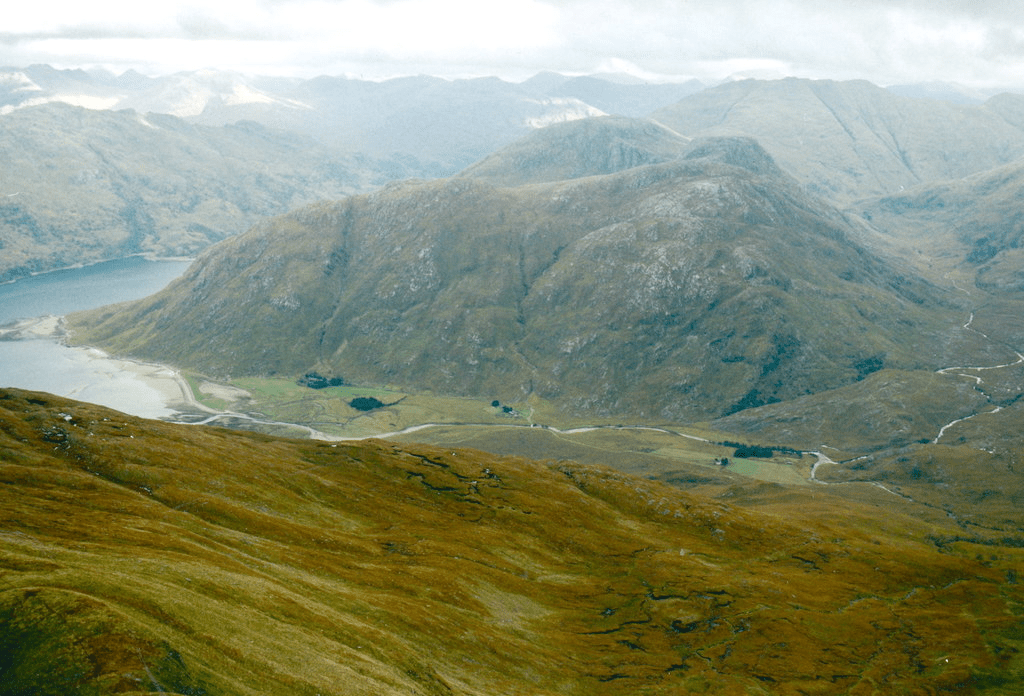
Macpherson was most enthusiastic about these Knoydart lands, writing excitedly that ‘all I can say upon it is that if the Duke [of Gordon] chuses such a remote purchase it is an exceeding valuable one …’ Perhaps this coloured the surveyor’s judgement when it came to assessing Barrisdale and Glen Barrisdale, for the first thing Macpherson said on the subject was that the farm was ‘More proper for a gentleman than small tenants.’ Surprisingly, he goes on to say it was ‘an arable farm which will by industry produce sufficient bread to a good family.’ That was true down by the loch where the bothy sits, but the rest of it was good cattle country, and indeed ‘supports forty milk cows with a proportionable number of yell and small cattle throughout the year, but many more yell cattle in summer, with six or seven hill mares or thereby and their followers.’ The rent was set at £40 (presumably sterling, amounting to a rather spectacular £7000 now), the highest amount paid by any of Glengarry’s Knoydart farms, though only just.
The sale was eventually advertised in the newspapers, with as good a gloss put on Knoydart’s actual – but more importantly, its potential – value as Glengarry’s men could conjure up. ‘The estate contains within this great tract, many large and beautiful plains, and vallies, hitherto uncultivated and capable of high improvement by tillage, and inclosing. The whole is very low rented at present, which will be evident from this circumstance, that a great part of the estate has been long under wadset, and these lands in the natural possession of the wadsetters themselves.’ But, for whatever reason, neither the duke of Gordon or anyone else put in an offer and Glengarry was stuck with his Knoydart possessions.[iv]
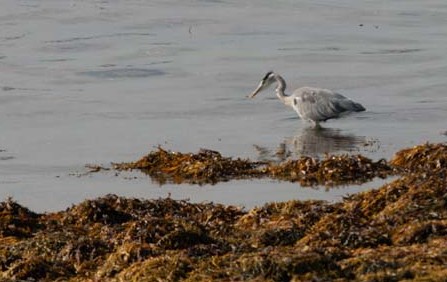
The seagulls are busy down by the lochside once I’m beyond the trees, pouncing into the water and settling into it to bob up and down or rise quickly with the odd squawk. I imagine the rocks there will soon become a carpet of sea pinks, but it’s too early yet. A heron pads delicately through the seaweed before convulsing its way into the air, making its feelings known at being disturbed with a sharp croak.
A young man is packing up his tent on a patch of grass on the other, hill-side, of the road. We exchange greetings and he tells me his name is Sean and he prefers solitude to bothies. He’s also on a bit of a mission, lamenting how long it’s taken him to get this far, though he’s only on his third day, compared to my fourth. He hadn’t expected the ground to be so tricky, the roughness of the terrain making it hard to move swiftly. I know what he means. I was certainly lulled into a false sense of how fast I could go on the first day, simply because it was such a good track, not to mention six miles on the road. But I learned pretty quickly on the second day that there was no point in getting annoyed with either the ground or myself. That way lay madness, or at least an unnecessary amount of extra angst. What I’m enjoying now, as a veteran of three days of walking, is its meditativeness. I feel as if I exist perfectly balanced between the outside world and my inner one, both claiming my attention but not clamouring for it.
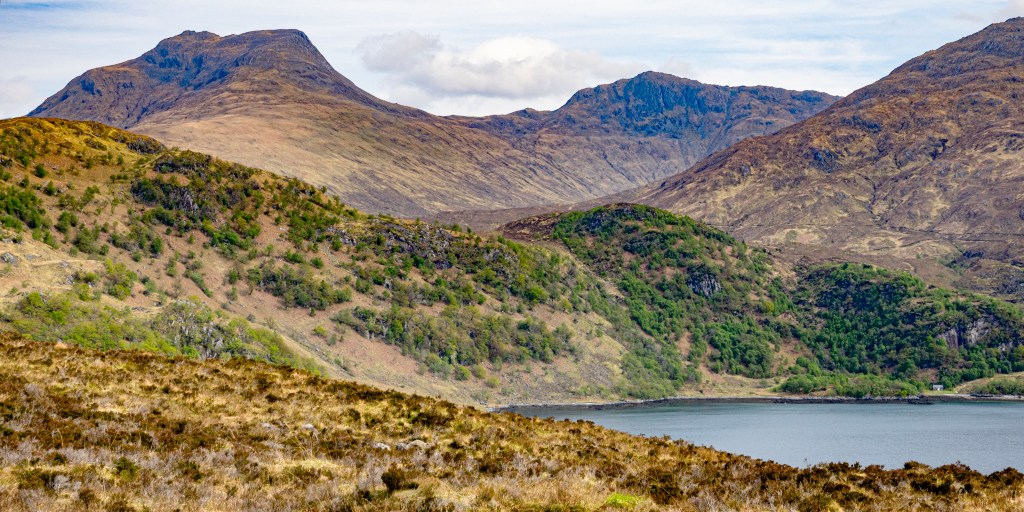
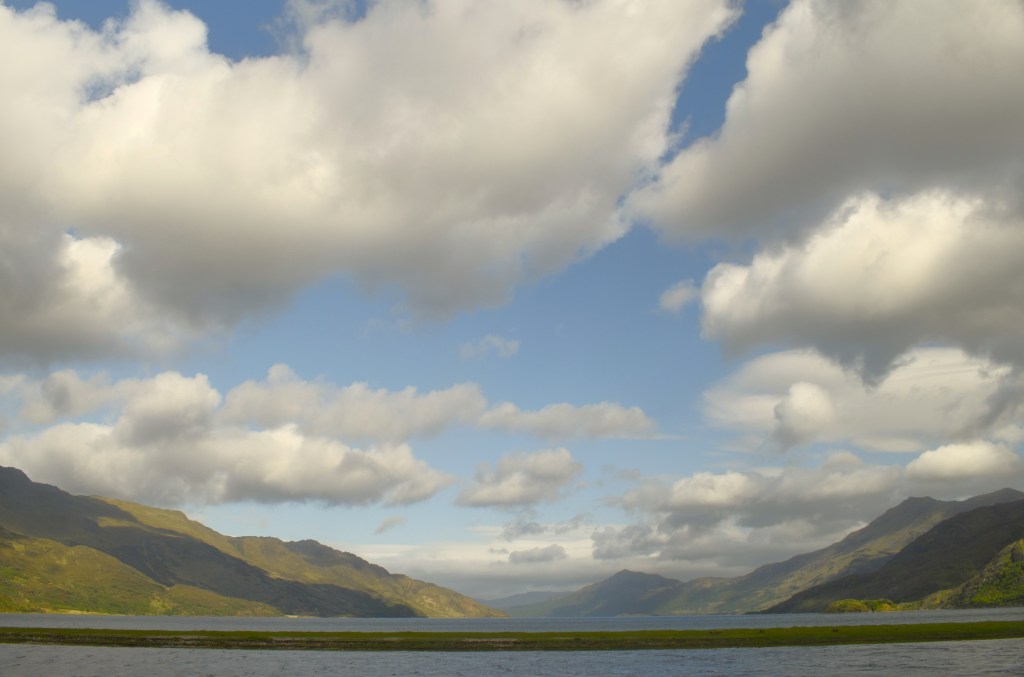
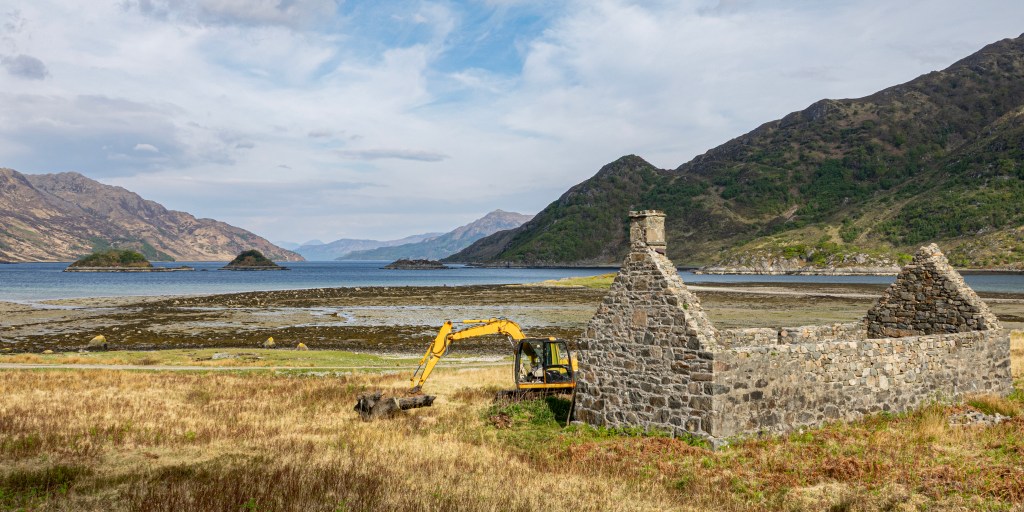
I carry on, the view down the loch opening up as Barrisdale Bay blends into Loch Hourn proper. Three small islands sprout out of the blue water, encrusted with heather and scrubby trees. Beyond them, looking west, I can see the great mountain of southern Glenelg, Beinn Sgritheall, looking luminous in the sunshine. Beneath it, though I can’t see it from here, the loch widens out in preparation to take on the North Atlantic just beyond. All is calm, the loch ruffled only by a slight breeze.
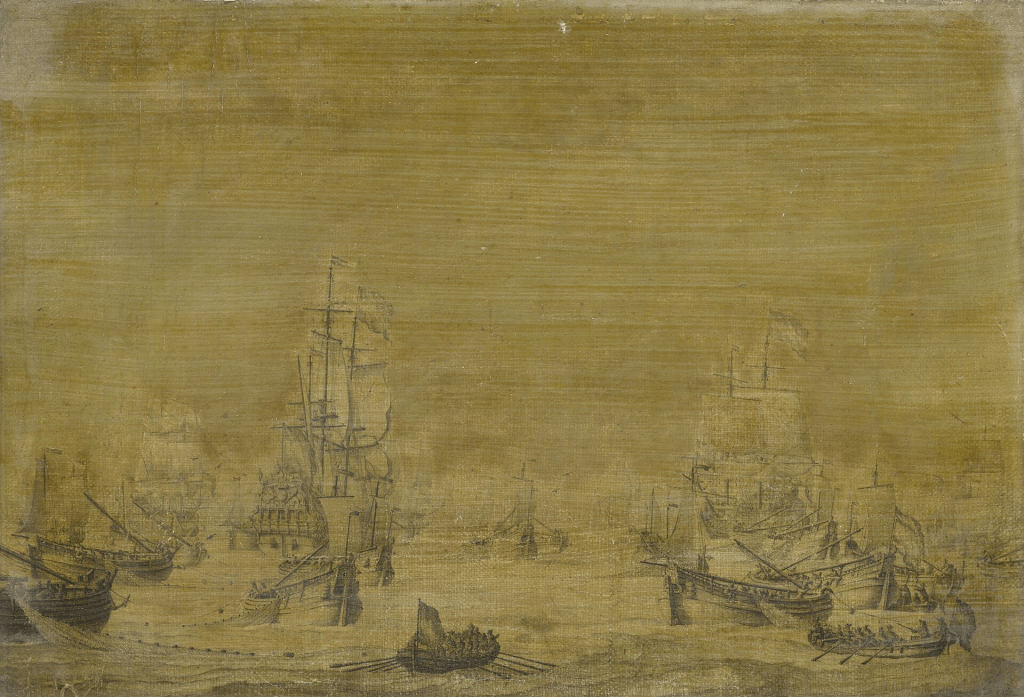
But it wasn’t always so, though what is a little more unexpected is the fact that it was the loch itself that lay at the heart of an enterprise billed, not even for the first time and certainly not the last, as the saviour of the highlands. From at least the seventeenth century, Loch Hourn was where: ‘There is abundance of herrings, salmond and sundrie other fishes slaine.’[v] By the eighteenth century, boats from all over the British Isles, Ireland and beyond came to fish here, but it was the herring they were after. And Loch Hourn was known to be one of the best places to seek them out.
Coll McDonell was perfectly well aware of it, though, as a cattle man, he had no interest in fishing himself. No, if folks wanted to come in their busses – the great round-bilged keel boats originally used to follow the herring by the Dutch – that was fine by Coll. Just so long as he received ‘from the proprietors of each Vessel or boat employed in this fisherie a day’s product each week of whatever fish they caught in consideration of shore dues and fireing etc.’ Given that this was a substantial and lucrative trade, the return to the laird of Barrisdale ‘turned out to be a considerable amount.’[vi] But then, large houses with thirty plus rooms (with or without fires) don’t just build and keep themselves.
In the decades after the ’45, the government became more and more interested in encouraging fishing among the tenants, particularly on the Forfeited Estates, as a way of raising them out of poverty. ‘The greatest support the tenants of Barrisdale have is the herring fishing on the lochs Urn [Hourn] and Nevis, which begins in the dog days & continues to the end of December. The country people seldom have cask or salt, therefore they sell them fresh to the Bounty Men from 8d to 4 shillings the barrel. They cure as many fish for their families as will serve them ¾ of the year. The herring are boiled with potatoes and their butter, cheese & milk maintain them the remaining part of the year.’[viii]
The Welsh naturalist Thomas Pennant visited Scotland in the same year (1772), travelling mostly by boat and struggling against wind and tide to enter Loch Hourn or, as he put it with feeling ‘the lake of hell.’ Pennant then got into his little rowing boat to explore the loch further, passing by Barrisdale bay. Eventually he was rewarded with ‘an instantaneous and agreeable view of a great fleet of busses, and all the busy apparatus of the herring fishery; with multitudes of little occasional hovels and tents on the shore, for the accommodation of the crews, and of the country people who resort here at this season to take and sell herrings to the strangers. An unexpected sight, at the distance of thirteen miles from the sea, amidst the wildest scene in nature.’[ix]
A decade or so later, in 1786, another visitor, John Knox, came north to look at the state of the west coast fishing. Receiving word that the herring had arrived in Loch Hourn in huge numbers, he wanted, as he put it, to see ‘the sight.’ He got a grand day for it, he and his companions in ‘high spirits’ as they sailed north-east from the island of Rum along the coast of Sleat in the south of Skye before entering Loch Hourn. He was lucky, too, to be able to witness at first-hand several ‘Highland boats, with four oars, and containing, generally, six or seven men,’ coming in the opposite direction.
It was tough going. ‘The wind being contrary, these poor people were forced to labour at the oars from ten to twenty, or twenty-five miles, before they could reach their respective huts. They take the oars alternatively, and refresh themselves now and then with water, though generally in a full sweat. They sing in chorus, observing a kind of time, with the movement of the oars. Though they kept close upon the shore, and at a considerable distance from our vessel, we heard the sound from almost every boat. Those who have the bagpipe, use that instrument, which has a pleasing effect upon the water, and makes these poor people forget their toils.’ Bagpipes on a rowing boat! Whatever next?
In the end, Mr Knox didn’t hold out much hope for Loch Hourn as a long-term prospect for a fishing station. ‘Though Loch Urn has a capital herring fishery, it has no other recommendation as a proper station for a town. The hills rise to a great height on both sides, and all intercourse with the inland country is nearly cut off; consequently there are few inhabitants on this water.’ He was probably right. But in some ways he really was too late, not just for the herring, but to see Barrisdale well-stocked with people.
[i] The life of Archibald Mc’Donald, 34; https://www.trove.scot/place/11769#activities
[ii] Pickle the Spy or The Incognito of Prince Charles, Andrew Lang (London, New York and Bombay, 1897)
[iii] Archibald actually only made it to the lower rank of lieutenant
[iv] GD44/25/29/2; GD44/25/29/3
[v] Macfarlane’s Geographical Collections, vol. ii, 168
[vi] E729/1
[vii] E729/1
[viii] GD50/2/1
[ix] Pennant, A Tour in Scotland,341-44; 322


Leave a Reply