

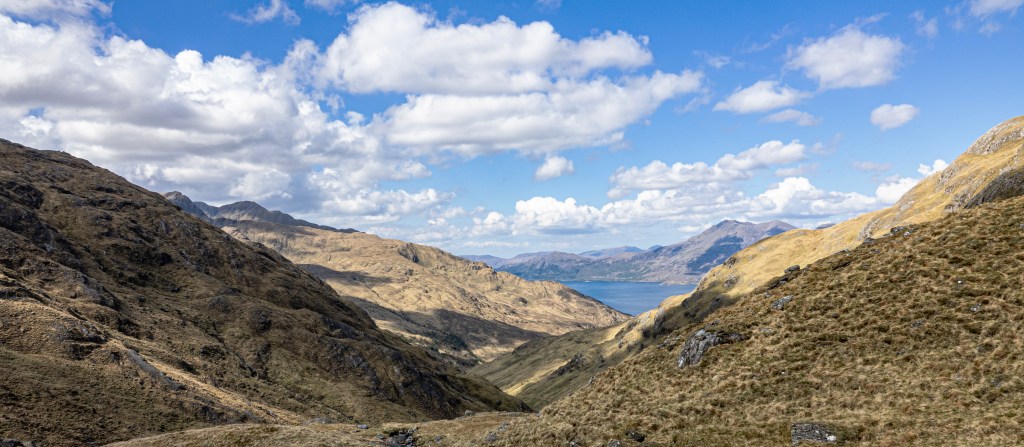
Having made it safely through the Rough Bounds of Knoydart, I can now bid good afternoon to the prince, Glenaladale and the rest, though I imagine them to be curled up asleep somewhere during the daylight hours, perhaps too exhausted even to feel fear. We left them attempting to flee the hills to the north of Loch Arkaig and Glen Dessary, well aware – because they could see them even without the aid of a ‘prospective glass’ – that their enemies had set up camp no more than a mile away, ‘their sentries being placed within call of one another, and patrols going about every quarter of an hour to keep their sentries alert, that so his royal highness might be surely catched should he attempt to pass through them.’
The royal party headed off at nine o’clock at night on 24 July 1746, when they might still be betrayed by the persistent light in Scotland at that time of year. By one in the morning they had reached Coire nan Gall, which lies beneath the south-eastern flank of Sgurr na Ciche. If they’d turned left to head south-west along a series of corries and bealachs, they’d have arrived at Sourlies. But they were heading north.
Cameron of Glen Pean, their guide, was very worried, because they had nothing to eat apart from a little oatmeal and a tiny bit of butter ‘which they could not dress or prepare in any shape’ and this – as I very well know, and I’m not being chased to the death – is a country that demands energy and strength. Glenpean had expected that some of the Loch Arkaig people would have fled to this corrie with their beasts, given that it held shielings that they were presumably used to frequenting. But there was no sign of them.
To stay put was to risk disaster. They pressed on, moving towards Loch Quoich, which lies to the east of where I am now, and ending up at ‘a fast place in the face of a hill’ by two in the morning. This must have been the eastern end of Beinn an Aodainn somewhere above Lochan nam Breac. I can practically wave at them from my vantage point on the slopes of Mam Unndalain. It was only a mile’s walk for them from Coire nan Gall, but it must have been a tough one. And they were still no nearer to something to eat, a need that was becoming more than urgent. Cameron of Glen Pean and Glenaladale’s brother John went off to try to find something, anything, the others standing guard over the sleeping prince.
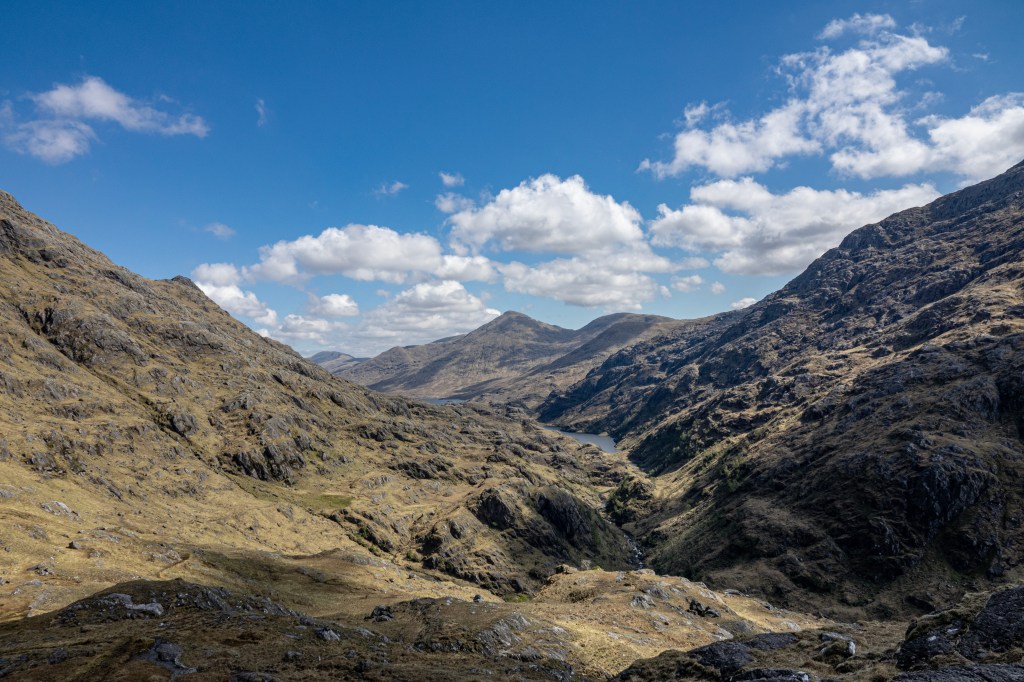
As the sun came up, Glenaladale was greeted by the most unwelcome sight of yet another enemy encampment down below them, at the end of Loch Quoich. But they dared not move without provisions, not to mention their guide. John Macdonald and Glenpean were gone until three o’clock that afternoon, and when at last they did come back, they had no more to show for their efforts than two small cheeses ‘that would not be a morsel to the piece of them.’
To add to their woes, they brought news ‘that about one hundred of the red-coats were marching up the other side of the hill his royal highness lodged in, in order to destroy and carry off such of the poor inhabitants as had fled to the hill for shelter.’ If the soldiers had known that Charlie was within reach, it would probably have been game over, for there was nowhere to hide and many hours of daylight left. But the fugitives must have hoped that the redcoats would be distracted by lesser prey and stayed where they were. Such was the lot of ‘the poor inhabitants,’ to have their meagre supplies pilfered and their lives put in jeopardy for the sake of one man. But there’s nothing new in that.
At eight o’clock at night they set off yet again, scarcely any better fed than they were before. But needs must. At least the prince was revitalised by his slumbers; he ‘travelled stoutly till it became dark,’ heading due north, crossing from one mountain to another. They ended up on Druim Chosaidh, which lies above and north-east of me (or, to my right, if I’m looking north towards Loch Hourn and Barrisdale). And once again, they were dismayed, for, from the top, they could clearly see the redcoats’ fires down in Gleann Cosaidh right in their path.
Perhaps judging that there was never a good time to try to get through, they pressed on, coming so close to the soldiers ‘as to hear them talk distinctly.’ But it was no better at the top of the next hill, for here they ‘spied the fires of another camp at the very foot where they were to descend.’ John Macdonald, Borrodale’s youngest son, says something similar, underlining just how crazy the whole enterprise was. He sums up this exhausting, terrifying journey as if scarcely able to believe it himself: ‘In the course of three nights we passed by four camps and twenty-five patroles, and some so nigh us that we heard them frequently speaken, without any food farther than a smal slice of salt cheese, and aboundance of water.’
But good old Glenpean served the prince well, guiding them so that they managed to slip between two redcoat units ‘betwixt two and three o’clock in the morning.’ After a phenomenal march, they managed to reach Coire Sgoiredail, which lies to the east of Kinloch Hourn. I won’t get anywhere near there until tomorrow.
This might be considered dramatic enough, but it isn’t the whole story, though Glenaladale said nothing about the prince’s near-death experience until long after he had managed, after many adventures, to put Charlie safely on board that elusive French frigate on 19 September 1746. But that seems to have been the way with Glenaladale, to stick to the facts, leaving out much in the way of extraneous detail and any sort of reflection on just how close to disaster they’d all come. Indeed, he said it himself, that ‘I would be very unjust and negligent in either adding to or pareing anything from the truth of matters of fact, particularly in anything I was eyewitness to.’ All the same, the story had clearly circulated widely in Jacobite circles, adding the frisson of a very different kind of what-might-have-been to the rather Grimm fairy story that was already Charlie’s escape at no more than a hair’s breadth – or the distance over which a redcoat conversation might carry – from his enemies.
And so Glenaladale was at pains, when quizzed about it some three years after it happened, to lay to rest some of the more outlandish elaborations that had grown up in the interim. I glance along the long ridge of Druim Chosaidh, for it happened there, though in the middle of the night, not under a vehement sun. While they were climbing it, according to the well-travelled story, having only just managed to get out of the way of the redcoat camp down in the glen, Donald Cameron told the prince that they had to go down through a very tricky pass that went across the top of a cliff edge, ‘but was the only place he could advise the Prince to attempt.’
Glenpean went first, the prince following immediately behind. It was perhaps just as well it was ‘dark night’, for at least Charlie couldn’t see the great drop so close at hand. But nor could he see what lay under his feet, and one of them slipped ‘and the hill being so steep, he tumbled to the very top of the rock; and would certainly have fallen one hundred fathoms perpendicular over the rock, had he not catched hold of a tree on the very top of the rock with one of his legs after his body passed the same, and which he kept hold of betwixt his leg and his thigh, till the next person that was following him catched hold of him by the breast, and held him till the said Donald Cameron returned back and came to them, and recovered both.’ Apart from the somewhat comical image conjured up by this description of an upside-down prince suspended from a tree, I feel almost giddy at the thought of such an awful, but curiously mundane, end to the Young Gentleman. For it could happen to any of us up here, whether through carelessness or plain bad luck. Death certainly doesn’t care.
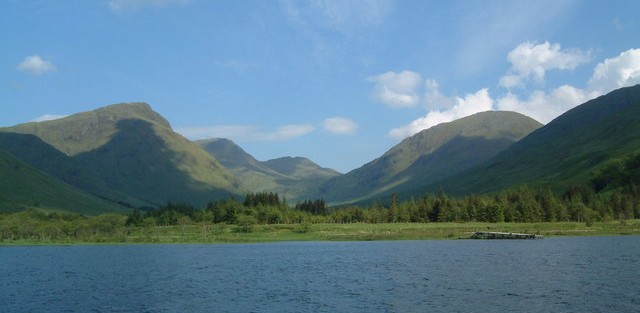
Glenaladale, needless to say, denied that it happened quite like that, though he remembered the incident well and could provide a little more detail to bring the scene to life in our minds. He agreed that Cameron of Glen Pean was out in front, with the prince coming after, followed by himself, then his brother and finally young Borrodale bringing up the rear. Soon enough, they came to ‘a small rivulet that gushed out of a spring, as I think, and lided over a precipis att the very place we crossed it.’[i]
Glenpean passed across without incident, but the prince did indeed miss his footing, ‘and ‘tis altogether probable he would fall down the precipis, which we took to be very high if he had not been very full of life, and that I caught hold of one arm and Donald Cameron of the other and recovered him in a tryce.’ Even Glenaladale admitted that it was as well they couldn’t see ‘the hight of the precipis’, but otherwise the story had become overly dramatic, with no tree whatsoever for the royal personage to tangle with, for, as he continued with sublime gravity, ‘it is so near the tope of the hill that the winter snowes and frostes would starve any wood growing there.’
I must confess that I have developed quite a liking for Alexander MacDonald of Glenaladale, for his apparent lack of ego and his good sense, not to mention composure in the most extreme of circumstances. I might wonder at his devotion to such a cause, and to the Young Gentleman of so few words and even fewer thanks in any tangible sense, whose life he most certainly saved and more than once. Neither has posterity paid him much attention, for he is not among even the second best-known Jacobites and I cannot say I knew anything about him before I began this journey. I suspect most of those who come to pay their respects at the monument in Glenfinnan are just as unaware of the trials and tribulations of the man who once had his home on Loch Shiel.
That monument was put up in 1815, on the fiftieth anniversary of the uprising, to honour those who fought and died for the Stuart cause, now that its threat was but a misty-eyed memory. But the Macdonald of Glenaladale responsible for it was not a direct descendant of the prince’s Glenaladale. Alexander Macdonald did have a son, John, who, if you remember, was only three years old in 1746 when his father left him to go to the prince in his urgent need to escape.
John inherited the estate in 1764, presumably on Alexander’s death. He had spent his youth in the Catholic Seminary in Regensburg, Germany, which had long housed Scottish monks, and it was his Catholicism that underpinned the beliefs that were to govern his life. A mere seven years after he came into his inheritance, he passed his estates on – with the permission of his chief, Clanranald – to a cousin, another Alexander Macdonald, but this one resided in Westmoreland in the far west of Jamaica.[ii] It was this Alexander’s son, yet another Alexander, who had the monument built.[iii]
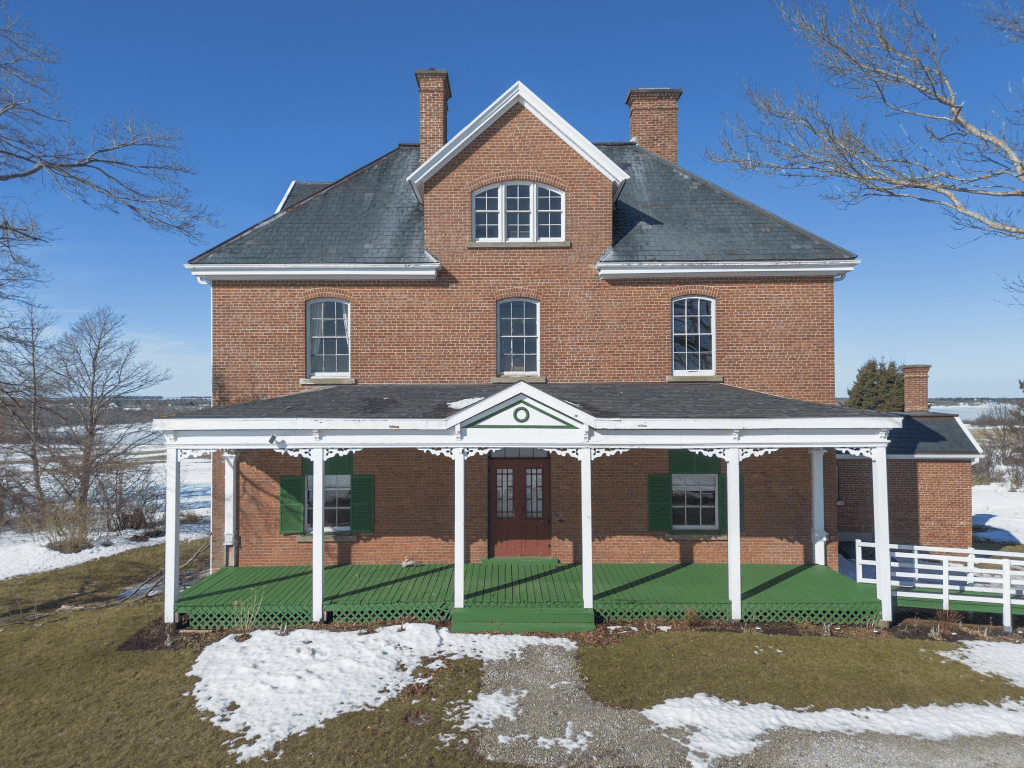
As for John, he had no intention of withdrawing from worldly affairs in a monastery or seminary, but rather of conducting them in a new world altogether. For whatever reason – reputedly a combination of dismay at extortionate rents now prevailing in the north-west highlands, combined with outrage at reports in 1770 that the tenants of South Uist were being forced to abandon the Catholicism of their forefathers for the Presbyterianism of the church of Scotland – John decided to leave Scotland. ‘He grieved for the passing of the tacksman’s old position and honour. He looked at the perilous situation around him: ‘‘I saw many of my friends whom I loved, like to fall into, and which the children could not avoid unless some other path was struck out for them.’’’[iv]
As a man of means, John Macdonald was able to purchase land in St John’s Island in the Gulf of St Lawrence (renamed Prince Edward Island in 1798), before encouraging, so it is said, no less than 210 of the South Uist people and others from the mainland to emigrate there. In 1772 he chartered a ship, the Alexander, which left Greenock, downstream of Glasgow, in May to pick up its passengers from Arisaig and Loch Boisdale before beginning the perilous journey over the Atlantic. John Macdonald did not accompany them, but he sailed west the following year, building himself a grand house set in 500 acres at Tracadie Bay on the north of the island. It was certainly not plain sailing for the new settlers, not least with the outbreak of the Revolutionary Wars in the American colonies in 1776, but survive they did, their pride in their Scottish heritage only amplifying through time.[v]
But as my eye is drawn back once more to the intricate fastnesses of Knoydart, I like to imagine myself in the elder Glenaladale’s company, to feel myself shadowing him and the prince not for who they were and what they had tried to do in seeking to change one king for another, but for being here and surviving. And I wonder, once he was safely back home, how Alexander remembered those days in the hills. Did their suffering, the trauma of being so close to capture, become something vivid and life-affirming in his mind? And did the rest of his life suffer in comparison? The prince surely soon felt that the best years of his life were already behind him, condemned now to be an out-of-work never-monarch, the sparest of the spare.
But Jacobites left in Scotland may have imagined it wasn’t finished yet, that the cause lived on. Certainly young Borrodale in his account described the prince, as he boarded the ship that would take him away from Scotland forever, as ‘in good spirit, and addressed himself to such as stayed behind to live in good hopes, and that he expected to see us soon with such a force as would enable him to re-emburse us for our losses and trouble; so that he ended as he began.’[vi] But he would say that, wouldn’t he? Or perhaps it’s what Borrodale wished the prince had said. They must have known, in their heart of hearts, that it would never happen.
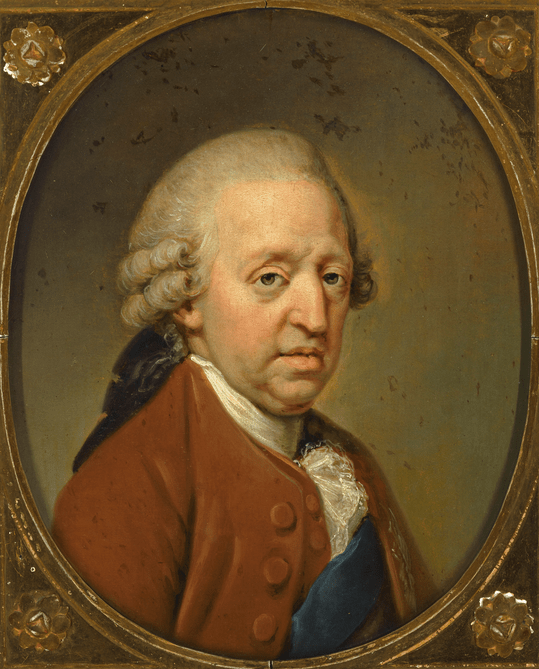
Disappointment is a powerful human emotion and we have come, so it seems to me, to fear failure as if it were a disease. Perhaps it’s because so many of us no longer have to worry about the myriad of terrible possibilities that used to afflict us in the past, when so much was beyond our control and survival was an achievement. Now we like to think we’re in charge of our own destinies and any failure must therefore be our own fault. Instead of being allowed to learn from our mistakes, we’re often castigated for them, denied a second chance because there’s always someone else who will do better. Above all, you must see things through, come hell or high water. Did Glenaladale fall into the grip of an unshakeable regret at the catastrophic end to his hopes and dreams? At least he managed to guide Charlie to safety, severely against the odds.
And among these thoughts of failure and disappointment, my dad flits into my mind. Sadly, he ended his life the very opposite of the way he’d lived it, in a care home, helpless, brain-addled, drugged. And, despite the drugs, he knew something of what he’d become. When we returned from a five-month stay in New Zealand about six months before his death and I was telling him about some of our trips, he suddenly shouted out, ‘I want to go up a mountain!’ If I could have carried him to the top of even a small hill with a view, I would have done it. But of course I couldn’t.
I wonder if, before his mind began to fail him, he viewed his life as a failure. In so many ways he didn’t get to live it the way he wanted, and he only made it as far as assistant manager in the bank, primarily (according to mum), because, to become manager, he needed to devote himself to after-hours schmoozing with at least some show of enthusiasm. But he did sustain a long marriage (just!), watched three healthy children grow to adulthood, and successfully provided for all our material needs until we were old enough to look after ourselves.
Maybe I would have found the mountains without him. After the disappointment with the chess set, I certainly began to wean myself off any notion that he would be very present in my life. I learned to make sure he couldn’t hurt me. It really didn’t matter that, at my wedding, he talked long and enthusiastically about everything but me and my brand new husband. He was who he was, and what he endured in his formative years from his own parents, who never forgave him for being the one to survive, explains much. I will always have those precious memories of the times we did share in those mountainous places we both loved. Even if the tight control he exerted over his children’s lives, the determination to brook no argument, left us incredibly ill-equipped to go out into the big wide world, I know now – and I think I always knew – that he did love me, even if his love was not made up of big, obvious gestures or a mutually-assuring connection. I’m pretty sure he knew I loved him, but I’m also hugely relieved that such a love, with its careful boundaries, was not the kind I took into my own marriage.
And what is success anyway? It can feel like an insatiable beast, always demanding the next achievement. Right now, I just want to be on the right path. There is much further to climb than I had imagined from the bottom, but that is so often the case, when the top of a mountain is always just over the next summit. Still, I can see the gnarled edge of the ridge coming closer on both sides and suddenly the slope begins to smooth itself out. I skirt round the corner of another mound of rock and I see it.
A visceral stab of elation shoots through me as I look down the next glen, over the next loch to the next mountain range I will have to cross in a few days’ time. Yess, I say out loud, as if anything here remotely cares. I know I was never in any danger of getting lost, that I had worked out where I was, both from the map and my GPS. But it still feels like a triumph, something substantial overcome. I am close to tears, but it’s pure joy that grips me.
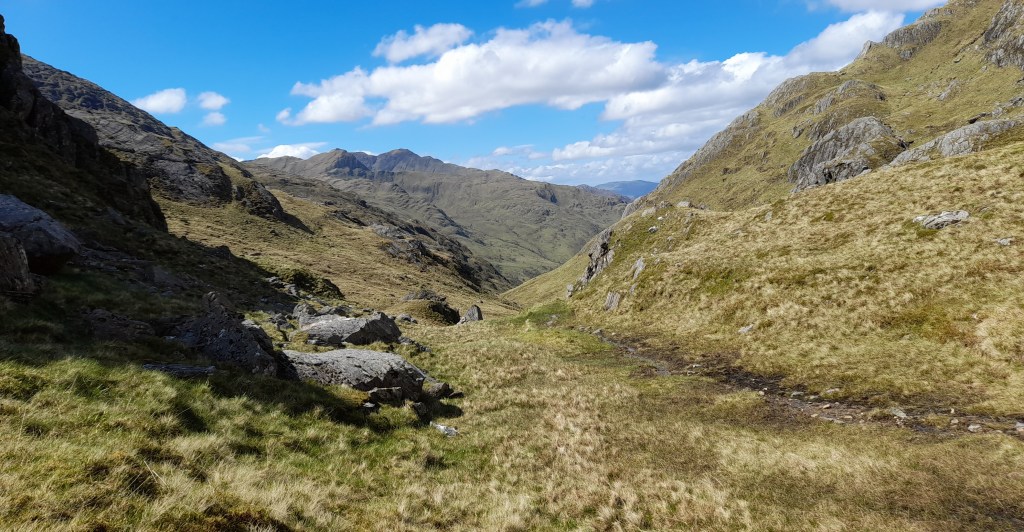
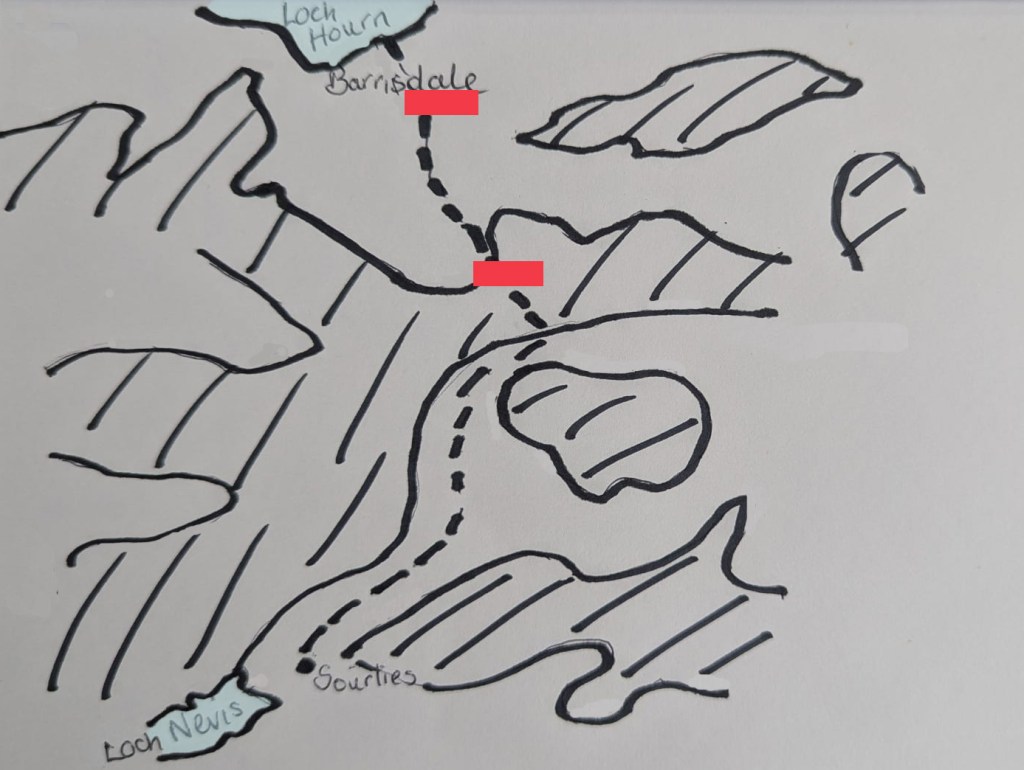
The view stretching out in front of me is awesome, a tumble of ridges criss-crossing at my feet, a small dark blue triangle all that is visible, as yet, of Loch Hourn, and more mountains spilling into the loch on the other Glenelg side. The path is easy enough even before it becomes a double-laned cart track snaking its way down the eastern side of the river. This is Gleann Unndalain. And though there’s absolutely no-one around, it must once have been a busy thoroughfare, for why else would there be a cart track?
I bounce down in the sunshine, the ground beneath my feet soft and easy. My feet are still sore, but I feel much stronger today The river chatters away beside me, a sprinkling of birches leaning into it. A tall fence appears on the other side, presumably to encourage the birches to spread out without being nibbled by deer. I turn and look back up, the conical top of Mam Unndalain staring down at me on my left, a steep flank of Luinne Beinn rushing down from the right. And just peeking out in between, the rocky façade of Beinn an Aodainn. I am almost loath to let it go, so thrilled am I still by my day’s labours.
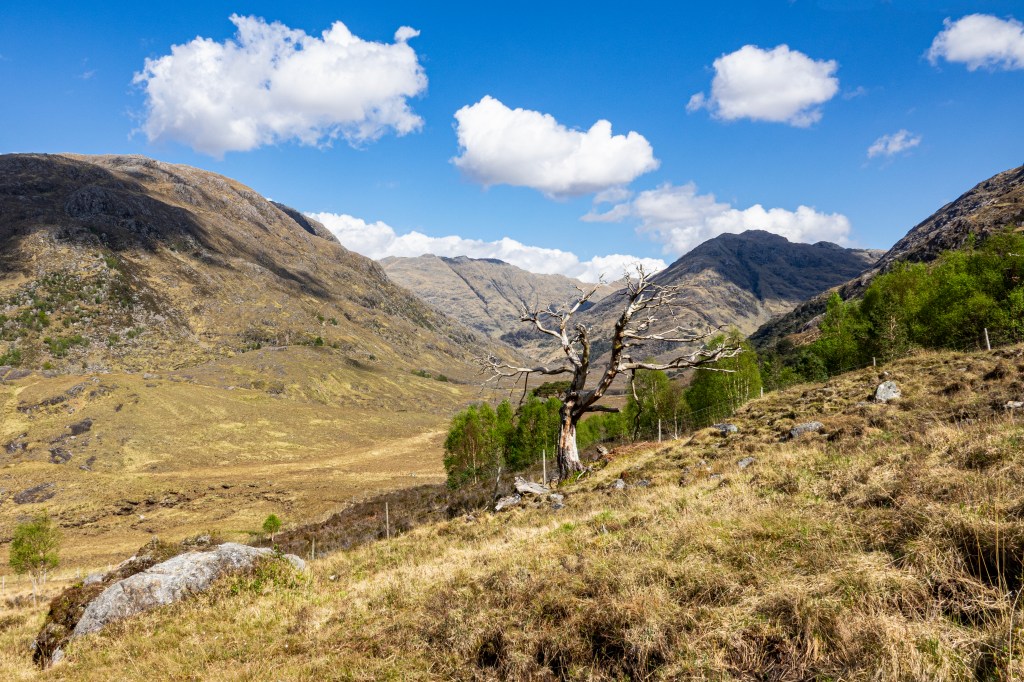
But it would be lovely to take my pack off. I keep going, the path turning slightly to head due north. Loch Hourn grows bigger, the view opening up to my right, showing off the mountains at the head of Glen Barrisdale. A small birch plantation, well protected by another deer fence, fusses about at the front, though those trees are easily dwarfed by a huge old specimen, entirely naked, sending out bony fingers in all directions. An oak, perhaps, though there’s still the remains of a significant native pinewood further up Glen Barrisdale. In 1772 the Welsh naturalist, Thomas Pennant, noted that in Knoydart ‘A conflagration had many years ago destroyed a fine forest; a loss which in a little time, it is to be hoped will be repaired.’
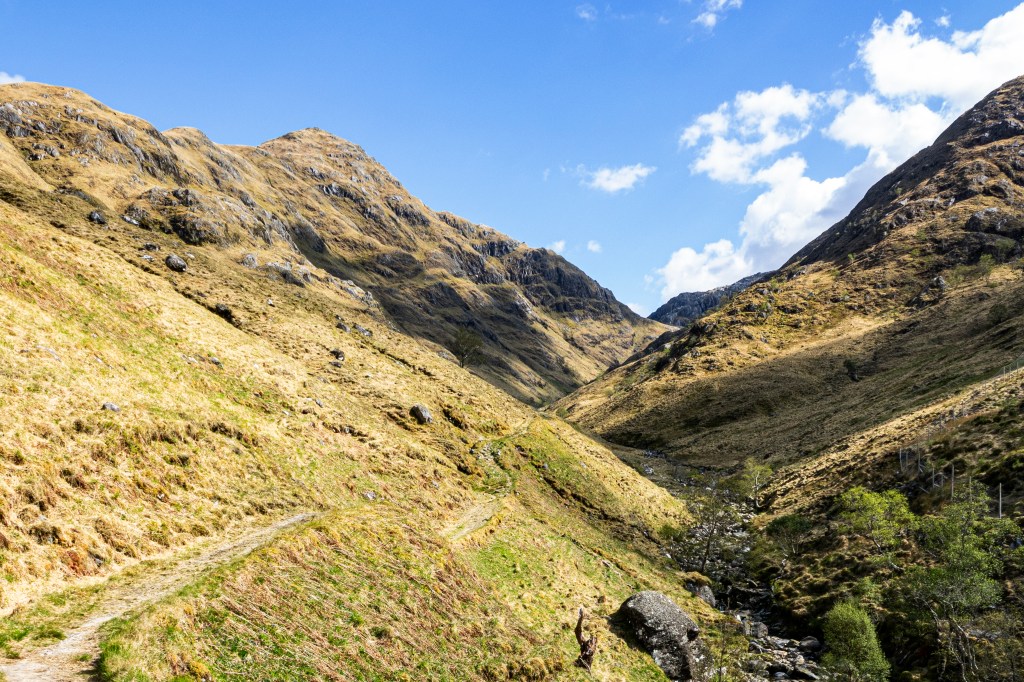
And certainly, in the middle of the twentieth century the local people here reported a tradition ‘that there were fellings about the beginning of the last century [1800], the logs being floated down the River Barrisdale to a water-powered sawmill near Ambraigh Croft and sawn there, and the deals [planks] explored by sea.’[vii] Wilderness, schmilderness.
The track twists one way, then the other, but I’m nearly on flat ground now, passing the remains of Ambraigh Croft on my right. Another track joins mine from the left, the route to Inverie over a high pass. Coll McDonell, and Archibald too, must have used it to get from their house here to their house there, a little highland pony perhaps taking the strain. My steps feel urgent, as if I’m being pulled towards Barrisdale, which, like Sourlies, has grown in my mind to become the height of civilisation.
I’m on a road now, marching towards the bothy. An old red deer, munching along the verge, gives me a brief look, then carries on. Passing a sign advertising accommodation for £120, I’m half tempted, but that’s a lot of money. And rumour has it the bothy boasts a proper toilet and running water. That’s luxury enough. It lies before me now, a long single-storey stone-built house. I push open the door.
All is utterly silent. I walk in and turn left, into the kitchen. A huge table dominates the room, chairs slung at odd angles to it, as if their occupants had just got up and gone out. There’s a sink on the front, window side, and a work surface along the wall at right-angles to it. Up on the shelves sit the remains of a dozen or so bottles of whisky, testaments to who knows how many grand nights. I am both disappointed and slightly relieved there’s no-one about. I go through to the furthest-away bedroom, picking the bottom of one of the bunks to lay out my sleeping mat and bag, using the bottom of another one to spread out my stuff, since there’s no-one to hem me in.
But first I need to get myself clean. I wash my t-shirt and hang it off a bush to dry, enjoying the no-nonsense luxury of my only other clean one. And then I pull off the layers of sticky blister plasters, trying not to remove too much skin. Yesterday’s blisters are nauseous brown lumps, another one threatening on my littlest toe. I hesitate, remembering childhood imprecations not to burst them. But if they’re infected, I need to get them clean. I go for it, wiping away any last bit of bad stuff until my feet look almost normal. And smell a lot better too. It’s three thirty. A short day. I go outside and pop a tenner into the box. It’s only supposed to be a fiver, but I don’t have one, and anyway, what price a flushing loo?
I’m just sorting through my stuff when there’s a sudden explosion at the door, two older men bursting through it. I smile, glad they’re here, apologising for having taken up two beds. They’re Glaswegian, full of chat and boisterous kindness, their accent unmistakeable. They introduce themselves as Willie and Brian, the advance party of a group of six – two women and four men – who’ve walked in from Kinloch Hourn. Soon the bothy is alive with voices and laughter, a wealth of comings and goings that require careful negotiation in the narrow corridor.
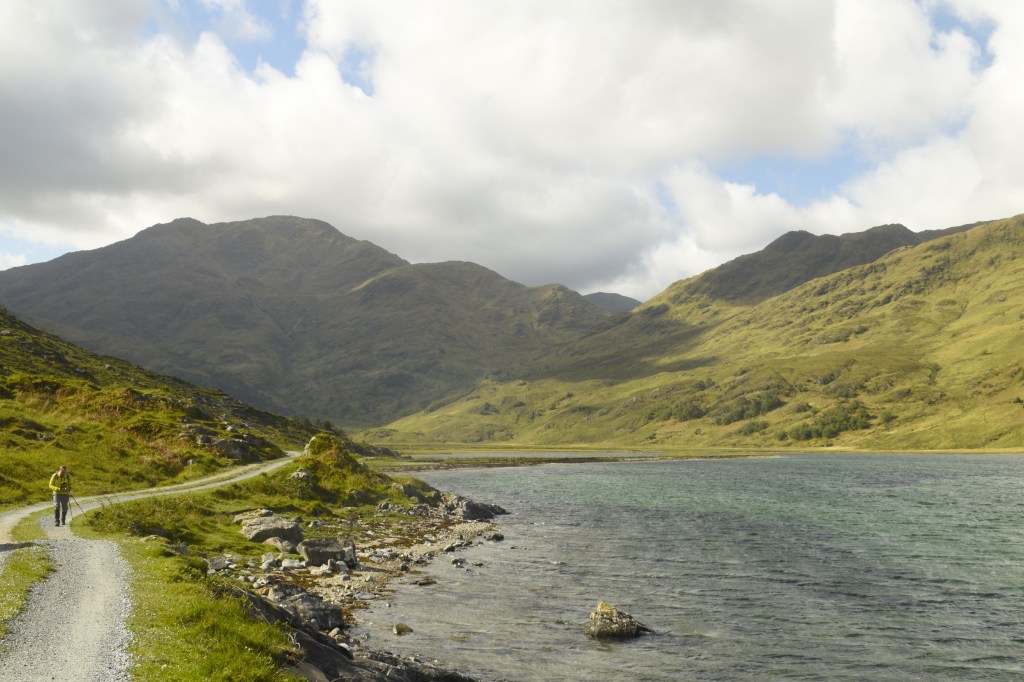
I can see the kitchen will be busy soon enough, so I make my tea and head outside into the sunshine. I join Lauren sitting by the little burn that flows parallel to the bothy. It’s nice to chat, to gather my thoughts and share them, bringing them into sharper focus. She tells me they’re a disparate group of friends brought together by a love of walking, acquiring new members like an expanding ball of used blu tack. Mark is the newest recruit, encountered on the top of a mountain, phone numbers swapped, an enduring friendship made. Though some live close to one another, they might not see the rest until an adventure is decided upon.
Sarah arrives, weary but jubilant. I’m glad to see her and glad, too, that she sent me on my way so that my triumph is all mine. She pitches her tent, popping in and out of the bothy. The evening is chaotic, in the very best sense. We all sit round the table, telling stories and jokes, the conversation dotting all over the place, one anecdote leading to another from someone else. Three of the men were once in the army and I sense it wasn’t entirely easy to settle into civilian life, whether in the police or out on the rigs. Sometimes we divide into disparate conversations, only to come back together, like flocks of birds forming and reforming in constant motion. When I say that I come from a wee village near Crieff, Kate tells me that she had to get a farmer from over that way to take one of her sheep that was bullying the others. Turns out to be someone I know well, the husband of a friend who lives on a farm about two miles away. I smile at the coincidence.
But most of the time I’m happy to listen, heart full. I cannot imagine being anywhere else. And right now, I have nothing to worry about. The evening light begins to fade. Someone walks past the window, though they don’t come in. But a little later the door does open and two men ease themselves into the kitchen, weariness tugging at their relieved smiles. They’ve come up and over from Inverie, having travelled all the way from London very, very early in the morning. A stalled train, leading to an enforced bus trip, put them behind schedule and they are very glad indeed to have made it. And, no doubt, to have found room at the inn, which is certainly not guaranteed.
Nick and Duncan are both engineers from Derby, sharing a love of the hills, as we all do. They plan to tackle Labhar Bheinn, the big beast of a mountain that sits in a semicircular embrace just to the west of us. I wonder about coming back here with my Nick, to do just that. But something is intriguing me, for Duncan’s gentle smile rings a bell deep in my memory. Somehow, as we chat and I tell him a bit about myself, he is moved to ask if I knew Norman Macdougall when I was a student at St Andrews University. It all falls into place. Norman taught my class about King James IV and is Duncan’s uncle. And they both have the same smile. That should be an even more astonishing coincidence, and I suppose it is. But somehow it just feels right, that in this small group from all over Britain thrown together entirely by accident, we should connect not only through the passion that drove us here, but by other threads that are wrapped invisibly round and round this beautiful planet hurtling through the universe at 67,100 miles an hour.
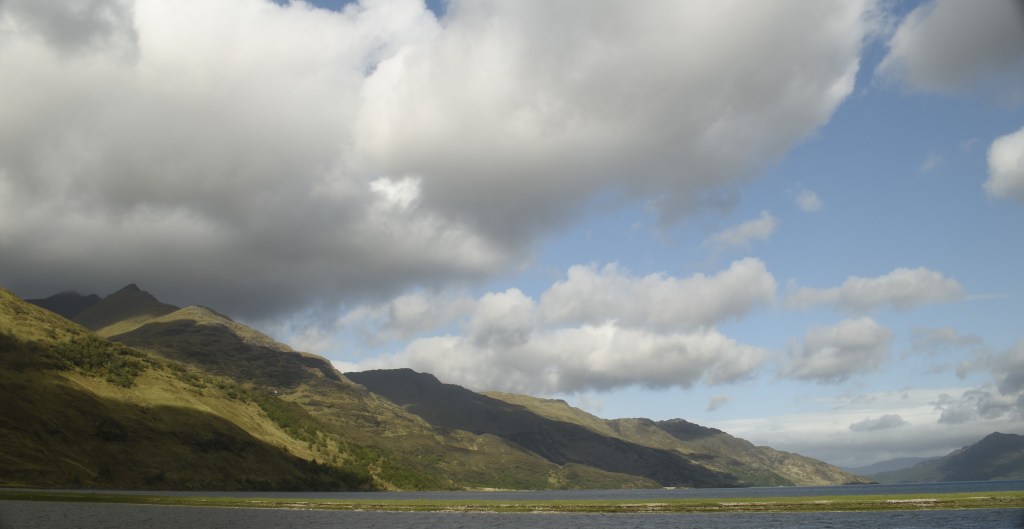
Be that as it may, we’ve all got plenty to do tomorrow and already people are drifting off to bed. I’ve thoroughly enjoyed being part of such a wildly disparate bunch of people – plumber, IT consultant, engineers, policemen, catering manager. But I’m less sure about sleeping in such close proximity to so many of them.
[i] Lyon in Mourning, I, pp.321-354; Lyon in Mourning, ii, 334-5; 362-6; Lyon in Mourning, iii, 376-383; History of the Rebellion, John Home (London, 1902), 251-256
[ii] GD243/4/4/3
[iii] GD243/4/4/18 and 19
[iv] Prebble, Highland Clearances, 19
[v] https://www.electricscotland.com/history/articles/glenaladale_pioneers.htm
[vi] Lyon in Mourning, iii, 383
[vii] Thomas Pennant, A Tour in Scotland and Voyage to the Hebrides, 1772 (Edinburgh, 1998), 342-3; H M Steven & A Carlisle, The Native Pinewoods of Scotland, (Edinburgh 1959),160


 The Other Side of Wild: Walking through Time and Space on the Cape Wrath Trail
Leave a comment