

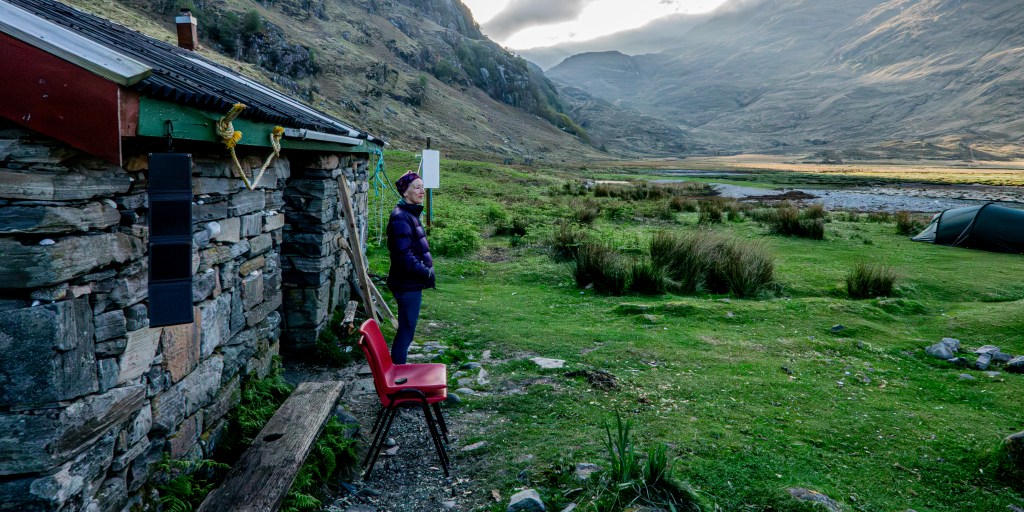
And so, here I am in Knoydart on what was once known as the Barrisdale estate. It was Archibald’s father, Coll, who acquired these lands, though it was only ever meant to be temporary. Coll is one of the most fascinating and exceptional men I’ve ever met in the historical record. I even have a friend, a proper eighteenth-century historian, who named his son after him. But Coll’s a hard man to judge, from a historical point of view, the things of which he was accused often so heinous that his reputation becomes difficult to see around.
Coll may not have done all the things his many enemies said he did, but I suspect he sometimes chose to ignore the line between legal and illegal when it came to taking advantage of opportunities to acquire more money and land. From a young age, he gives the impression of being a man on the make, determined to improve his wealth and status and energetic enough to do it. His own father, another Archibald, was a younger son of their chief, McDonell of Glengarry. But though Coll could, and did, claim to be cousin to a number of chiefs – like so many in the highlands – he started out as a tacksman with only a few farms to his name.[i]
He began his rise to notoriety conventionally enough. Still in his twenties, by 1727 he’d become factor in Lochaber (roughly between Loch Leven and the area around Spean Bridge and Roy Bridge) for Alexander, 2nd Duke of Gordon. Both men were Roman Catholic and Jacobite. Coll proved loyal and effective, with eyes and ears everywhere, though he wasn’t always able to do as he was asked. In 1728, he was forced to inform Alexander that none of his tenants were suitable for service in the army of the Duke’s friend, Friedrich Wilhelm I, the ‘Soldier king’ of Prussia. The problem was the stipulation they should be no less than six feet five. As Coll tersely noted, ‘there are none of such height among the highland clans; there are some MacLeods who are six feet two inches, but the writer was unable to persuade them to join, apart from one who only promised to wait upon [Gordon].’ The irony was that Coll himself belonged to a family of giants, standing well over six feet tall.[ii]
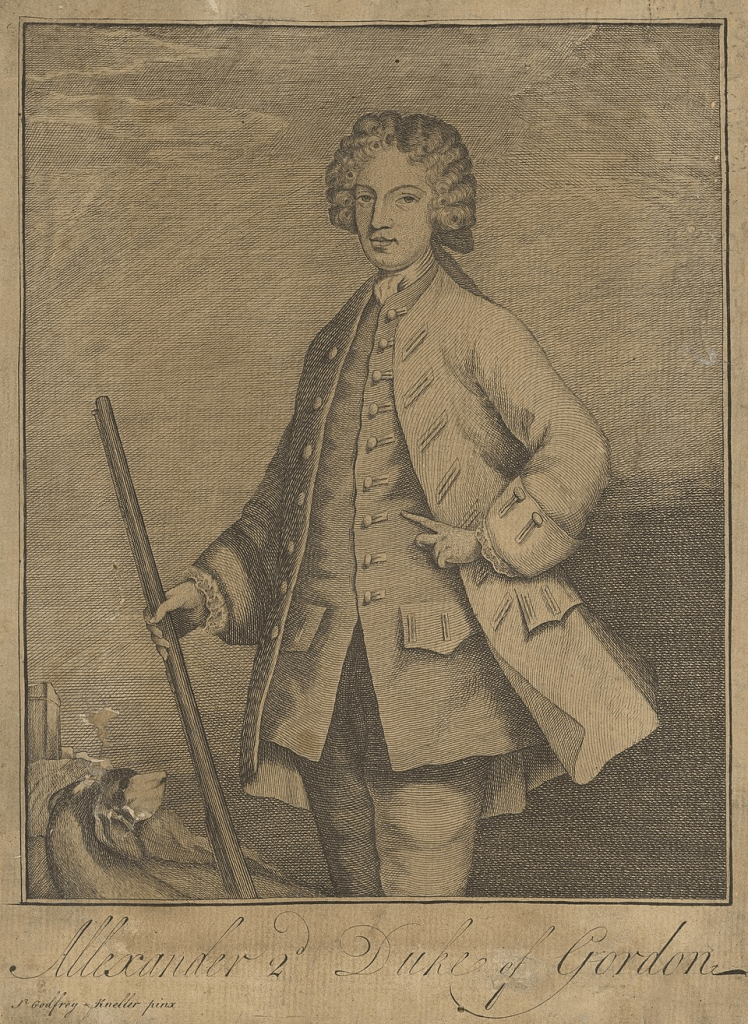
This stint as Gordon’s administrator seems to have given Coll both the appetite and the wherewithal – especially introductions to useful people – for playing in a higher league than he was born to. In 1734, he was able to lend his chief, John McDonell of Glengarry, the extraordinary sum of around 27,500 merks Scots (c.£678,000 today). In return, Barrisdale was given in wadset twenty-one of Glengarry’s townships in Knoydart, including Sourlies, the rents from these farms to come to Coll as interest until the loan was repaid.
Six years later, Glengarry – clearly incredibly strapped for cash, or at least eager to buy, buy, buy well beyond his income – borrowed another 1000 merks [£10,000] from his obliging cousin, this time in return for ‘the penny land of Malaigbegg,’ which lies on the south bank of Loch Nevis a short rowing distance from Inverie. Though Glengarry or his successors fully intended to pay back the loan, who knows how long that would take. In the meantime, the McDonells of Barrisdale became very present landlords across Knoydart, from Loch Nevis north to Loch Hourn, where Barrisdale itself lies.
Of course, Coll did not actually possess such exorbitant sums of money. But he knew a man who did. In 1734, Baillie Macintosh, a merchant in Inverness, was sufficiently impressed with his credentials to lend him the money that Coll then passed on to his chief in return for the lands in Knoydart. Macintosh clearly believed that Barrisdale was a good risk. But in truth Coll was robbing Peter to pay Paul. Almost exactly ten years later, on 6 April 1744, he had to divert the income from all the Glengarry lands he’d acquired, including Sourlies, to Baillie Macintosh, because he’d made so little headway in paying back the loan.[iii]
And the Inverness merchant wasn’t the only person Coll owed money to. Indeed, the number of creditors on the Barrisdale estate after his death is frankly so eye-watering that I couldn’t bring myself to add them all up.[iv] But Coll McDonell was very much a man of his times in the scale of his indebtedness and his cavalier attitude to repayment. Debt was passed on as an asset or an encumbrance from generation to generation. It may have been a gamble, but it was worth it if the loan could be converted into a permanent increase in wealth and status.
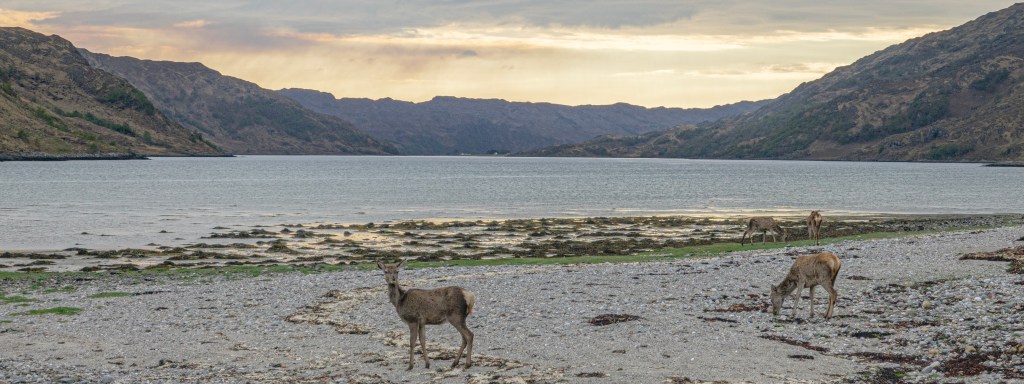
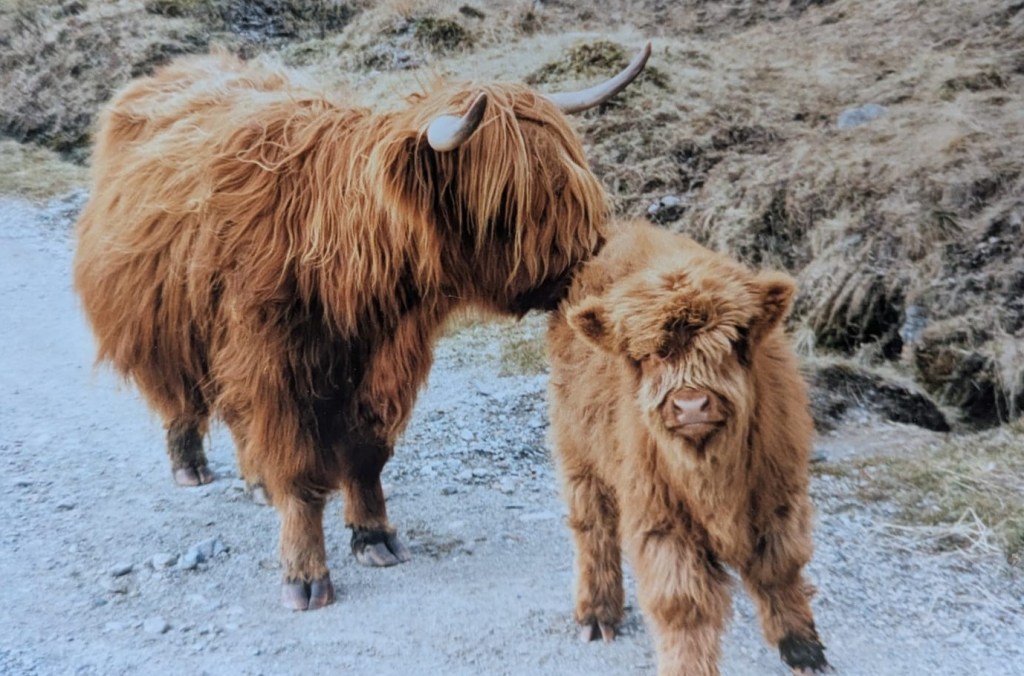
There are quite a few tents outside Sourlies bothy, but even more deer grazing along the beach. Some lift their heads at my approach, skittering away. The rest refuse to pay me any heed whatsoever, concentrating on the tasty morsels they’re prising out from between the stones. If I’d been here three hundred years ago, it wouldn’t have been deer scavenging around Sourlies. It would have been something altogether more shaggy, long-horned and long-lashed, a staple now of postcards, pictures and photographs the length and breadth of Scotland: Highland cattle.
Like the people who used to live permanently in places like this, black cattle have largely gone from the highlands, which is no real surprise, for the two went hand in hand. But such a transformation was inconceivable to Coll McDonell, or indeed anyone else in this part of the world. For while Coll was clearly determined to lift himself out of comparative obscurity to become a man to be reckoned with in highland society, he was still at heart an old-fashioned highland gentleman when it came to the means by which he would accomplish his rise. Cattle, for Coll, was everything.
To be fair, even Murdo Campbell, the Forfeited Estates’ factor, couldn’t see past Highland cows, arguing in 1755 that ‘This estate being rocky and mountaneous is fit only for pasture and the rearing of black cattle.’[v] But while such a view lingered in places like Knoydart, it was soon being challenged in other parts of the highlands where the inhabitants of entire glens were cleared for sheep by the end of the eighteenth century.[vi]
Coll’s dealings in cattle were prolific and geographically wide-ranging, conducted with his usual energy and zeal. But it earned him a vicious reputation, as a man who stole cattle as a matter of course, then took the tascal money for finding them. He was named as the eminence grise behind a plot to frame some of the earl of Breadalbane’s tenants for stealing cattle from James Menzies of Culdares, with whom Breadalbane was engaged in a lengthy court case.
And yet, the evidence against Coll is very much laid at his door by his enemies, and there’s no doubt that, in the Culdares’ affair, Barrisdale strayed perilously close to the interests of some very big hitters, given that the earl of Breadalbane was a member of the great Campbell network that dominated Scottish politics, presided over by the Duke of Argyll and his brother, the earl of Ilay. Coll was acquitted in 1736 of any criminal activity against Breadalbane’s tenants, though the fact that so many of the witnesses were notorious liars and thieves probably made it very difficult to separate fact from fiction. Yet perhaps the most damning indictment of his activites came from one old lady – grandmother of Sir Alexander Matheson, a nineteenth century merchant, railway entrepreneur and MP who owned a swathe of Wester Ross – who recalled that, ‘in her youth [she] had paid blackmail for Fernaig [near Stroneferry north of Knoydart] to Coll of the ‘45 …’[vii]
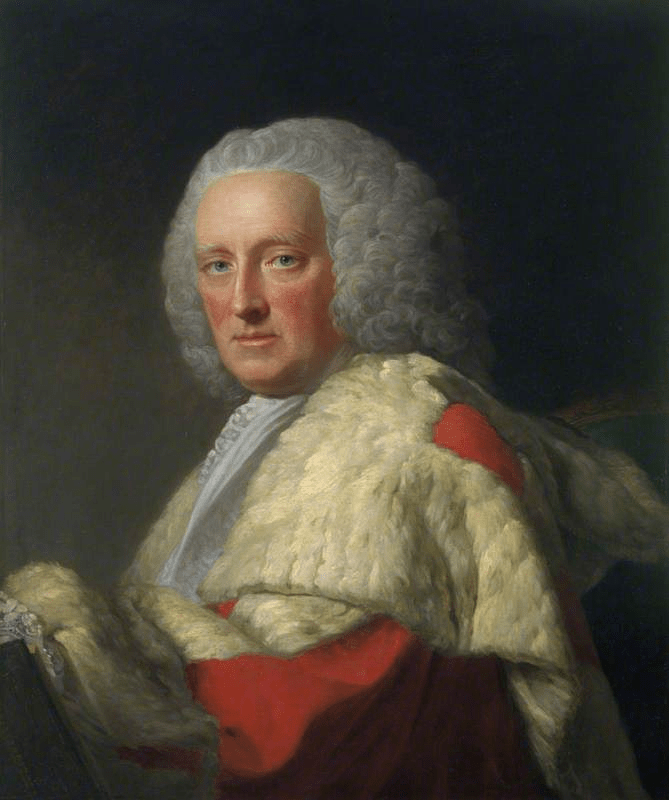
But the most horrific accusation, and one that went viral, for it was so often repeated about Coll even after his death, concerned the infamous French tye, an instrument of torture that he supposedly used to keep his followers loyal.[viii] But no-one ever seems to have actually seen this infernal machine; when the Ross-shire militia came to destroy his house at Inverie after Culloden, they found only a set of stocks, a fairly standard instrument of lordly justice.[ix]
That Coll McDonell of Barrisdale was acquisitive, unprincipled and deeply unpleasant is not in doubt. That he was capable of forcing some into doing things they’would really rather not have may well be true. But whether he was as grotesque as those who clearly hated him claim is less clear. What does come across, so many centuries later, is Coll’s energy, his belying of any notion that Highlanders were poor benighted creatures at the mercy of others, lost in a mist of bad weather, poor soils and an irredeemable devotion to lost causes. He was here, there and everywhere; at the great cattle fair in Crieff, and in Stirling, even in Edinburgh, over 180 miles from Knoydart, all in the interests of doing deals, of making money.[x] You may not have liked him, but you couldn’t deny his audacity, his sheer chutzpah.
And who knows how Coll McDonell would have fared if his life had continued as a series of strenuous dashes about Scotland, avoiding creditors, chasing cattle and generally seizing any opportunity that came his way. But, of course, it didn’t.
Coll’s record during the ’45 is pretty much what we might expect. After he and his twenty-year old son Archibald met the prince at their chief Glengarry’s house at Invergarry twenty-four miles north of Fort William on 26 August 1745, less than a week after the standard was raised at Glenfinnan, he applied himself energetically to the Jacobite cause. As ever, he seemed to be everywhere, from Sutherland to Argyll via Beauly north of Inverness where he tried to stiffen the resolve of yet another cousin, Simon Fraser of Lovat, who would really rather have avoided him, but could not refuse hospitality to a kinsman.[xi]
For Glengarry’s Mcdonells, who had marched over towards Inverness from Knoydart and neighbouring Glenelg, the whole adventure promised one thing guaranteed to get their attention and keep it, a reason that had very little to do with replacing one faraway monarch with another: cattle. They could now, in good conscience, threaten a ‘spreath’ or cattle raid on any Macdonald who hadn’t yet joined the rebellion. The irony is that Glengarry himself chose to stay at home.[xii]
Coll spent much of the winter of 1745-6 in the north of Scotland and managed to miss the battle at Culloden on 16 April 1746, though whether by accident or design would depend, as always, on what you want to believe about him. But he ended up on the run anyway, haunting out-of-the-way caves and shielings in Knoydart. Evading capture for nearly two months, on 10 June he and his son ran into Ensign James Small of the garrison at Bernera north of Knoydart, who would also be responsible for recapturing Archibald seven years later.
What happened next is shrouded in at least as much mystery and controversy as anything else Coll McDonell of Barrisdale did, for he was said to have regained his freedom by promising to hand over Prince Charlie, unable – so his enemies said – to resist the £30,000 placed on the Young Pretender’s head. He probably did promise to do just that. But whether he meant to follow through on it is another matter.
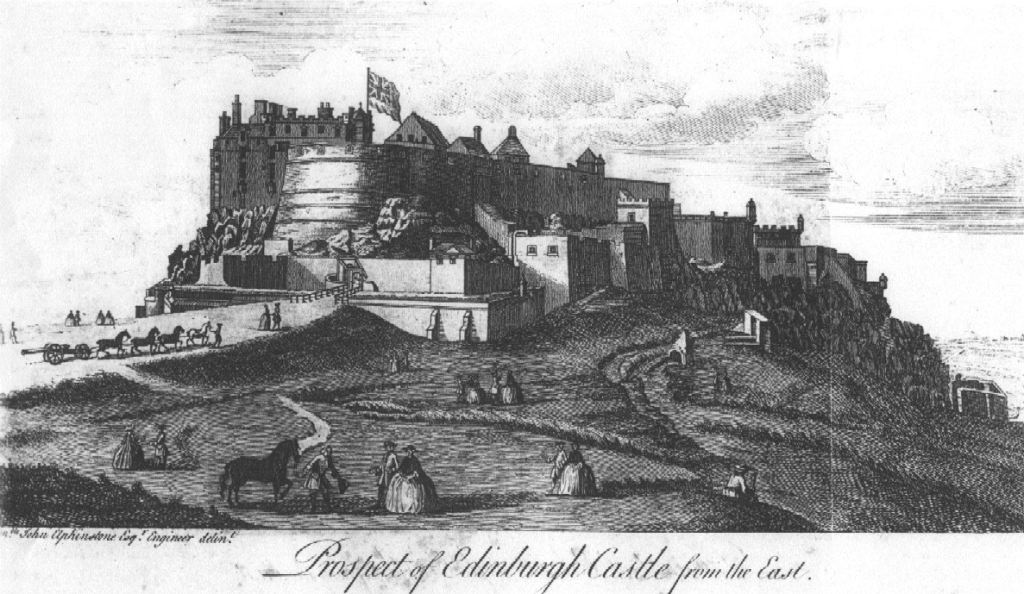
He and Archibald escaped to France – or were taken there forcibly – but by now no-one trusted him. Running out of options, he returned to Scotland and was captured again, though, unlike his son, he was never forfeited, which suggests he really did agree to try to lay his hands on Charlie. But equally, given that he was imprisoned in Edinburgh castle, British officials were also unconvinced by his sincerity. He caught a fever, died and was buried there in 1750, supposedly attended by only six soldiers, ‘a number scarce sufficient to bear so bulky and corpulent a corpse.’[xiii]
It’s remarkable, when you think about it, that, despite the violence inflicted on Jacobites by a government that wished to deal such a blow to their persons, their identity and their livelihoods that they would never rise again, not to mention the incentive of such a huge reward, no-one did choose to betray Charles Edward Stuart. It’s true that some of those tasked with smuggling Charlie through the hills saw traitors among their own at every turn. Would Coll really have done the unthinkable? Who knows. The fact of the matter is that he didn’t, though his enemies said that’s because he wasn’t given the chance.
But what is rather harder to stomach is the evidence that he viewed his own tenants as just as much of an opportunity to make money as anyone else who crossed his path. As the government factor, Mungo Campbell, began to feel his way towards a fuller understanding of the mountainous cattle country under his jurisdiction, he discovered that the entire tenantry had failed to disclose to David Bruce, the surveyor in 1748, the full extent of the money-making wheezes imposed on them by the former laird of Barrisdale. These were superficially charming things like payment of the ‘kitchen cow’ (one week’s milk, or money equivalent) and the May present (more of the same).
Such taxes were a hangover from the days when tenants put food directly onto their lord’s table and were probably already out-of-date in many parts of the highlands, though clearly, so far as the government was concerned, such weird, ancient impositions were yet another frustrating example of Jacobite devotion to chiefs and tacksmen. But it wasn’t just the loss of £8000 in revenue that seems to have annoyed the government factor, for Campbell claimed ‘that the estate of Barrasdale was so high rented by Coll McDonald, late of Barrasdale, that the tenants were reckoned the poorest in the Highlands, and by their wants were notorious for theft and depredations during his time.’[xiv] Perhaps, in raising rents beyond his tenants’ means, Coll was, for once, ahead of his time. Or perhaps Mungo Campbell was unduly influenced by the laird of Barrisdale’s reputation within government circles.
I nod and smile at the tent-dwellers standing around in the lethargy that falls after a long, hard day. I have a choice to make. I could put up my tent again and risk another cold semi-sleepless night. Or I could sleep in the bothy, with the possibility of heavy snoring to keep me awake. I push open the door. All lies quiet, the wooden sleeping platforms entirely devoid of any sign they will be occupied. A stove sits in the chimneybreast, but there’s no firewood. Even the wires that criss-cross the ceiling for wet clothes hang neglected. I’m not sure I like this austere emptiness. Bothies are meant to be full of those who like to forge connections with people they’ve just met and will likely never see again. That’s when they come alive.
But without thinking much more about it, I start unpacking my sleeping mat and bag. A couple of the campers follow me in, setting out their stoves on the large table. Gaby arrives and I’m glad when she too begins to spread out her sleeping gear. I summon up the app on my phone that should allow me to use the tracker’s satellite signal to send a message home. But it doesn’t work. I try again. I reset the connection between app and tracker. It still doesn’t work. I had nothing to say other than that I’d finished Day Two without mishap, something Nick would already know from the tracker itself. But now I can’t even say that, I feel the loss of it. One of the campers suggests that, unless you’re the registered owner of the device, you might not be able to send messages to discourage sharing. Gaby says she could never get that app to work anyway and uses another. She lets me send Nick a message on her phone. He replies shortly after and I feel better.
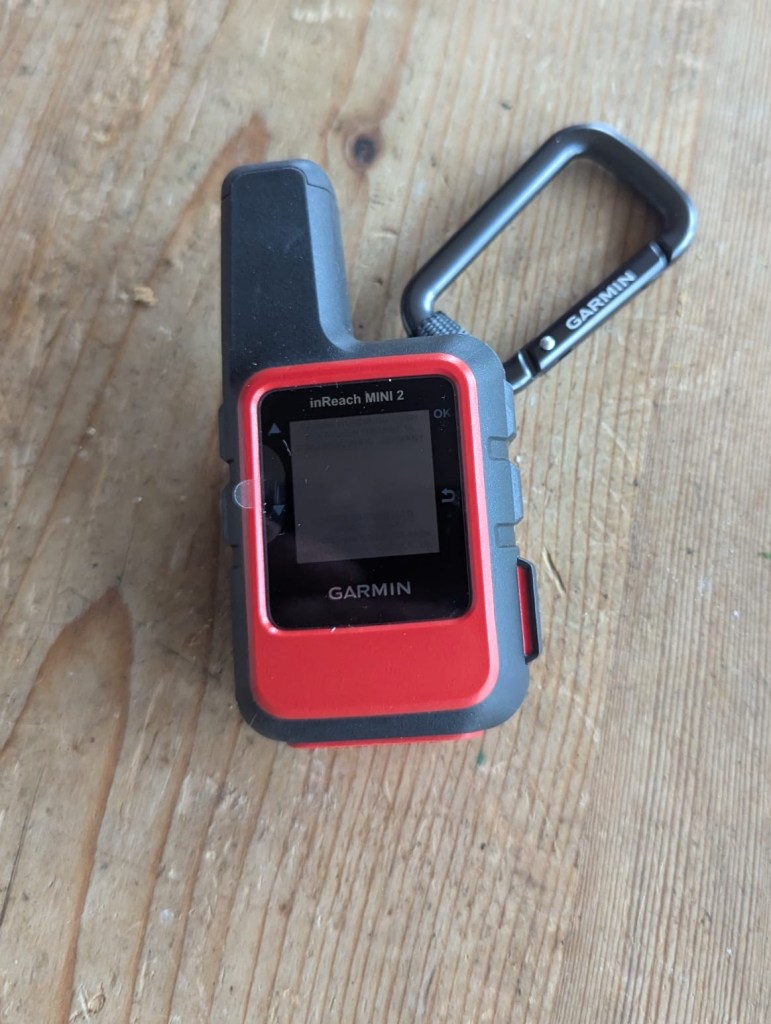
I’m glad I’ve got the tracker, not for myself but for those who might worry. And yet if I didn’t have it, maybe I wouldn’t now be feeling the pull of home and normality, the ache of a separation caused not by war and upheaval, but my own selfish desire to leave that normality for a short while, to give my life more edge and less ease. It’s been a long day, some of it exhilarating, but much of it a bit of a slog. I don’t know whether it’s a Day Two thing, my body still getting used to constant walking. I start to rethink my plans for the stage after this one, which will begin in four days’ time, now that I truly understand just how gruelling the trail is.
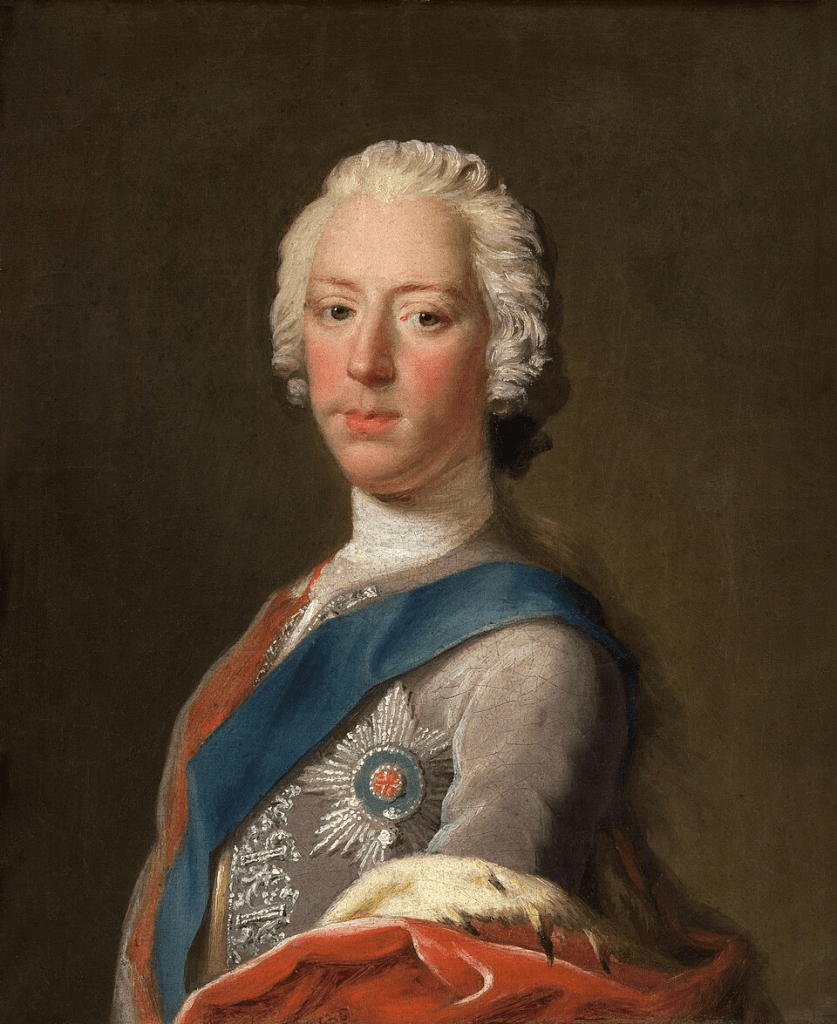
But at least I’m safely within four stone walls with nothing pursuing me apart from a vague feeling of unease, unlike Bonnie Prince Charlie and Glenaladale, still camping out in the hills above me. What strikes me as remarkable now is the fact that, for all the copious amounts of ink spilt on the subject of the 1745 rebellion, including the recollections of those who took part in it, Charlie himself remains elusive, his own thoughts and feelings unrecorded except second-hand. He supposedly tried to learn Gaelic, but it has been suggested he never fully settled in any language, not the English of his father, the Italian of his homeland or the French of aristocratic culture. He certainly seems to have been a man who kept his thoughts to himself.
In the accounts of his flight through the heather after Culloden, he comes across as a largely silent companion to those making the decisions about where they should go and how they might find sustenance. Born in 1720, he was five years older than Archibald McDonell of Barrisdale, but the two could sing from the same hymn sheet when it came to a steadfast belief in the God-given right of their families to rule, even if the scale of what they thought should be theirs to command was vastly different.
Did Charlie despair, tossed from hillside to corrie to mountain top in the middle of the night, fighting the heat, the bitter rain, hunger and, surely, electric jolts of fear at every sudden noise or movement, which might herald imminent capture and death? Or did he, as I have tried to do until I came to Sourlies, focus every waking thought only on the here and now, on doing what needed to be done and nothing more. Young Borrodale, who was one of Glenaladale’s company, recalled the depths of their travails deep in the mountains, but also the sweetness of small victories.
…we … found there a bit hollow ground, covered with long heather and branches of young birch bushes, where we all five of us lay down to rest!, almost fainting for want of food; these severe trials and circumstance drew many heavy sighs from his [the prince’s] poor oppressed heart. I informed him then that I had a leepy [measure] of groaten meal [oatmeal] wrapped up in a Nepkin [handkerchief] in my pocket, which, when I produced it, made a vast alteration in the countenance of the whole of them. Come, come, says he, let us, in God’s name, have a share; never was people in more need. I expect soon to meet with plenty; so I divided the whole of it between us five; and they began to chat and crak [gossip/make merry] heartily, after our refreshment.
As words put into the prince’s mouth, they don’t tell us very much beyond the most predictable and banal – of course he was going to share the oatmeal among his companions and try to cheer them up. And I don’t doubt even a little sustenance can go a long way in extremis. I certainly feel a lot better myself, now that I’m in company. And perhaps I shouldn’t think about anything beyond what needs to be done tonight. I wander outside, drifting towards the water’s edge. The deer are still scattered along the shore. I watch the early evening light hovering in pearly whites, pinks and greys above the tops of the hills guarding the loch. I stop worrying.
I go back in to cook my tea, following beef stew with a chocolate pudding I’d been saving for Day Four. It’s disgusting, but I need the calories. Campers drift in and out. They’re all, like Gaby, continuing west to Inverie tomorrow, so I’ll be on my own going north into the heart of the Rough Bounds and over to Barrisdale. A small clump of us discuss other long-distance routes, or at least I listen as they talk. There’s the Arctic Circle trail in Greenland that one couple have done and Gaby would like to do. It sounds quiet and beautiful, if a little barren and bog-ridden. To be honest, I’m not a big fan of bogs, however good they are at soaking up carbon. I cross that one off my metaphorical list.
Gaby confesses to a near-death experience on a trail in northern Australia, where she spent 72 hours on her own without any water in blistering heat. I like the sun, but that’s not getting my vote either. The door opens again and a dark-haired woman steps in wearing a warm smile and carrying a cup and her guidebook. Sarah is another Cape Wrather and I light up when she tells me she’s going the same way as me tomorrow. ‘I’ll see you then,’ I call after her as she returns to her tent.
The others all drift off and Gaby and I fight our way into our sleeping bags. I pop on my eye mask, insert my earplugs. All I can do now is hope for a decent night’s sleep.
[i] It’s hard to tell exactly what Coll held in this period but he is said to have received charters from Glengarry granting him three farms, including Inverguseran, which he certainly held later on. [https://www.electricscotland.com/webclans/m/macdonn3.html]
[ii] GD44/43/6/87; GD44/28/1/16; GD44/41/32/17; GD44/43/17/39; Dictionary of National Biography, 1885-1900, vol. 22, ‘Gordon, Alexander (1678?-1728), by James Tait
[iii] E741/2/3
[iv] Just a few of these can be found at E741/4/1/(10), E741/4/1 (7), E741/4/1 (3); E741/4 is the inventory of all these debts as they stood after Coll’s death
[v] E786/42
[vi] See, for example, Alexander Dick, ‘Bliadhna nan Caorach/The Year of the Sheep: Reading Highland Protest in the 1790s,’ Studies in Scottish Literature: Vol. 46: Iss. 1 (2020), pp.23–31
[vii] Charles Fraser-Macintosh, Letters of Two Centuries (Inverness, 1890), no.CC
[viii] If you want to know what a French tye was, then here’s a description from The Life of Archibald McDonnell, a pamphlet written in 1754, ostensibly about Coll’s son. But it’s mostly a vitriolic account of the life of the father. It says: ‘The supposed criminal was tied to an iron machine, where a ring grasped his feet, and another closed upon his neck, and his hands were received into eyes of iron contrived for the purpose; to move his hands or feet was impracticable, tho’ his neck was at a little more — but then he had a great weight upon the back of his neck, to which if he yielded in the least, by shrinking downwards, a sharp spike would infallibly run into his chin, which was kept bare for that very purpose.’
[ix] GD112/27/50/1; GD112/27/50/5; GD112/27/50/6; GD112/27/50/8; GD112/15/246/27; GD112/3/96/1; GD112/15/246/28; GD112/3/96/2; GD112/27/50/10; GD112/27/50/11; GD112/15/245/20; GD112/3/96/3; GD112/3/96/4; GD112/3/96/13; GD112/3/96/14; GD112/3/96/15; GD112/27/50/12; The Life of Archibald Mc’Donald of Barisdale, who is to suffer for High Treason, on the 22d of May, at Edinburgh. By an impartial hand. 1754, p.33
[x] GD112/27/50/11; GD112/27/50/6
[xi] https://highcouncilofclandonald.com/magazine/the-macdonells-of-lochgarry/; Mackay book, 187-8; GD248/48/2/30; GD248/168/7/23; GD1/730/11; GD14/53
[xii] https://highcouncilofclandonald.com/magazine/the-macdonells-of-lochgarry/; Mackay book, 187-8; GD248/48/2/30; GD248/168/7/23; GD1/730/11; GD14/53
[xiii] The life of Archibald Mc’Donald, p.37
[xiv] E741/25/1; E729/1


Leave a Reply