

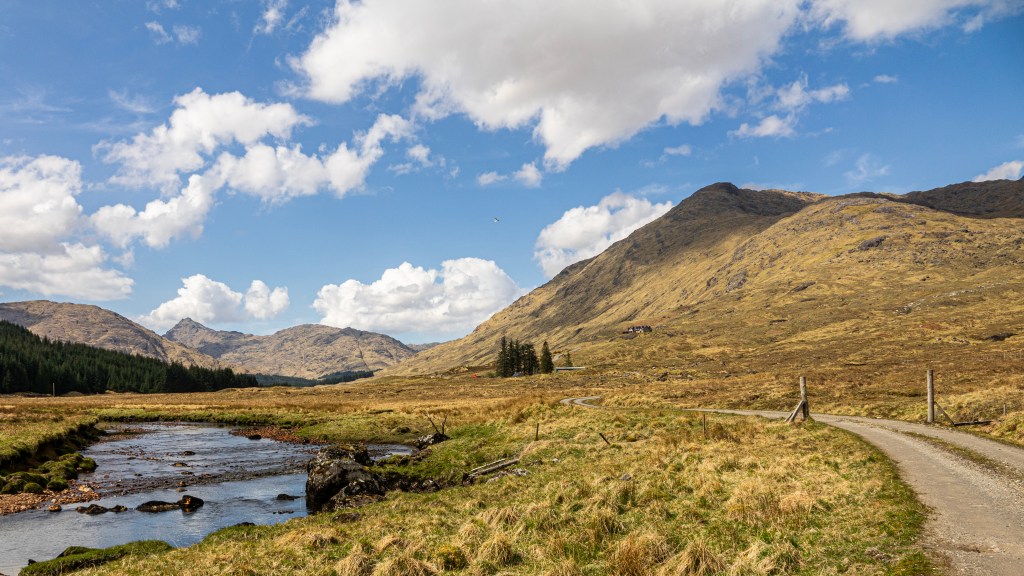
I stand quietly on the bridge over the River Dessary, enjoying the sunshine and the panoramic views. The mountains jostle close together, but at a distance. All I need do now is reach the other side of the bridge and pick up a path that twists back to the left, towards the west. I’m in good spirits, though a part of me wonders how far I’ve still got to go. But I can’t complain – I’m walking on a decent path, for the moment at least, and fairly flat. Unlike some people I know.
When everything fell apart on Culloden moor in April 1746, most surviving Highlanders were consumed by only one entirely reasonable desire: to get home to defend their families and lands. The prince himself, whatever abilities he may have lacked as a general, showed great personal courage, so the stories go (though he wasn’t the first royal to receive what might equally be a face-saving assessment), but was forced off the field by his Irish adjutant general, Sir John O’Sullivan, who knew a catastrophic defeat when he saw one. They fled west, deeply worried about traitors and hoping they could hook up with a French ship that would get them out of Scotland.
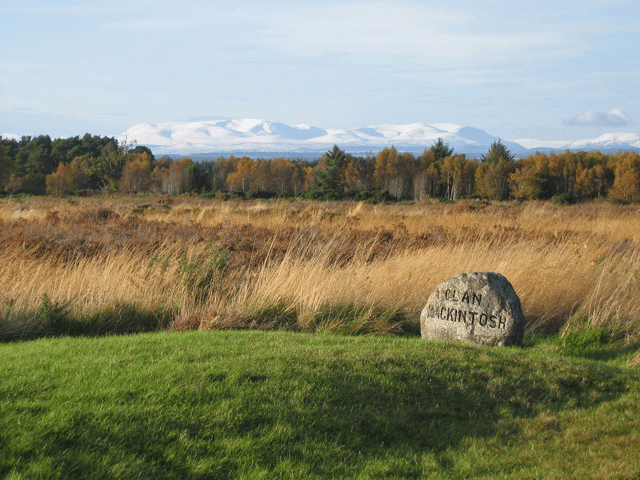
That would prove no easy undertaking. The government wanted this troublesome prince very badly indeed, putting up a ransom of £30,000 – the equivalent of at least £5 million today – so the possibility of a traitor in the Jacobite ranks was certainly not paranoia. No stone was to be left unturned in finding Charlie, as well as anyone else who had been, or was suspected of having been, in his army. As rumours spread that the prince was skulking out west, government troops were ‘planted in little camps pitched in a line from the head of Loch Uirn [Hourn] (I’ll reach Kinlochhourn in two days’ time) to the head of Loch Eil (which stretches west from Fort William towards Glenfinnan), being 27 in all.’ In other words, this red-coated[i] cordon cut right through my walk.
After a tense to-ing and fro-ing in the Hebrides, the prince decided to put himself in the hands of Major Alexander Macdonald of Glenaladale to lead him to a French ship rumoured to be heading for Poolewe, some 100 miles further north. This was around 18 July, some three months after the battle, while Charlie was staying pretty much where he’d started – at Borrodale House on Loch nan Uamh, sixteen miles west of Glenfinnan.
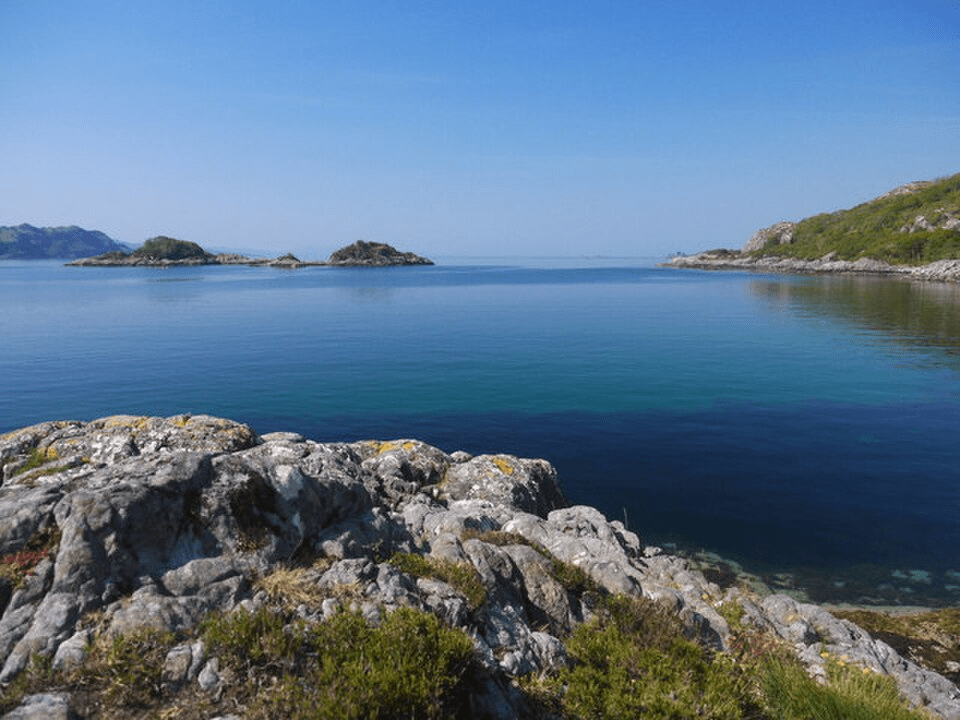
I wonder how Glenaladale felt when he received the prince’s letter. He was home now, a little to the south of Glenfinnan, on Loch Shiel. He’d received ‘three bad wounds’ at Culloden, one of which was still bothering him, and had not only a wife, but ‘five pretty weak children’ to keep safe, including his son and heir, three-year-old John. At least he didn’t have to worry about his ‘great stock of cattle’, for they’d already been taken by government soldiers. But the habit of loyalty to the house of Stuart ran deep and neither his own distressing situation nor even the thought of £30,000 could stop him from going off to do his best by his fugitive prince. But I wonder what his wife thought about her husband going to look after Charlie instead of his own family. If Glenaladale was captured with the prince, that would have meant the scaffold for sure.
By now the north-west coast was awash with naval frigates. It must have been difficult to know what to do, but in the end they decided to head east along the hills towards Glenfinnan. It was a small company, just the prince, Glenaladale, his brother John, and Borrodale’s youngest son, also John. Unfortunately, Glenfinnan itself was overrun with 300 government soldiers, so Glenaladale led his party east [and north] ‘under night till sunrise next morning, to the top of a high mountain laying between Locharkeig [Loch Arkaig] and Lochmoror head [Kinlochmorar].’
That lofty peak stands above me now – Fraoch Beinn, or heather mountain, though there doesn’t look like there’s much heather up there these days. They had been right to use darkness as cover. As they crept along the hillsides they could see fires coming from ‘a camp of the enemy laying on each side of us, and two different camps of the military before us.’
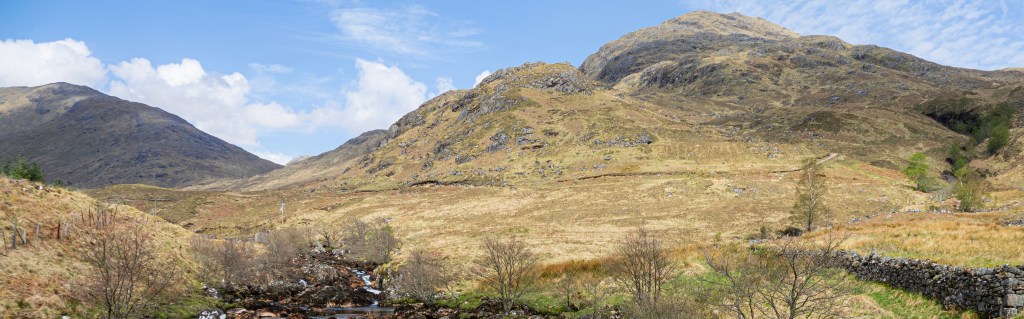
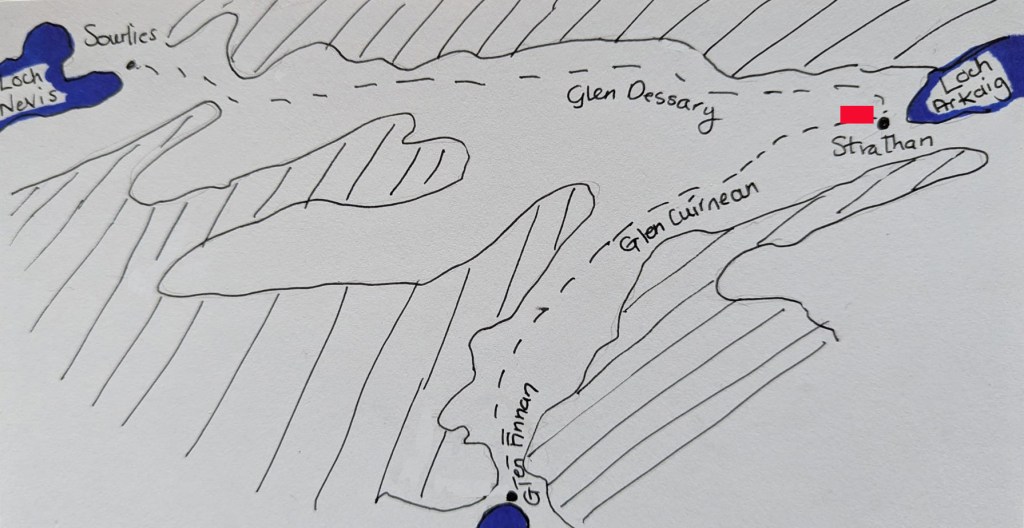
But were they safe even on Fraoch Beinn? To their consternation, they suddenly saw cattle on the move below them, a sure sign that men were on the move too. The prince and Macdonald of Borrodale scurried out of sight, leaving Glenaladale to investigate. But he quickly realised that these were ‘some of his own tenants removing with their cattle from the troops, who by this time, to the number of five or seven hundred, had come to the head of Locharkaig (several miles east/right of the picture), in order to inclose his royal highness in Clanranald’s country, while the search was going on very narrowly within it.’
This was bad news, but Glenaladale still planned on using the hills above Loch Arkaig to escape the noose being pulled tight around them. Before he made a move, however, he needed more information, sending one of his tenants back up Glen Cuìrnean and down Glen Finnan. And he sent another man to a nearby hill to fetch Donald Cameron of Glen Pean, who was sheltering there. Glenaladale was perfectly happy acting as guide on his own lands, but they would soon be heading out of them. And they would need to know every nook, cranny and track, however vague, if they were to have any chance of evading the enemy. Despite being an ‘aged gentleman,’ Cameron of Glen Pean was the best guide Glenaladale could think of.
As they waited, one of the Glenfinnan people milling around Fraoch Beinn, dismayed at seeing Glenaladale skulking about like a thief, brought him some milk. Since no-one knew the prince was one of the party, and wanting to keep it that way, Charlie threw a handkerchief on his head, something he had to do on a regular basis, so that he looked like a servant with a headache. Sadly no-one thought to throw down a portrait of him sous mouchoir, but we can perhaps conjure up an image of his stained, sweaty majesty in our own minds.
Poor Glenaladale, presented with this lovely cool milk on what was a very hot day, now had to graciously accept it, drink some but not so much as to leave nothing for the incognito prince, and get rid of the woman as quickly but gratefully as possible. This, as always, he managed. But there was more bad news brought back by the ‘express’ – the tenant sent to Glenfinnan earlier in the day. I am in awe of his fleetness of foot, having just completed half of his journey in more than four hours. Admittedly he wouldn’t be carrying much more than a dirk, but he couldn’t just take the obvious route straight down the middle of the glens for one very good reason, the news of which he now carried with him. He had raced back, only just ahead of ‘a hundred of the Argyleshire militia [who] had come to the very foot of the hill where his royal highness stayed.’
It was time for a very sharp exit, even if they were still missing their guide. Thankfully after two hours hard walking after sunset, they miraculously bumped into Cameron of Glen Pean, who told them what he knew about where the troops were camped and agreed to guide them round the enemy. Now they, like me, were headed towards the rough, even more mountainous country of Knoydart.[ii]
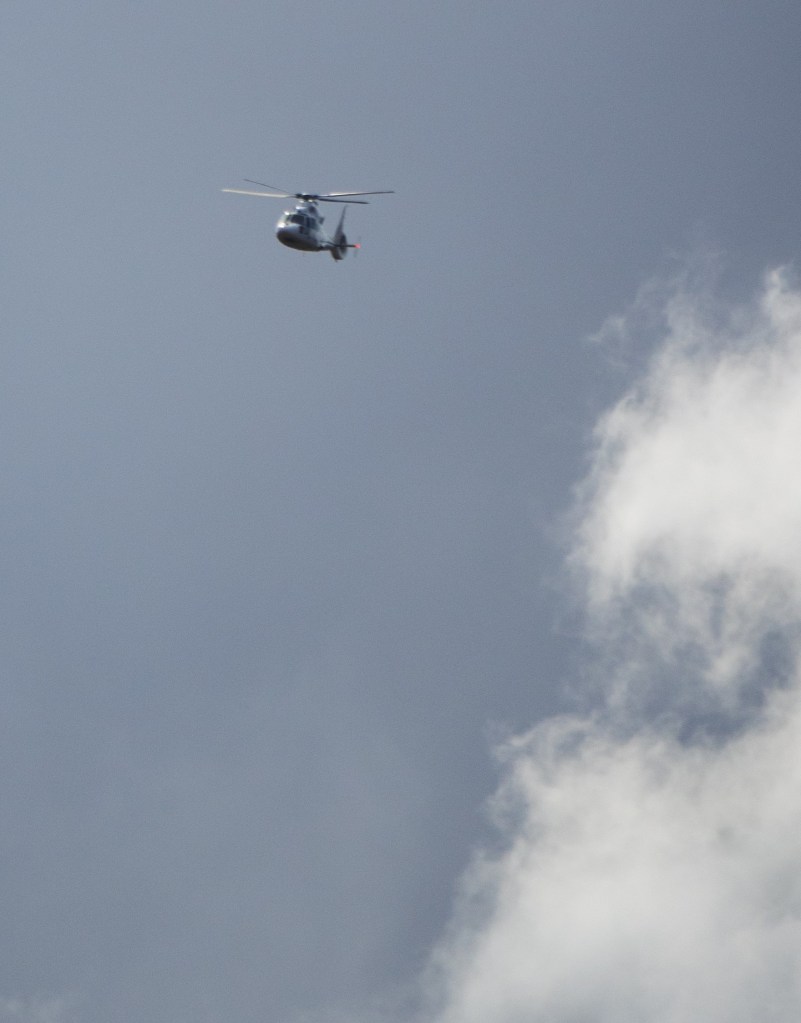
If I turn round and look up the way I’ve just come, perhaps I might see some bright red shadows moving swiftly through the pale greens and yellows of Glen Cuìrinean. As inhabitants of Argyll, these militiamen were highlanders too, and well-used to such terrain. For them, it was surely only a matter of time before they got their hands on the Young Pretender, as they called the prince. A helicopter drones towards me, bringing to mind a James Bond movie or John Buchan’s Thirty Nine Steps.[iii] The odds of Charlie getting out of his current sticky situation were pretty low indeed.
It’s time for me to move on too. After crossing the bridge, my road twists back to the left, heading west along the river. This is Glen Dessary, which begins pleasantly enough. The story goes that ‘Bonnie Jeannie’ Cameron, whose family held these lands, brought their men to Glenfinnan riding a white horse and wearing a fetching green jacket. An eye-witness described her as ‘a widow, nearer fifty than forty years of age.’ But she was clearly eye-catching for all her lack of youth, for he goes on to say that: ‘She is a genteel, well-looked, handsome woman, with a pair of pretty eyes, and hair as black as jet. She is of a very sprightly genius, and is very agreeable in conversation.’ But she doesn’t seem to have marched with the army and probably didn’t meet the prince, which could be viewed as disappointing. Be that as it may, what I find most interesting about her is the likely reason that she didn’t ride any further than Glenfinnan, for she was acting as factor for her sick brother, administering the family estates. This was a woman of energy and ability, who may not have had much of a role in the great national drama, but who was exceptional all the same.[iv]
I pass yet another pristine hunting lodge offering ‘a unique memorable experience of a Highland Scottish Estate in a wilderness location whilst experiencing the comfort and amenities of 21st century living. The Lodge is set in a private and magical setting amongst the Estate’s 15,000 acres of stunningly beautiful mountains, rivers, and lochs.’ Now the ‘eagle, the raven, the hill fox, and the red deer have their home,’ though the human imprint is still here, if a little harder to find after the first mile or so.
I’m now following the line of an old drove road, and will keep following it until I finally take off my pack down by Loch Nevis. But this wilderness is just the latest incarnation of a place with a long human history, one that those who fought for Prince Charlie believed they were trying to protect, but which was already in the grip of irrevocable change, albeit slowly and painfully. A survey done some thirty years after the rebellion shows the clachans of Glackfern, Shanaval and A’ Chuill (now a bothy and meaning ‘a nook’), along with the arable and pasture and moorland that sustained them. In 1803 Donald Cameron was a drover living in Shanaval. Thirty years after that, a map of 1832 shows a stage house near the Strathan barracks, the house at ‘Coull’ (A’ Chuill), and three places – Invernanalt, Tamnanowack and Shanavall – that no longer seem to have had any buildings on them. [v]
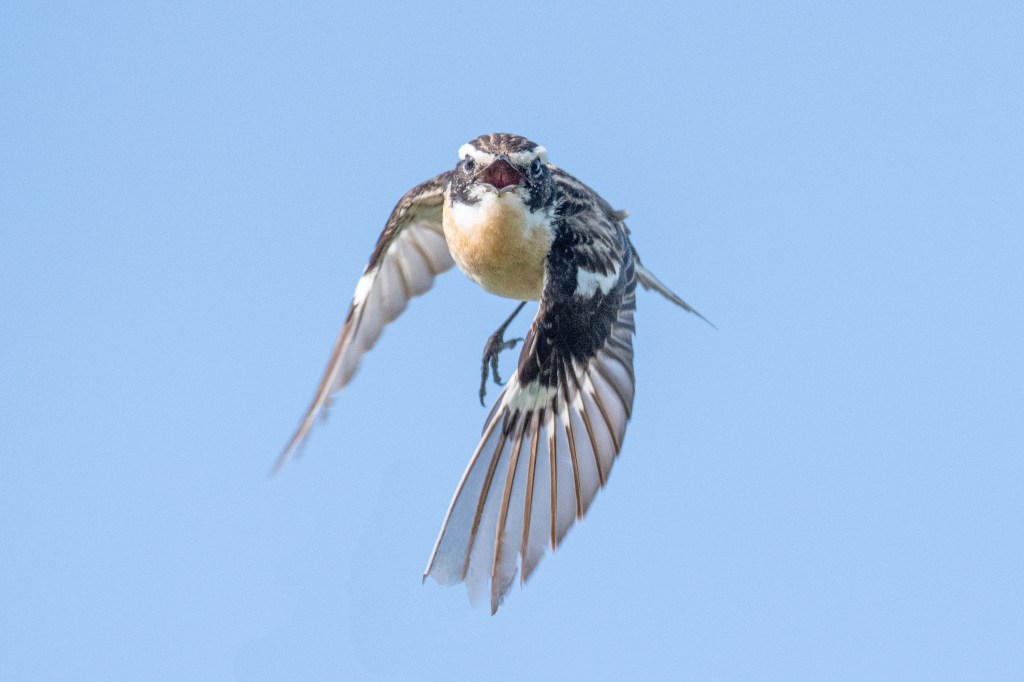
I pass the only farm in lower Glen Dessary, though I can’t see any sheep or cattle scattered across the hillsides. Instead whinchats click and trill as they swoop from fence to gorse. A snipe flies off in silent alarm. It’s easy enough walking, until I reach one last lonely cottage that marks the end of the road. There’s a helpful sign pointing me to a little path leading up behind the cottage – ‘Sourlies, 4 hours.’ It’s two o’clock now. That seems like an awfully long time. A little later I spot A’ Chuill bothy in the trees to my left on the other side of the river, beckoning me over.
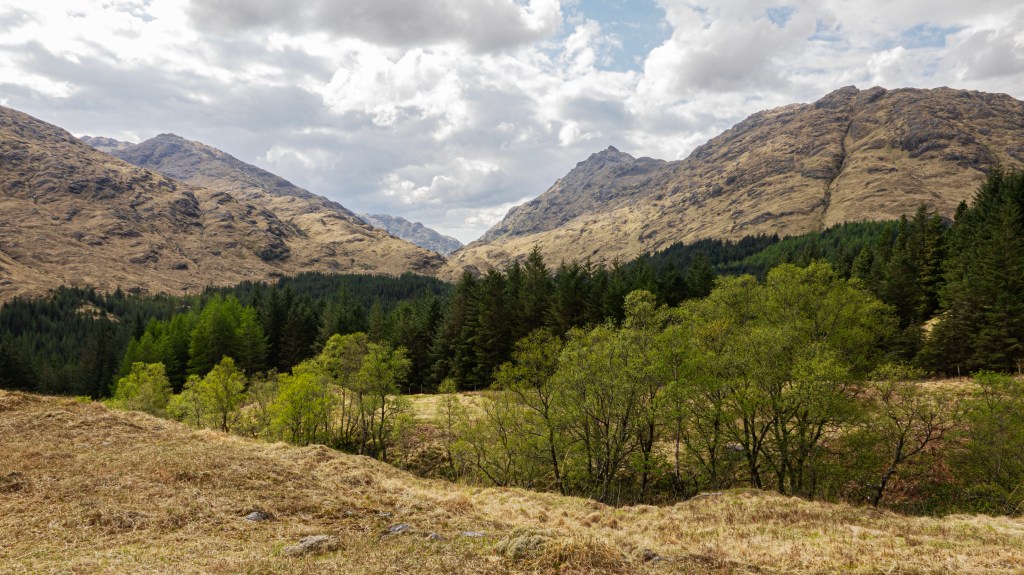
It’s still 7 miles (11 km) to Sourlies so it’s tempting to go across, to end today here. My feet are not painful exactly, but irritating. And I’m very tired. But if I stop now, that leaves 15 1/2 mile (25 km) walk through the infamous Rough Bounds of Knoydart tomorrow. I turn my face away and press on. It’s less easy going now, the path often little more than a series of footprints through dessicating bog. Long dark blocks of forestry shadow me to the left, which I find gloomy, especially as the clouds seem to be building. At least a break between blocks shows off the jagged peaks of Glen Pean in the distance. The forestry looks so similar, I begin to wonder if I’ve stumbled into a hellishly repetitive time-warp from which I’ll never escape.
But suddenly a young man strides towards me. We chat briefly. He’s as nearly finished the Cape Wrath Trail as I am nearly started. ‘It’s about three, four hours to Sourlies,’ he tells me. ‘Don’t worry. You’ll make it.’ And off he trots.
I nod, glad to have seen someone else. But as we move on, his words start to rankle. I know he only meant to be reassuring. But I doubt very much he would have said such a thing to a bloke and I’m far too old to be patronised by someone half my age. Oh, well. I soon meet another man, older this time, with a melodic highland accent. He’s not a Cape Wrather, but is seriously impressive, having knocked off a number of Munros in the area. He is exactly the kind of person you want to meet out on the hills: dedicated, friendly, boundaried. I ask if he’s seen anybody else going my way. ‘Oh, yes,’ he lilts. ‘Three. All women.’
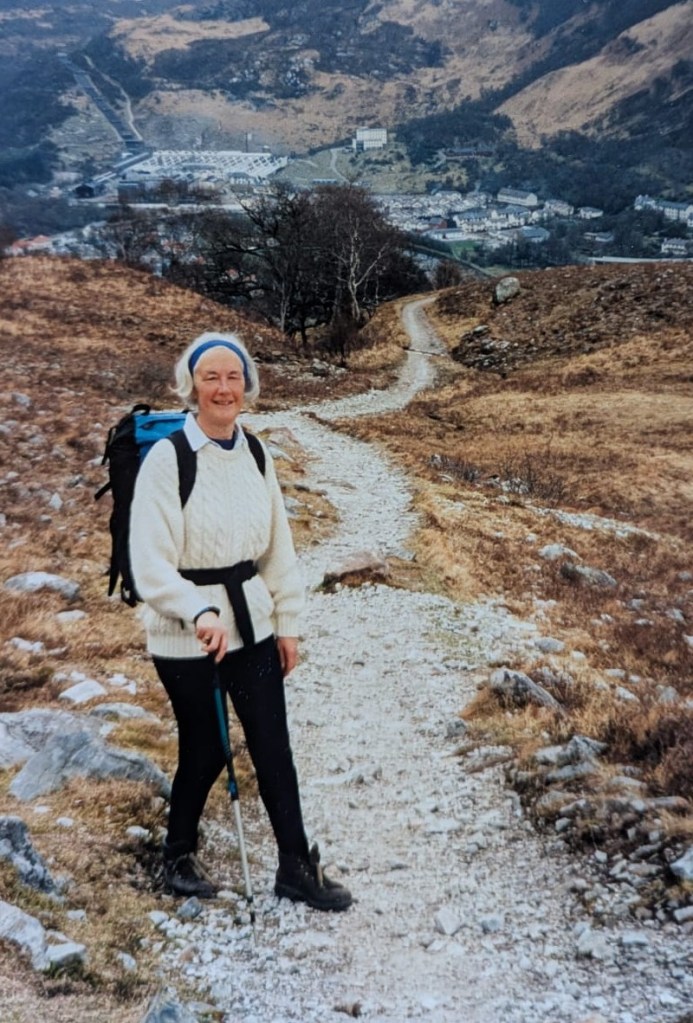
Excellent. I’ll presumably meet them at Sourlies. I’ve definitely got to the ‘are we there yet?’ stage, with sore feet and nothing particularly interesting to distract me. I think of mum, nearly thirty years ago, when dad dropped out of the West Highland Way and we went on. It was a tough first full day for her – twenty-one miles from Bridge of Orchy to Kinlochleven up and over the Devil’s Staircase.
She’d asked me if she should wear walking boots or trainers, me being the mountaineer and all. I had advised boots. In those days there was nothing in between and trainers were neither waterproof nor designed to protect ankles. But having already done a good fifteen miles, the steep descent of the Devil’s Staircase was causing her toes to bash against the front of her boots. She made it perfectly clear she wished she’d never listened to me.
When we finally got to our bed and breakfast in Kinlochleven, she immediately lay down on her bed and I wondered if there was maybe a wee shop to buy crisps or something. But after five minutes with her face turned to the wall, she sat up. ‘Come on, we need to get something to eat.’ We could see a pub about 500 metres away, across the other side of the primary school. Since we were starving and one of us at least was absolutely knackered, through the school we went. But within a few metres of our destination, the way was barred by a high fence and a locked gate. Thankfully mum was in resigned, giggling mood and we retraced our steps to go round the long way.
We arrived at the pub at 8.55, five minutes before they stopped serving food. Never have fish and chips and a half pint of cider tasted so good. But we also enjoyed the shared adversity we’d just overcome together. She was fifty-six, a few years younger than I am now, and in her final few years as a lecturer at a technical college teaching food and nutrition. That was the first time we’d been on an expedition just the two of us. It wouldn’t be our last.
When I told her I wanted to do the Cape Wrath Trail, she tutted before she could stop herself. ‘Oh, Fiona,’ she said, in the way only a mother can, part exasperation, part pride. And despite the fact that she really wished I didn’t stuff my head full of this kind of potentially dangerous nonsense, she paid for some of my kit and listened to my copious training day tales, my self-inflicted worries. But I know she was very relieved when I decided not to do it those first couple of times.
I scramble down a steep path and cross a burn before hauling myself back up again. The forestry has come to an end at last, though now the peat has been forcibly churned up, probably by a quad bike. I take a rest, glugging down the water I’ve forgotten I need much more of. The clouds are still gathering, subduing the light if not the heat. The landscape is changing too, rough pasture giving way to something more elemental, great boulders standing sentinel in the landscape.
The remains of an old building suddenly emerges out of the background, its remaining stones painted with lichen. There’s not a trace of mortar or cement holding it together, but three or four layers of it are still standing after who knows how many centuries. A small burn runs alongside, but I have no idea what the structure itself might be. A house? A mill? An inn to satisfy the needs of thirsty passing drovers?
It doesn’t exist on any map, suggesting no intrepid Ordnance surveyor ever came this far into upper Glen Dessary. Nor is it noted by the archaeologists and historians of the Royal Commission for the Ancient and Historical Monuments of Scotland,[vi] who scoured the country looking for any kind of historical debris left on or in the soil that might indicate human activity. A writer who passed this way in the 1930s mentions shielings near the track. But it seems far too large, too substantial for a structure usually put up and taken down on an annual basis, timber-framed even if sometimes attached to foundations of stone.
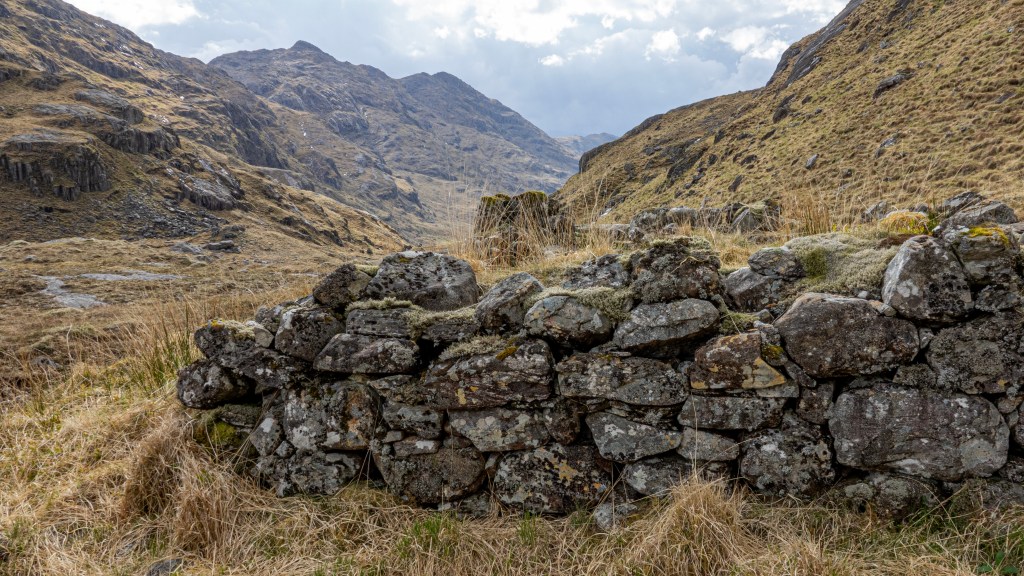
It’s easy to see this as a lonely place, but I know, not least for having followed the prince about this morning, that there was far more coming and going through these glens in the past than we might imagine. It’s only those who walk for pleasure who come here now, whether for the high tops or the valley trails. It’s true that this part of Scotland was unnaturally crowded back in 1746. And those trying to avoid government troops had good reason to spirit themselves away through mountainous tracts they knew even in the dark.
But in more peaceful times, they still flitted from glen to glen, plying their trades or helping out at various points in the agricultural cycle, bringing messages and gossip, visiting friends and relatives, following a tune or a story or a drop of whisky. And moving their cattle along the drove road. Walking was natural and took as long as it took. If darkness proved too unyielding, you just wrapped yourself up in your plaid for the night. Even Glenaladale, a cousin of the chief and an important man in his own right, would do it if he had to. And now he had to.
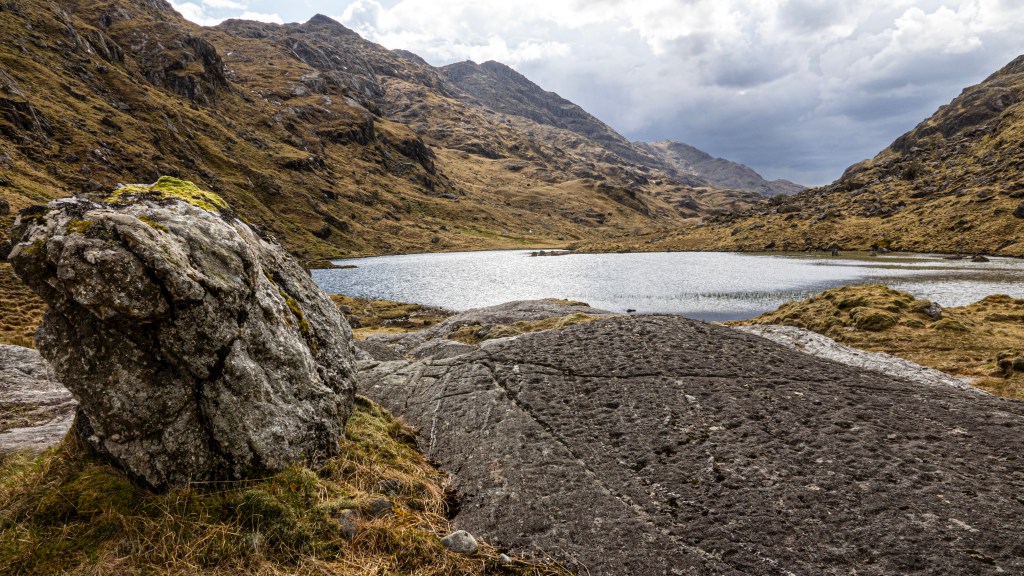
I am in the heart of the Màm na Cloich’ Airde – the pass of the high rock. And the track certainly dodges round stony spurs tumbling down from the surrounding hillsides. Around a century ago, three cairns once hunched over this important byway, though I can only see one now, gnarled and patched with moss. The three marked the boundaries of the lands belonging to the chiefs of Lochiel, Lovat and Glengarry. Lochiel’s was the biggest stone, which perhaps tells us something about that family’s ambitions or may be entirely coincidental. I move on, away from the Camerons and towards the Macdonalds, this time of Glengarry, though it’s another branch of that family, the McDonells of Barrisdale, who will shadow us through Knoydart.
[i] Soldiers in the British army in this period wore scarlet uniforms, which gave them their name, redcoats
[ii] Robert Forbes, The Lyon in Mourning, ed., William Paton, (Edinburgh, 1895), volume 1. I’ve pieced together this version of the prince’s wanderings from two accounts, one written, at least in part, by Glenaladale himself, and the other by John Macdonald of Borrodale, both of whom were actually there. But that doesn’t mean they agree in the details, though the general gist is clear enough. Since both accounts were written some time after the events they describe, it’s not surprising that memory started to play tricks
[iii] I believe the aircraft in The Thirty-Nine Steps was actually something called a monoplane, but I’m prepared to overlook that
[iv] https://blog.nationalarchives.gov.uk/jeannie-cameron-and-the-case-of-the-three-jennys/; Robert Chambers, History of the Rebellion, 1745-46 (1847), p.215, note 1
[v] E786/50; CS271/573; https://maps.nls.uk/view/190781191; John Prebble, Culloden (London, 1978), p.168; Paul Gordon Seton, The highways and byways in the West Highlands (Edinburgh, 1995), p.133
[vi] The Commission merged with Historic Scotland in 2015 to become a new executive non-departmental public body called Historic Environment Scotland
 The Other Side of Wild: Walking through Time and Space on the Cape Wrath Trail
Leave a comment