

I’m quite wrong. It really is cold at night. I’m wearing a thermal top and leggings, as well as my jumper, so I don’t notice to begin with. It takes me a while to get to sleep, but I was expecting that. Being in the tent always takes a bit of getting used to, and my body still seems to be working through everything I asked it to do today.
Eventually I drift off, lulled by the gentle shush of the river. I waken now and then, turning over and over, vaguely aware that I’m not quite comfortable. But inevitably I end up sufficiently awake to have that well-worn debate about going for a pee: will getting up make going back to sleep impossible for longer or am I just delaying the inevitable (you probably need to have reached a certain age to appreciate the niceties of that)? I decide to get on with it.
Outside, it’s nose-bitingly cold, but the upside is the incredible sky. I have never seen so many stars. If they’re not careful they’ll join up and become one single iridescence, night turned to fluorescent light. I linger for a while, gazing upwards, trying to memorise this slice of infinity, comfortable with my own cosmic insignificance.
Back in the tent I grab every piece of clothing and wrap them round myself. My sleeping bag is supposed to cope with minus numbers but it’s all not quite enough. The night passes in pockets of sleep mixed with wakefulness. I hear the birds serenading the new day, light tugging at the edges of my sleep mask. Sunrise is already a little before six, galloping towards the short summer nights. I wake properly at seven.
I feel okay. My training has given me well-seasoned legs, rather than the creaking pins I woke up with after my first big outing with a pack on my back some five months ago. I feel rather pleased with myself. But it’s time to boil some water to give a coffee bag a try for the first time. It’s nothing like any kind of coffee I’ve become used to, but gives me a sufficient kick to make it worth repeating. I move onto porridge, forcing myself to eat a small pan-full. After last night’s semi-fail with the chicken tikka, I know I need as many calories as I can swallow to keep me from running on empty today.
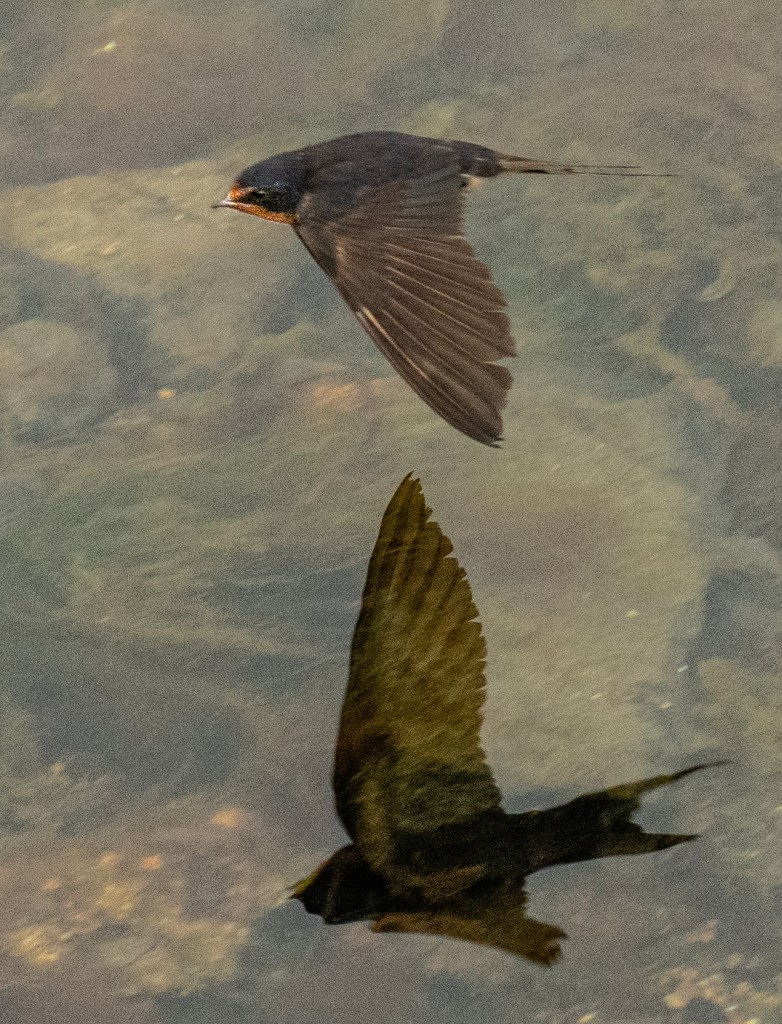
It’s still cool, but with a hint of riotous sunshine behind the deep breaths of cloud above. The grass, the woods, the broom crowding up the hillside – it all looks glossy, brand new. Swallows already skim through the trees, a cuckoo back on call. I wash my breakfast stuff in the river, keeping an eye out for my lost glasses. It’s most bemusing, but I’m fairly resigned to the idea that I’ll have to leave without them. I pat my pocket, just to be extra sure my spare, my only, pair is still in there. It is, and so is Lorna’s cross. They both suggest I get on with it.
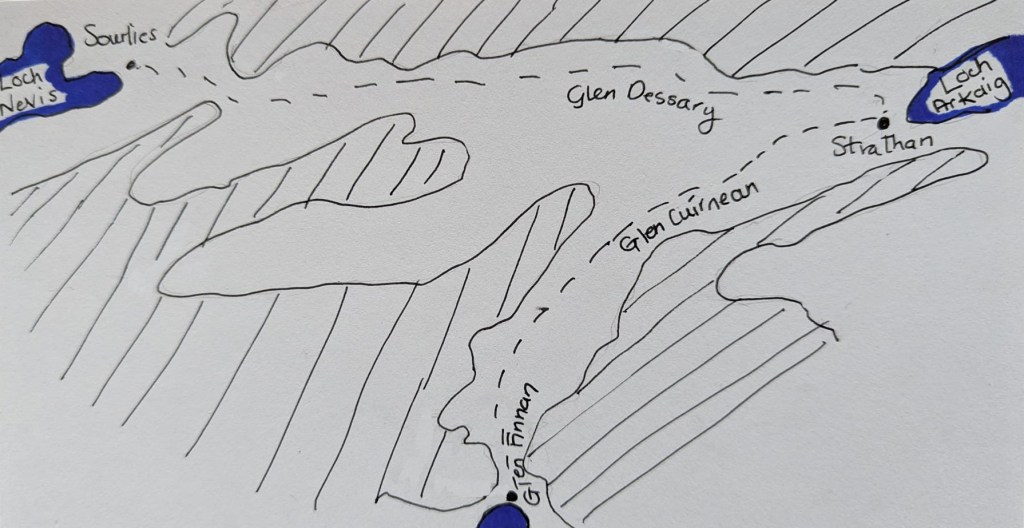
Slowly packing away all the stuff inside the tent, then the tent itself, I enjoy the leisureliness that comes with an early start, a full day’s walking instead of yesterday’s late march. I hear some German murmuring, then a tousled head peers out of the other tent. I tell her I have repented of my scepticism about the cold. She laughs and heads for the river. I wonder about my day ahead. It’s 18 1/2 miles, so another fairly long one, but straightforward enough in terms of navigation. Up this glen, down the next, cross the River Pean, then the River Dessary, turn left and keep going until you hit Loch Nevis.
I hoist my pack onto my back. I have a cut on my right hip and a rub mark on my left one, despite the homemade padding I tie round my waist to sit under the belt of my rucksack. It’s perfectly manageable, but I wonder if it’s me that’s weird. My high-tech solution to rucksack rubbing also includes cutting a sponge in half and sewing the pieces under the top of the shoulder straps. Unfortunately the sewing hasn’t even made it this far and the sponges pop out every time I take the pack off. For some reason I find this funny.
I say goodbye to the Germans, wishing them well on the West Highland Way. I can hardly believe I’m wearing only a t-shirt at 9 o’clock in the morning. In April. In Scotland. It’s a pleasant walk up the glen, the lower flanks of the mountains pressing close on all sides. A huge hunting lodge sits high up ahead of me, bristling with windows, two side wings flanking a large glazed entrance room. The stonework is pale, well-scrubbed, but the whole thing looks like a suburban behemoth. As with Conaglen House, you can stay here too, and there’s always the possibility of using the estate as a film set location. But I haven’t seen any film stars yet.
In fact, there’s no-one about at all. Yesterday, time flew by because Chrissie and I had so much to chat about. Today it’s just me. I don’t mind my own company. To be honest, I spend my working days almost entirely inside my own head, conversing occasionally with the dog and the cat, and Nick when he strolls through to the kitchen to attempt – rarely very successfully – to drag me out of whichever century I’m currently inhabiting.
I’m half-hoping this trip, the lullaby of walking, will unleash something creative in me, pointing the way to an exhilarating topic as my next-but-one book, whether fiction or non-fiction. If I really must turn sixty – the same age as dad was when we walked through the Cairngorms together – then I haven’t got all the time in the world. That’s not something I feel. But it’s something I know to be true. Sure, Dad lived for another thirty years, but the last fifteen years or so were in diminishing health. It crosses my mind that all this excessive walking might be my way of avoiding the mistake he made in not exercising much to compensate for the slow but inevitable dwindling of his youthful strength. I don’t think so. I may have felt many things in the run-up to my departure on the trail, but I don’t think you can get this far doing it for the sake of it.
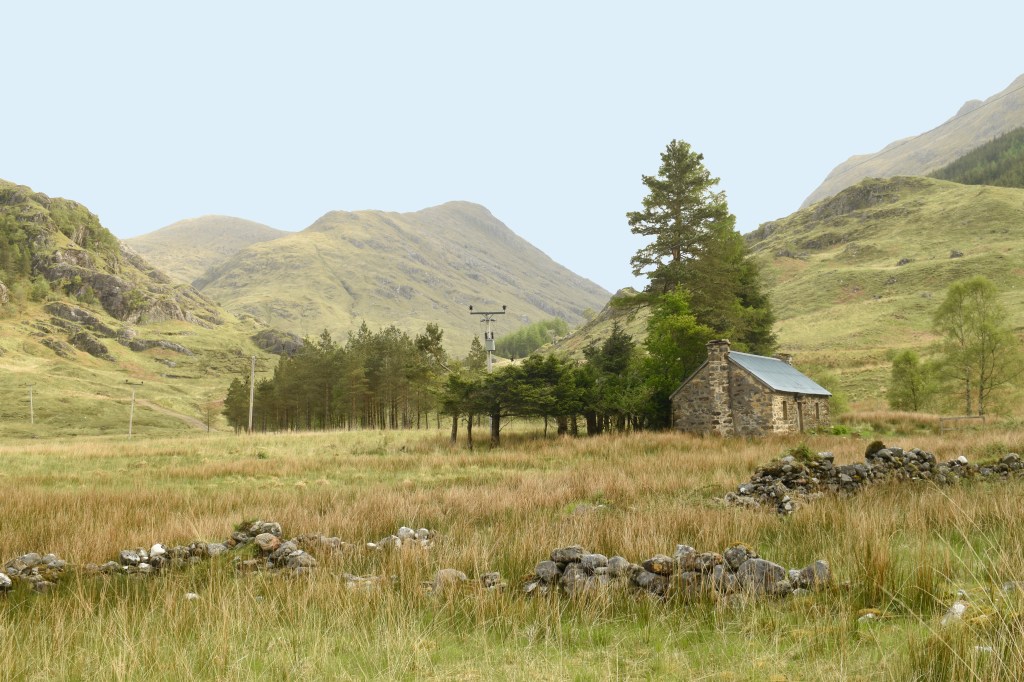
Turning right, I soon come upon Corryhully bothy, a sturdy stone-built refuge with two little windows and the bulge of a chimney at its left-hand gable end. The roof looks new. I decide to take a peek inside, startling the couple making their preparations for departure. The woman offers me a tangerine and I’m touched by her generosity. She smiles. ‘Less to carry,’ she says, deftly putting me in the position of supposedly doing her a favour. It’ll certainly be less beige than the rest of my food.
Up ahead, the track begins its determined ascent between two peaks and I’m eager once more to see what lies ahead. It soon narrows into a path, but it’s dry and easy enough. As I get higher, I turn to see what’s behind me. Glen Finnan has fallen away, submerged beneath the great mountains that tower over it. It’s impossible, from down in the glen, to even know they’re there, never mind comprehend their majesty, the poetry of their flawless contours. But now they thrust themselves at me with nothing to hide on a day like this.
The high tops may have held little interest for those who lived here in the past, but they would have had a detailed knowledge of the landscape now spread out all around me. Failing to pay attention risked famine, attack, death. A river that might suddenly burst into spate probably had a vengeful goddess living in it. A particular corrie might be where deer tended to gather, especially during the snows of winter. Another spot might nurture plants useful in curing a fever or as balm for a wound. A secluded cave or thicket might harbour thieves and other ‘broken men.’ Few of us now can read a landscape like our predecessors used to.
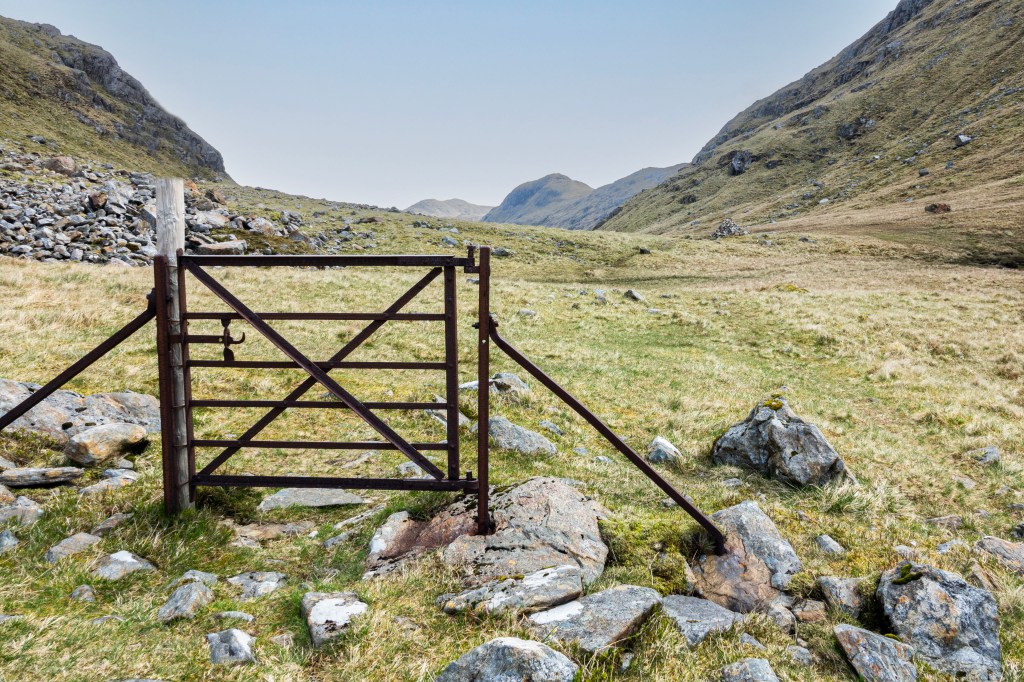
I reach the bealach, passing with a smile through a gate that is no longer attached to fence or wall. But it is a liminal space all the same, another face-off between landowners that might mark a tense potential trigger point between enemies or a porous passing place for friends and relations. I presume the lack of a fence means the land on either side is now owned by the same person. At least in Scotland, since the parliament in Edinburgh passed the Land Reform (Scotland) Act in 2003, we have the right to roam where we please, so long as we behave responsibly and observe a few restrictions. We are incredibly lucky. Only a handful of places – most Nordic countries and the Baltic States if the landowner doesn’t object – can say the same.
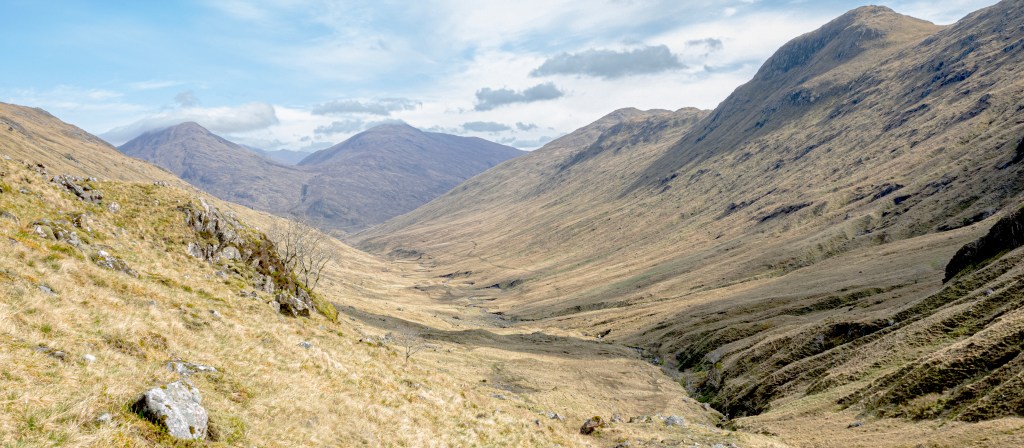
It’s getting hot as I reach the far end of the bealach and look down Glen Cuìrnean. The view is immense and I’m a little giddy from the way it throws itself away from me for such a distance, a vast carpet of washed-out greens and tawny yellows against a distant backdrop of mottled greeney-blue peaks. The lack of rain these past few months is taking its toll, however glossy the new shoots and buds on the valley floors, but at least it’s not likely to be particularly muddy. It’s easy to imagine this glen in more usual times as a mess of slimy treacherousness. But what strikes me most is how bare it looks, how empty. A patchwork desert.
This is Cameron country. If, at the bottom of Glen Cuìrnean, I were to turn right instead of left, I’d soon hit Loch Arkaig at the eastern end of which lies Achnacarry, Lochiel’s home. And now the ghosts of hundreds of Camerons, from Loch Arkaig, Glen Pean and Glen Dessary, push past me, eager to get to their prince, the Cameron pibroch assaulting the air, urging them on.[i] Some of the older men, those in their fifties, might have grumbled at being asked to turn out for the Stuarts again, remembering the abortive uprising of 1715 shortly after George, the Elector of Hanover and great-grandson of James VI and I, had ascended the thrones of England and Scotland, marking the end of the Stuart line of kings and queens. Others may well have felt grave misgivings at such a desperate throw of someone else’s dice, though Lochiel had given his tenants little choice but to come with him. Still, I imagine once they got to Glenfinnan, when they saw the growing body of men and a few women thronging the lochside, caught a glimpse of the dashing young prince on his ‘pretty gelding’, they might have been caught up in the excitement of it all.
They were right to be fearful. The rebellion ended with death and the deliberate destruction not only of homes and livelihoods, but much of the legal basis for the power clan chiefs had wielded for so long, particularly over justice and the raising of fighting men. Though many chiefs were already well aware of the commercial possibilities of their estates – timber and fish and livestock to be sold, rents to be put up so as to generate more disposable income – the rapidity of change after the disaster at the battle of Culloden in April 1746 was surely bewildering. But perhaps if the Bonnie Prince had never come, or been sent away by the men of sense, the rebellion and its aftermath wouldn’t have left such a scar, one that was scratched even deeper into Scottish history by what the clan chiefs did next.
But it’s shaping up to be another beautiful day and I’m content to let the ghosts pass by. Meadow pipits bounce through the air, unconcerned with human history or politics, but alarmed by the sight of this great beast lumbering down their glen. I suppose they have nests and eggs hidden within the grass, though I’m following bare patches that make tracks of sorts. The unleafed skeletons of a few trees linger on rocky outcrops, a hint that once this might have been a more wooded place.
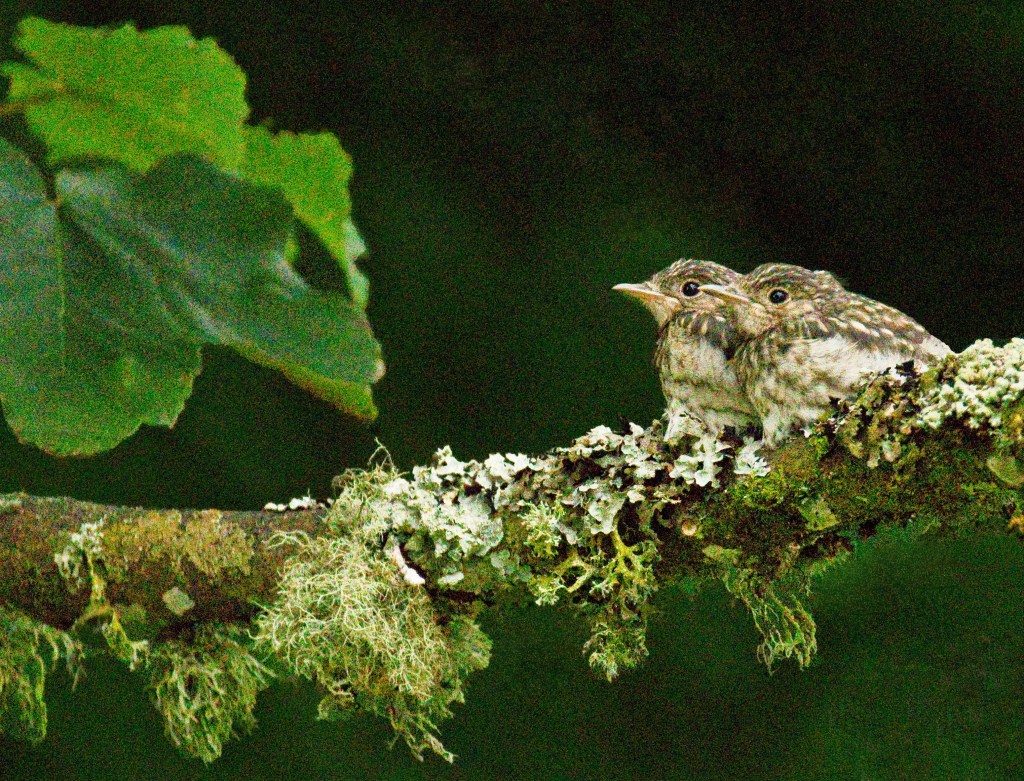
The guidebook – which errs on the side of terrifying potential Cape Wrathers, presumably in the interests of deterring the naïve – points out a good place to cross the river Cuìrnean further down. But in these strange dry times, I can cross anywhere. Skipping over as soon as I reach the river, I stop for a moment to stare through the white froth to the peat-infused glow beneath, everything from a dark chocolate brown to burnt orange. The water is so clean and clear, I can’t imagine it looked any different in 1745. Looking back up the steep incline I’ve just negotiated, a Mediterranean sky smudged with thistledown presses upon the sharp V of the bealach. It’s said that the day the prince’s standard was unfurled, the rain poured down, which would put a completely different complexion on things. But perhaps that was a bit of poetic licence, a forewarning of the tears to come.
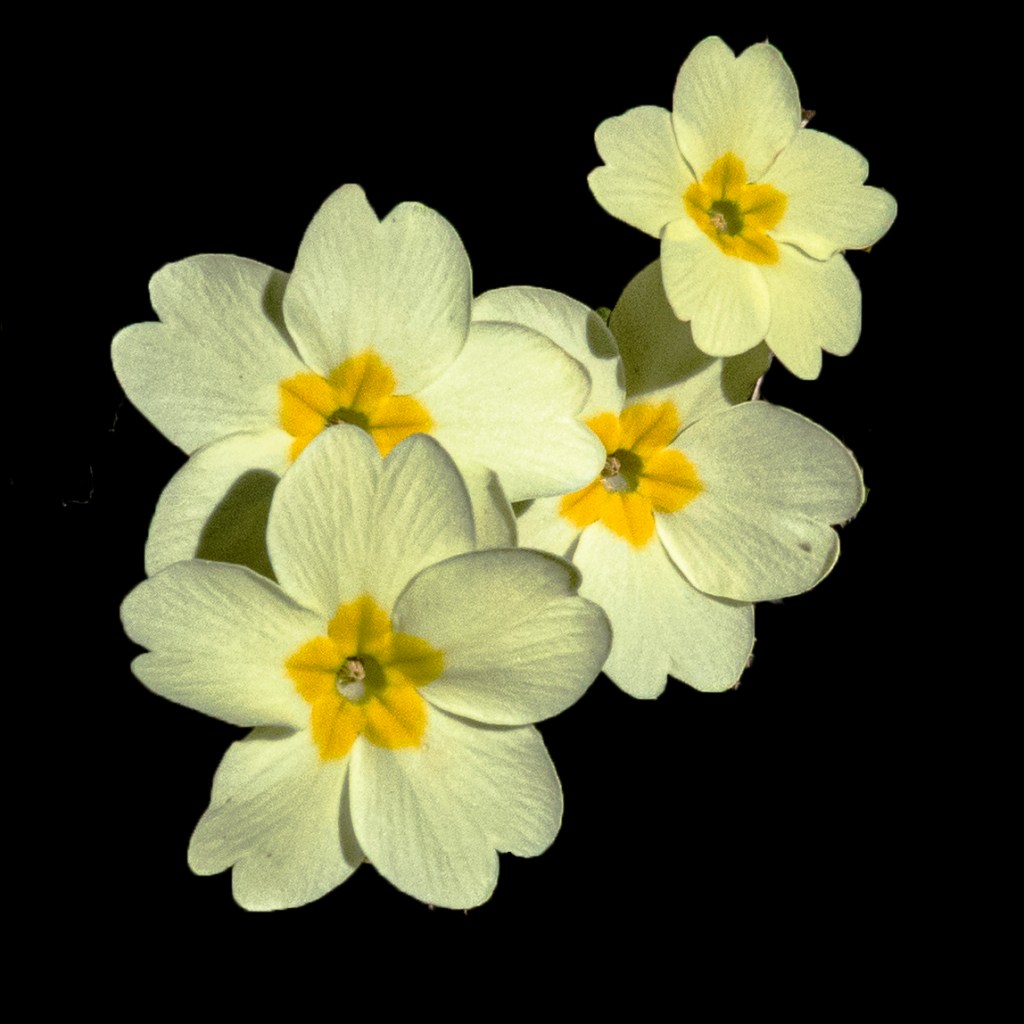
Despite the drought, it’s not easy to walk through the rough grasses spread across this vast peatbog. I want to hasten on, as we’d done yesterday, but know that wouldn’t be wise, that it’s better to arrive in one piece than risk a twisted ankle for the sake of half an hour or so. But at least keeping a careful eye on the ground lets me see there’s more to this landscape than I’d imagined, looking down the bland, pale sweep of it from the bealach. Primroses cluster on the sides of burns chattering down the hillside towards the main river. Snow-white wood anemones peek out of the moss beneath the grasses, their shot silk petals still perfect. Like the forlorn trees higher up, they too betray the ghostly presence of an ancient woodland, the earth doing its best to protect its treasures, clinging to nature’s ingredients so they might run riot once more, when the time is right.
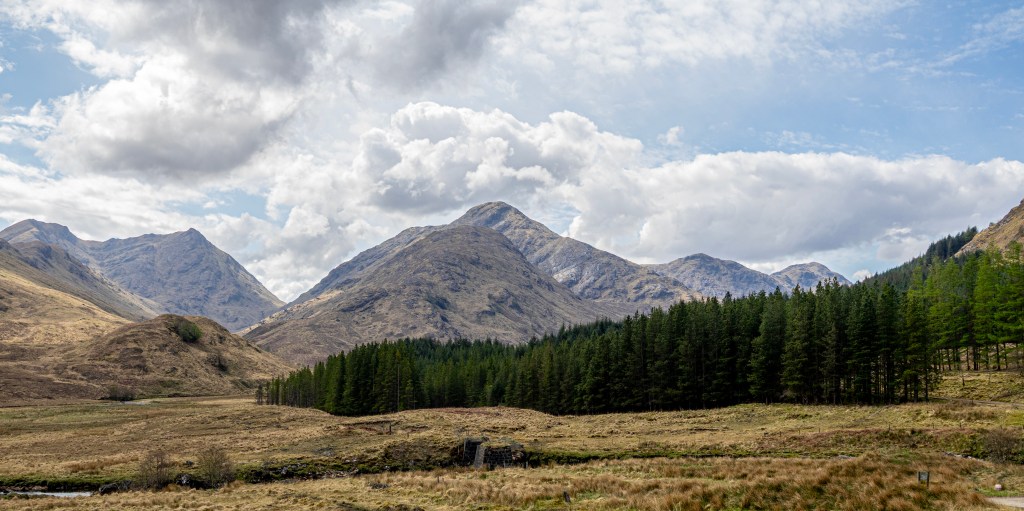
At last I reach the bottom, heading towards the first bridge across the river Pean, the glen of the same name stretching away to my left, mountains lining up on either side. I need a drink. I’ve also been feeling some discomfort in my right foot that I need to deal with sooner rather than later. Sitting down on a rock, I look back up towards Streap’s pointy summit at the top of Glen Cuìrnean. I take long gulps of water and realise just how thirsty I am. I’m grateful too for the gift of the juicy tangerine.
I take off my right boot and sock to reveal a line of blisters camped out on the top of the last three toes. I wasn’t expecting blisters in these boots, but at least I wasn’t foolish enough to neglect to bring padded plasters. Wrapping them up brings some relief, but I remind myself that I also need to keep things clean under there. Crossing the bridge over the River Pean, I head into a dense forestry plantation, unusually glad to be out of the full glare of the sun. And I’m soon on a good track, the kind that allows for some serious stomping. Ignoring the one that bends off to the left en route to A’ Chuil bothy, I follow the main track that heads east over the River Dessary via another, more substantial, bridge.
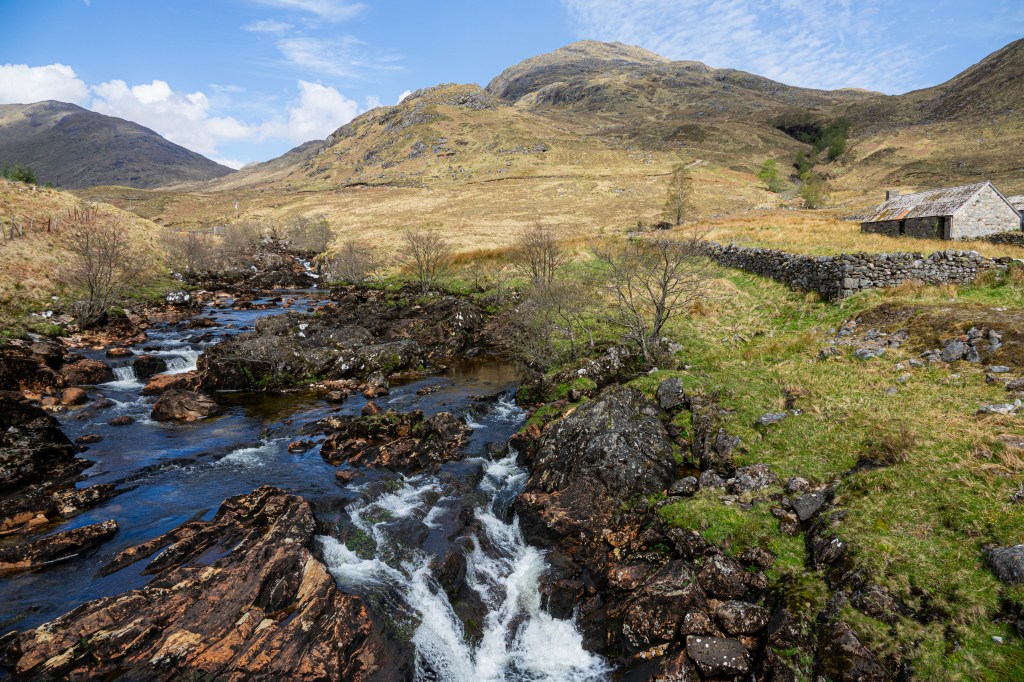
On the far side of the bridge lies Strathan, a tiny scatter of houses, though only the modern one looks lived in. In the 1870s there was a shepherd’s house here, occupied by a Mr Duncan Inglis. If I kept going along this road, I’d hit Loch Arkaig, but before then, I might spot a few piles of mossy stones that is all that remains of the tigh nan saighdearan [soldiers’ house]. It was tiny, more of a sentry post than a traditional barracks. Still, the presence of government troops so far west in what was once deemed wild, inaccessible country to those who didn’t live in it, speaks volumes about the government’s determination, after the defeat of the Jacobites, to ensure such a shocking, dangerous threat to the British establishment could never happen again. I glance back up the way I came. Now a few ghosts are following me and this time, they’re certainly in a hurry.
[i] John Prebble, Culloden (London, 1978), p.67


Leave a Reply