

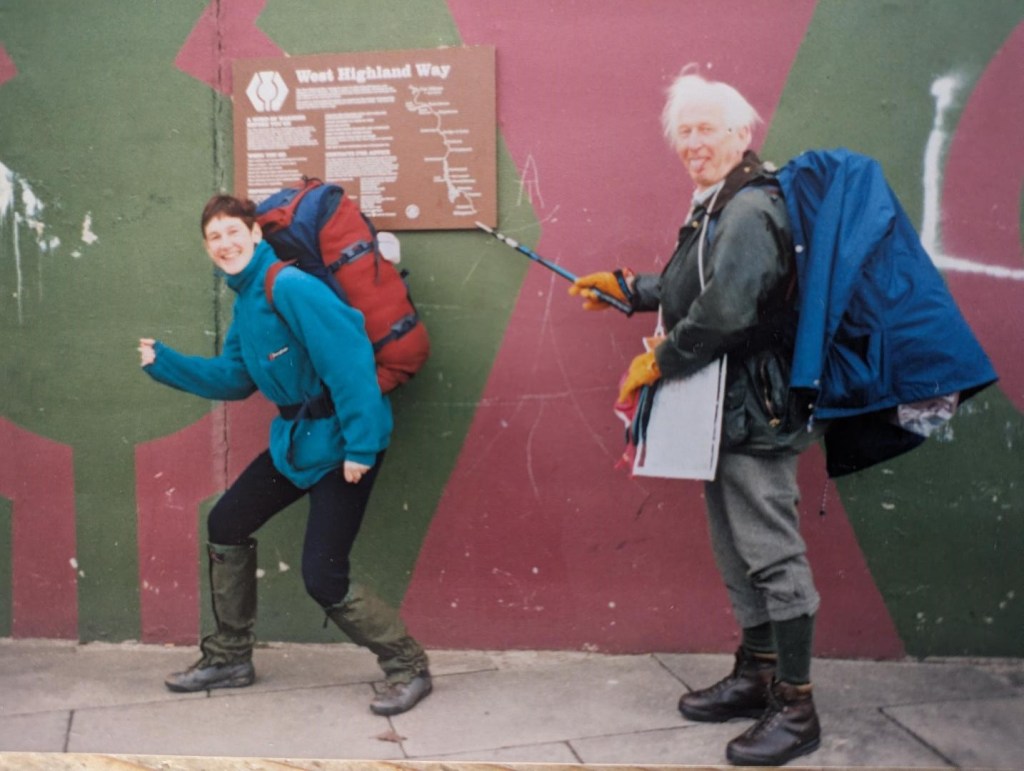
Dad and I had one more adventure to enjoy together, one that was very dear to his heart, not least for the boasting rights over the ‘boys’ he had coffee with every Thursday in the City Hotel in Dunfermline. In April 1996 we set off on the West Highland Way, that spectacularly popular 96-mile trail from Milngavie just north of Glasgow to Fort William. It wasn’t quite such a motorway in those days; nor was it easy to have your gear carried from stop to stop, as it is now. But looking at the photograph mum took of dad and me posing beneath the sign at Milngavie railway station, thumbs up, bright grins, there were already signs of trouble ahead. Dad’s rucksack was ginormous.
It was a perfect start. The sun was shining and we were soon in the countryside, spring surrounding us in all its blinding, new-born glory as we tramped beside sparkling rivers. But then came a grimace, a stifled yelp and we ground to a halt. ‘Just a minute,’ dad said, before ploughing on again. I didn’t think too much about it and we reached Drymen – twelve miles from Milngavie – in good time. It was a different story in the morning. The problem, he now admitted, was his groin. He hadn’t managed to sleep it off and it was still excruciating. ‘Okay,’ I said, sure I could fix things. ‘Let me take some of your stuff.’
Though I now had a lecturing job in the History department at Stirling University, I was used to having very little money so I didn’t have a lot of kit. I’d also realised walking is much more fun when you keep weight to a minimum. Unfortunately, dad hadn’t got that memo. I tried to keep the look of incredulity off my face as I pulled out all manner of ‘essentials’. Full electric shaving kit, anyone?
He was now seventy-three and a marvellous lesson in not letting your age put you off doing what you want to do, one I have certainly taken to heart. But groin strain, as any virile footballer will tell you, isn’t something you shrug off even in your prime. We had fifteen miles to cover that day and, despite the continuing good weather and my own reasonable fitness, they were painful for both of us, in my case because the weight of my pack was now taking the skin off my hips. The last section, through an interminable plantation of Sitka spruce beloved of modern British foresters, was dark and lifeless. But at last we stepped back into the light and that night’s accommodation: Rowardennan Youth Hostel.
There’s nothing like a good sleep to help you recover from aches and pains. But a good sleep is hard to come by in a dormitory full of rustling, snoring roommates. I slept reasonably well – I was only just thirty and drifting off was never a problem back then – but I could tell the next morning that dad had had another terrible night of it. He even admitted with a wry smile that he’d been suffering from an acute bout of nostalgia when he decided to book into a youth hostel. But at least I could leave an entire bin bag full of unnecessary items at the hostel to be collected on the way home.
His stoicism, honed to perfection during a lifetime of thwarted dreams, stood him in good stead; he never complained once, though he must have been in agony every step of the fourteen miles to Inverarnan. It’s not easy, negotiating the mud and the rocky ups and downs of the eastern side of Loch Lomond, but at least he was only sharing a wooden teepee with me that night. The next morning we were due to meet mum, who was still working, so that we could finish the last three days together. But as he took his first steps into another glorious morning of shimmering green, left leg twisted and unsteady, he stopped. I turned back towards him and saw the tears in his eyes, the only time I ever saw him (nearly) cry. ‘I’m done,’ he whispered. We both knew he would never finish the West Highland Way, another dream dashed. I blinked away my own tears, wishing I could magic away the pain, knowing there was nothing I could do.
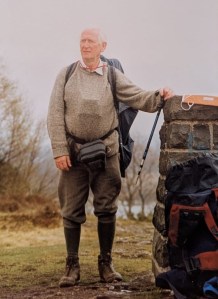
More than a decade after his death, I still feel so much admiration for my dad, even though he was a difficult man who seemed only to be able to cope with modern life from behind a thicket of rules and regulations – his own, and those of a bygone age – that he expected us to follow too. He was obsessed with alcohol, or rather he was obsessed with keeping us away from it (it didn’t work). He said he’d seen too many people ruined by drink when he worked in the bank, and I’m sure that’s true. But I suspect it was also about his aboherrence of losing control, of relaxing the tight leash he kept on his emotions even a tiny bit.
Maybe I would have found the mountains without him. After the disappointment with the chess set, I certainly began to wean myself off any notion he would be very present in my life. I learned, slowly but surely, to do things because I wanted to, not because I thought he might notice me. Whether I meant to or not, I learned to care less, so that, finally, it really didn’t matter that, at my wedding, he talked long and enthusiastically about other people and not me and my brand new husband.
It’s true that the control he exerted over my early life left me ill-equipped to go out into the big wide world. The fact that his word was law in our house and there was never a whiff of argument about anything was certainly an unfortunate training for an academic historian who must challenge any orthodoxy and develop arguments based on evidence. But what he endured in his own formative years from his parents, who never forgave him for being the one to survive, was infinitely worse. I will always have those precious memories of the times we did share in those mountainous places we both loved. And even if his love felt subdued and unreliable, I always knew he was proud of me. He has certainly shaped me well beyond whatever DNA we share.
And in teaching me, however inadvertently, not to rely on him emotionally, at least he saved me from looking for a father-figure in my boyfriends. I can honestly say that my husband is the opposite of my dad, not least in being a man committed to loving gestures. But he does share a passion for mountains. We met at work, in a meeting. I was impressed by the fact that Nick left it early, presuming he must be a very busy man. If I’m honest, I was also rather impressed by his broad lion’s face and slim, athletic build. Anyway, it turned out he was going for a run, for which I now know almost everything else must ultimately make way.
Our next meeting ended in utter ignominy, for me at least. I bounced up to him during a break in a ceilidh put on for international students. I knew he was leaving Stirling University for Edinburgh and asked what had tempted him away. He turned to me with a slight smile. ‘Who are you?’ It was polite, but crushing. I stammered that we’d been at the same meeting (where there had been no more than six people). He nodded. ‘We should have lunch sometime.’ I nodded too, eager now to disappear as quickly as possible.
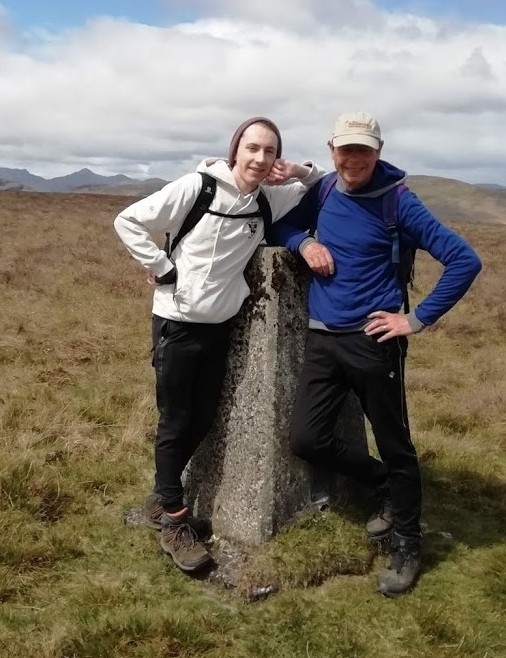
But we did have lunch, followed by a ‘date’ – chaperoned by his dog Fern and his friend Stuart, who drove us in a very fast green Subaru – climbing Stob Gabhar near Bridge of Orchy. Our next dates – minus the human chaperone, so I must have passed some kind of test – were all on hills or mountains until finally, an interminable three weeks later, he took my hand as I leapt across a little burn. I’ve no idea how many we’ve climbed together, or with my step-children, Rose and Charlie, and finally our son Finn. He could easily work it out from the little book in which he diligently writes up every hillwalk, large or small.
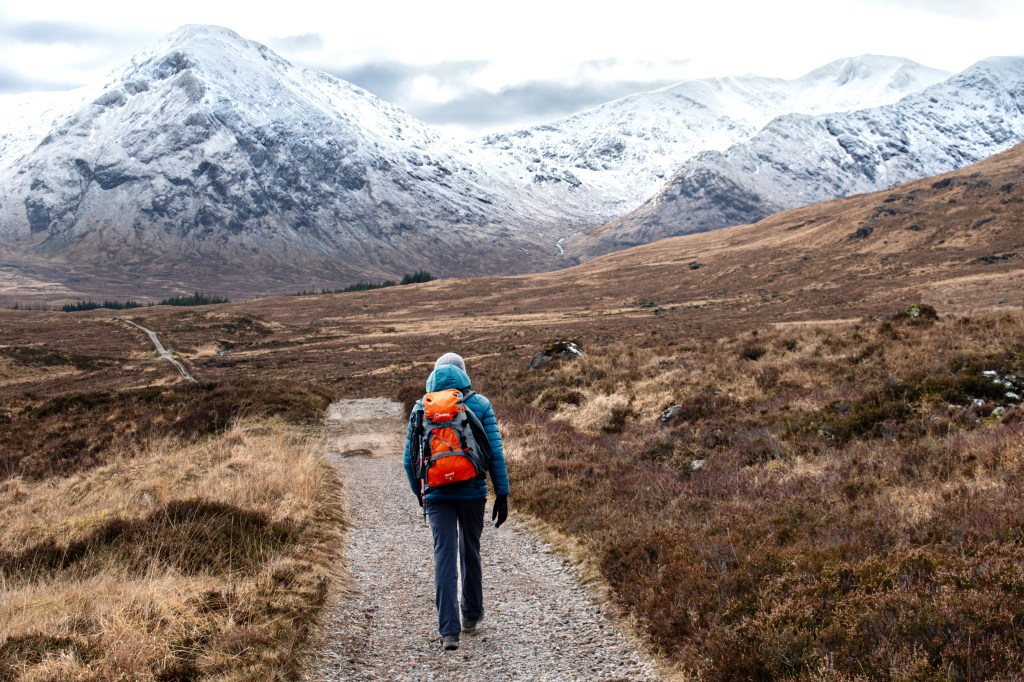
Walking beneath mountains or in between them, on the other hand, does not interest him at all. So when I finally start to think, maybe I can do the Cape Wrath Trail, I quickly realise I’ll be doing it by myself. But I’m quite happy for him to play support; this is my baby and I don’t want to be just tagging along. The compass is mine, all mine. It’s a curious thing, but for most of the four decades I’ve spent in the mountains and despite the safety course I went on back in 1989, I’ve rarely taken charge of navigation. I can do it, I tell myself. If I really had to. But as the years slip by, I’m not terribly convinced. Only practice makes perfect, and if I’m going to venture onto the Trail, I certainly need to be able to get it right.
I’m also far too old to launch myself into walking an average of fifteen to twenty tough miles a day for nearly three weeks carrying all my gear without building myself up to it first. It’s supposed to be, if not exactly fun, then not absolute torture. So I throw together the rough contents of a Cape Wrath rucksack and start training. I clock up the miles, striding up the road that goes onto Sheriffmuir I can see from our kitchen, limping back in boots that feel as if the tarmac is hammering my soles with every step. After much research and trial and error, I find the Perfect Ones. They look – and more importantly feel – like trainers, but still claim to be waterproof and have some ankle support. On one of my training walks, I meet a couple of guys from Northern Ireland doing the Rob Roy Trail through central Scotland. They look longingly at my feet, admitting that their heavy ones are killing them.
‘All the women walkers we know have Hokas,’ one says, rather wistfully. ‘But we can’t quite give up our leather boots.’
I smile. ‘My husband’s exactly the same.’ In truth, I’m somewhat bemused. It’s yet another mystery of the sexes that I’m probably best not to think about too deeply.
Dusting off my compass, I head off into the low-lying lumps and bumps north of our village. It’s a grey day, the cloud low enough to kiss the heather. Perfect for navigation. I reach Cromlet, a bit of high moorland with a trig point where you could, in theory, get a grand view of Ben Vorlich and Stuc a’Chroin. But not today. Crouching down out of the wind, map flapping across my knees, I take a bearing towards another vague top to the west and lurch towards it over tussocky ground. And eventually I get there, the cloud lifting sufficiently to inform me that I’ve successfully navigated to somewhere I hadn’t actually meant to go. There’s not a lot of difference, but it completely spooks me. I decide I’m not cut out for the Cape Wrath Trail.
But the trail isn’t ready to leave me be. I start training again, but don’t feel right, decide I’m still feeling the long after-effects of covid. So there’s no reason not to try again. I feel lucky this time, or maybe it’s just that I’m entering a year of historical significance, if only to me. In August I will apparently turn sixty. I’m happy to admit it, simply because it doesn’t feel as if it has anything to do with me.
As someone who makes, if not a living, then a way of life out of writing about the past, it also occurs to me this time that I could combine the story of ‘my journey’ on the trail with the history of the places I will pass through. I’ve known for some time that the ‘wild’ places I am drawn to were once full of people, that when you learn how to look, the imprint of the human past is still there within the peat, among the trees, beneath the grass.
The story of how so many Scottish families either chose to leave their homes or were hounded out is well-known. And many of the glens on the Cape Wrath Trail – wild and remote as they are now – were bound to have been inhabited, perhaps in surprising numbers. It would be poignant, I think, and illuminating, to see such places for myself, armed not only with tent and food, but any information about their past I can glean from the National Archives of Scotland in Edinburgh.
Nothing much has changed since I was last there some years ago. The historical search room with its huge draughty windows is still a place of sleepy erudition, any momentous discoveries digested inwardly without so much as a smothered whoop or a silent fist pump. Given the accidents of survival, not to mention the accidents of history, some places are awash with material, especially those that ended up in government hands after the Jacobite rebellions of 1715 and 1745-6. There’s nothing governments like more than a voluminous paper trail, which is both a blessing and a curse for historians, providing fabulous detail but skewing analysis very much in favour of the official point-of-view. Other places are harder to flesh out. ‘Tis ever thus.
But I learn much even in a few short weeks. After transcribing pages and pages of Macdonald of Glenaladale’s bar bills, I begin to wonder if that’s excessive in more ways than one. At some point I’ll have to say enough is enough. I emerge starving just before closing time into the twinkling tumult of winter afternoons in the capital. Even in January the tourists are legion. But by March Princes Street and Waverley Station tremble beneath vast murmurations of them. The weather is improving. It’s time to do some longer walks.
I try doing two days in a row, enjoying some bone-easing days of sunshine in early spring. I certainly can’t say it’s easy, but I’m definitely feeling fit. We set a date, wrapped around some of Nick’s immovable work responsibilities and Finn’s final essays before graduation from Aberdeen University. As well as seeing me off in Fort William, they’re going to join me for the very end. I book accommodation for the first two refuelling days, when Nick will bring up extra food and I’ll have a whole day off. Tuesday 22 April is Departure-Day.
I realise I haven’t done very well in answering my original question about why I want to do this. I certainly have to do better than ‘because it’s there.’ When I’m asked, I reply earnestly about my impending birthday, that embarking on such a gruelling solo adventure is one way of giving the finger to aging., If I want to do it, if I can do it, then do it. It’s one thing to accept (though I certainly don’t like) the grooves and ripples on my skin, gravity’s implacable imprint. But growing old(er) surely doesn’t mean the dreaming has to end.
I will admit, though, that a part of me is being terribly, terribly romantic, reverting to the teenager who mooched around Dunfermline pining for a love affair with one of English literature’s nineteenth-century Cads of the Year. I’ve moved past that kind of nonsense, thank goodness. My fantasy is now seeing myself pass easily up hill and down dale, doing yoga to greet the early morning sun, taking stunning pictures of sunrises and sunsets across turquoise lochs, communing with otters and sea eagles. In these scenarios, I sleep well. My rucksack doesn’t chafe the skin around my hips, as it still does despite the various bits of padding I devise to try to stop it. And it’s always sunny with no midgies or ticks to plague me. I even worry, if I’m brutally honest, that it will be too easy, after all my training, which won’t make for a terribly exciting read, at least when it comes to my own journey.
There’s certainly something magical about standing up high, the land spread out beneath you (on the days in Scotland when you see anything at all). The physical effort of getting up there is part of it, though it’s taken me years not to dread it, to believe I’m no longer that wan, sickly child, but a fit and healthy adult. Many writers have written exquisitely about mountains. They have felt the lure of the sublime, with its connotations of infinite beauty and external grandeur, a concept that, though ancient, began to replace the older view in Europe that these challenging places were just mile upon mile of unproductive wasteland. Most, it must be admitted, have been men fascinated by conquests and summits.
But women are now finding their voices in the mountains too, led by Nan Shepherd, who wrote with such love and insight about the Cairngorms in north-east Scotland, trying to do so on their terms as much as is humanly possible. Like me, many women have felt slightly, or even overwhelmingly, out of place just being in the mountains, though such feelings become even more intense if we add skin colour to gender. But an array of voices naturally leads to a range of perspectives, to new ways of thinking and, ultimately, of understanding, not least about our own desires and shortcomings, our fragility and endurance, our place in nature and on this earth. It is an act of imagination as much as experience.
It would be tempting to believe that some basic human need is what’s propelling me onto the trail. But in the past, those that lived in and around these mountains had very little desire to go any higher or further than they needed to, however well they knew their own backyard, including the higher slopes where they took their animals to graze in the summer and the well-worn tracks that led up and over the high passes into neighbouring glens, many of which I’ll be using on the Trail. In truth, they may have raised an eyebrow at the desire of those with money and leisure to conquer the high peaks. But a few did seize the opportunity to make some cash as guides in these unmapped ‘wildernesses,’ offering those climbing up behind an eyeful of unadorned Highland masculinity beneath their kilts while they were at it.[i]
They would surely be astonished that where they once lived has become such a playground for walkers, climbers, mountain-bikers, canoeists from all over the world. Some certainly do it to test themselves, to climb the hardest or longest in the shortest time. Others might say they’re inexplicably drawn to wild places, that they wish to leave behind, for a short while, the crowded detritus of a humanity that has made such a disproportionate mark on this earth. That it puts their lives in perspective. That communing with nature brings peace.
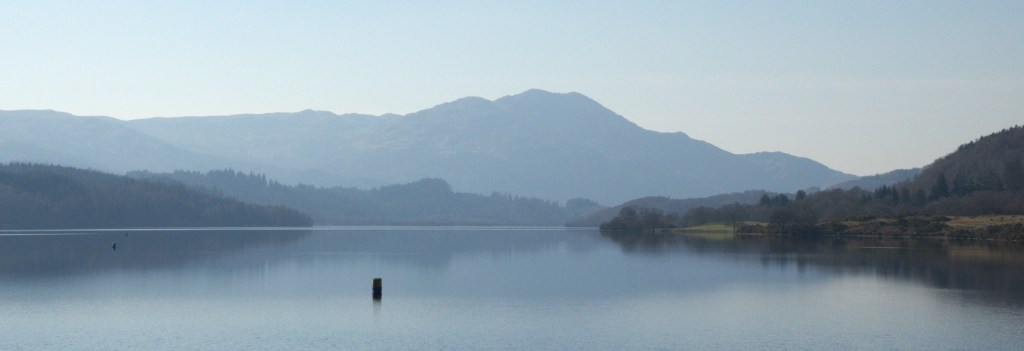
I’ve certainly felt all that. But I also think it’s an indulgence, that I’m very lucky to have the wherewithal – to be fit enough and have the time and money – to get out there. And yet there’s a growing body of evidence that being in ‘green’ (woods and meadows) and ‘blue’ (rivers and seas) spaces does lift our moods, not least because walking is one of the things we humans are really good at and which, in turn, does us a lot of good.
So I’m conflicted, which is perhaps not a bad thing, because then I might not take my time spent in the mountains for granted. It’s such a human thing to want to trap wild places in the logic of our attempts to bring meaning to our own short lives, to find the divine in shimmering horizons and commanding peaks as we increasingly turn our backs on an omnipotent Creator.
But I, too, want there to be something powerful out there.
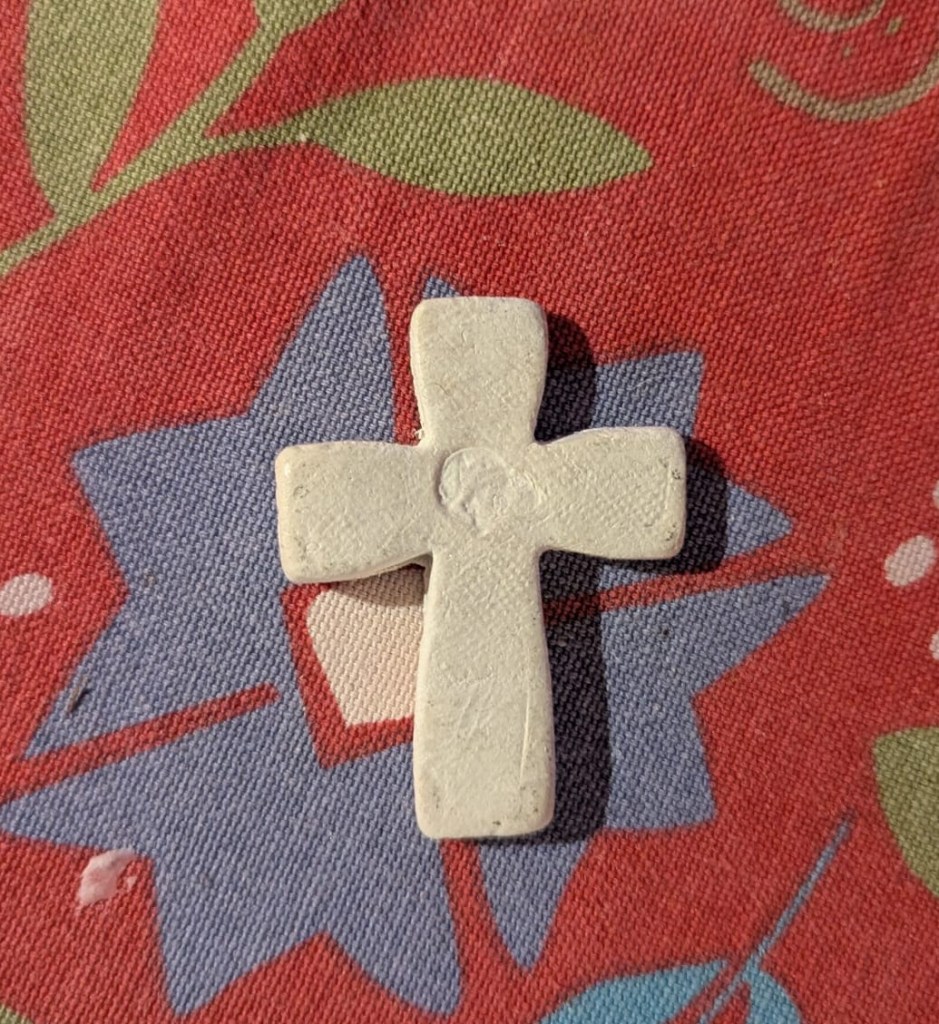
With a week to go, I start gathering stuff in the spare room. I concoct a recipe for a calorie-filled snack designed to stave off any major energy lows. I call them Fiona’s bars, but Nick calls them fat balls. Whatevs. Starving on the Cape Wrath Trail is not a good idea, so I already have a bag full of porridge with seeds and dried fruit and five-days-worth of freeze dried meals with one more for emergencies. Sadly there’s very little scope for supplementing in cafes. My friend Andy lends me a Garmin tracker that will allow everyone else to keep an eye on me. It’s reassuring to me too, since it has an SOS button, should I end up submerged in bog or river. Juliet gives me some super-duper lipsalve and Lorna gives me more lip balm and a little white cross. ‘I don’t know if it’ll do any good,’ she says, meaning the cross, not the lip balm. ‘But I wanted to give it to you.’ I’m glad to have it, tucking it into the pocket of my walking trousers. My friend Sheila gives me a notebook to write down my revelatory musings, a massive hug and tells me I’ll do it no problem. I almost believe her. Finally, after five years of dreaming and scheming, it really is going to happen.
Fiona’s bars/fat balls
Ingredients
1 tin of condensed milk
150 g salted butter
50 g golden syrup
(you can add 50 g of sugar too, but really, you don’t need it)
As many porridge oats as you desire for your preferred consistency
Dried fruit – sultanas, raisins, chopped apricots, chopped dates, whatever you like.
Method
Put the condensed milk, butter and syrup in a pan on a medium heat. Stir gently, but constantly. Turn down the heat if you start to see little burnt bits appearing and stir hard to get rid of them. Simmer until you like the colour, whether that’s a fawny brown or dark gold.
Take off the heat and stir in the porridge oats and the dried fruit. Once it’s cool enough, seize a handful and roll into a ball. Store in the fridge until you’re ready to enjoy one. But I wouldn’t recommend eating too many of these if you’re not doing some serious exercise or otherwise facing some sort of personal Armageddon.
[i] Edmund Burt, ‘Burt’s Letters from the North of Scotland, (Edinburgh, 1998), 232


Leave a Reply