

I imagine there’s one question that’s already crossed your mind, so I should probably at least begin to answer it before we go any further.
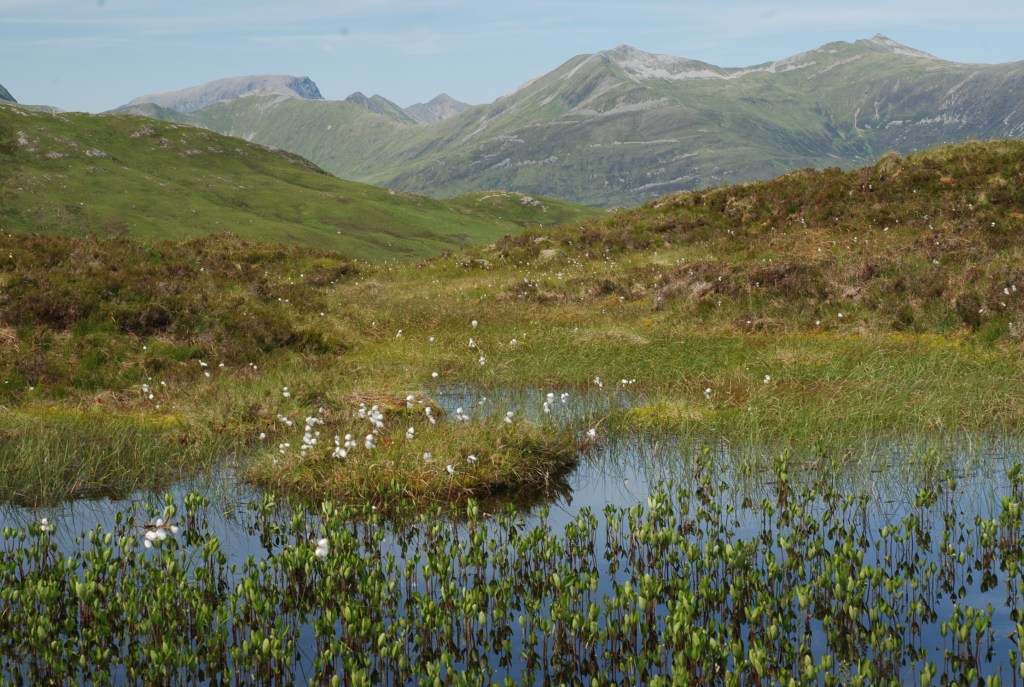
Why? Why does a reasonably sane, nearly sixty-year-old historian want to walk over 200 miles through some of the UK’s most remote and challenging terrain carrying the rough equivalent of a three-year old child on her back? The facetious answer is, of course, because it’s there. And there’s an element of truth in that. I first stumbled across the Cape Wrath Trail online during lockdown. My immediate reaction was ‘Wow!’ even as I told myself I could never do it.
It was exactly the same when I was fifteen and first saw a picture of Ben Nevis, a striking black-and-white drawing of its chiselled outline in a newspaper. I was a very fearful child and not particularly robust physically. When I was ten, I kept being ill and no-one knew what was wrong with me. Having ruled out glandular fever, that childhood catch-all for lethargy and under-the-weatherness, I could tell that I was suspected of malingering. But if I was forced to go to school, I would soon be sent home again, chalk white and wilting.
I was also ridiculously afraid of anything that might be considered a height, easing my way down castle steps on my backside and even refusing to jump into a swimming pool because I was sure I’d hit the side. My sister was the outdoor one, poking around the garden in pursuit of creatures for her to scrutinise and learn about. I stayed indoors unless forced out, escaping into the other worlds to be found in books, driving my parents and siblings mad as I ignored them even when they were standing right in front of me. Yelling.
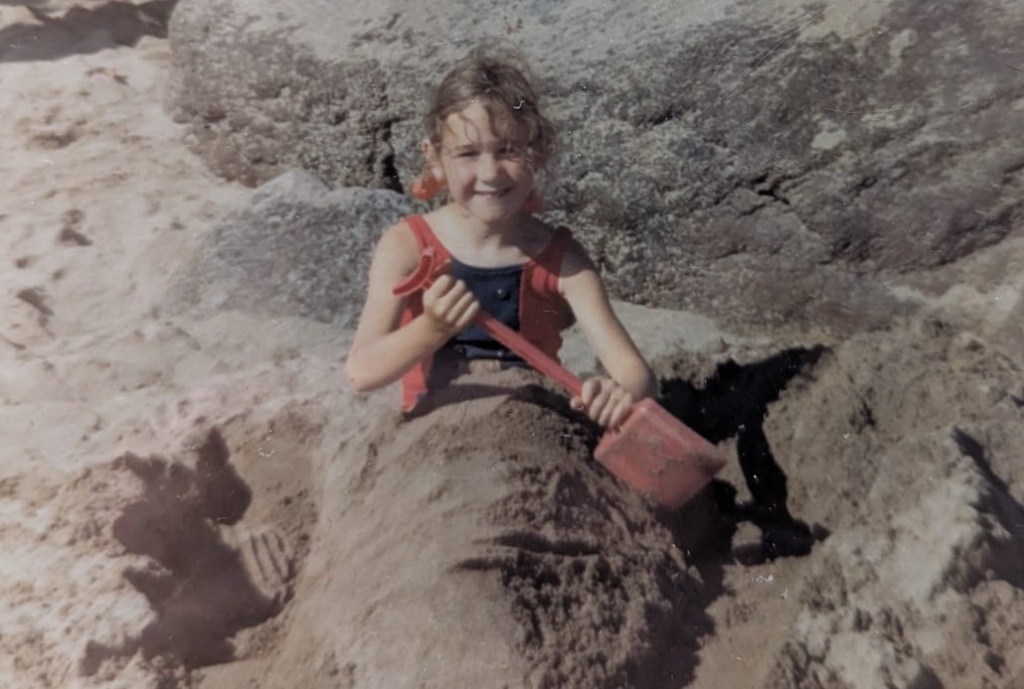
It’s true that walking was a part of our lives, by which I mean it was something my parents liked to do. In a deviation from normal Sunday afternoons after church and a roast lunch when we were strictly enjoined to play quietly while the grown-ups dozed or read, we were taken out to small, rolling hills within an hour of home. As my brother ran hither and thither like a puppy, clocking up three times the mileage of the rest of us, I found the whole concept just as boring as playing with my Sindy doll. So far as I was concerned, these hills were seriously undramatic, uniform grasslands under what I remember as uniformly leaden skies.
But when I became a teenager – a condition for which my parents seemed entirely unprepared – walking, like reading, opened up another form of escape that satisfied me and did not prove alarming to them. After school and at weekends, I wandered the highways and byways of eastern Dunfermline, still under farmland within a few miles of our house, imagining myself the heroine of my own melodrama – Jane Eyre or Catherine Earnshaw perhaps. I saw huge murmurations of starlings, hedgerows studded with wild flowers, lambs in the fields, birds following the plough. But mostly I indulged my own excruciatingly romantic thoughts.
Such freedom, which many of us are now too afraid to allow our own youngsters, was entirely acceptable to my dad in particular. Once upon a time as a teenager himself, he not only stravaiged across the hills surrounding his border village, guddling for fish, but youth-hostelled his way round pre-war Germany. I’ve recently come across tiny black-and-white photographs of him smiling blithely with a group of friends, a blonde-haired young woman draped across one shoulder. He’d already lost one brother to scarlet fever, but he looks so untroubled, still bright-eyed with possibility, the opposite of the frustrated, buttoned-up man he became, his life’s journey either imposed upon him by other people or by the strict moral code he devised to survive it. I want to ask him so many questions about those early days, but it’s too late now.
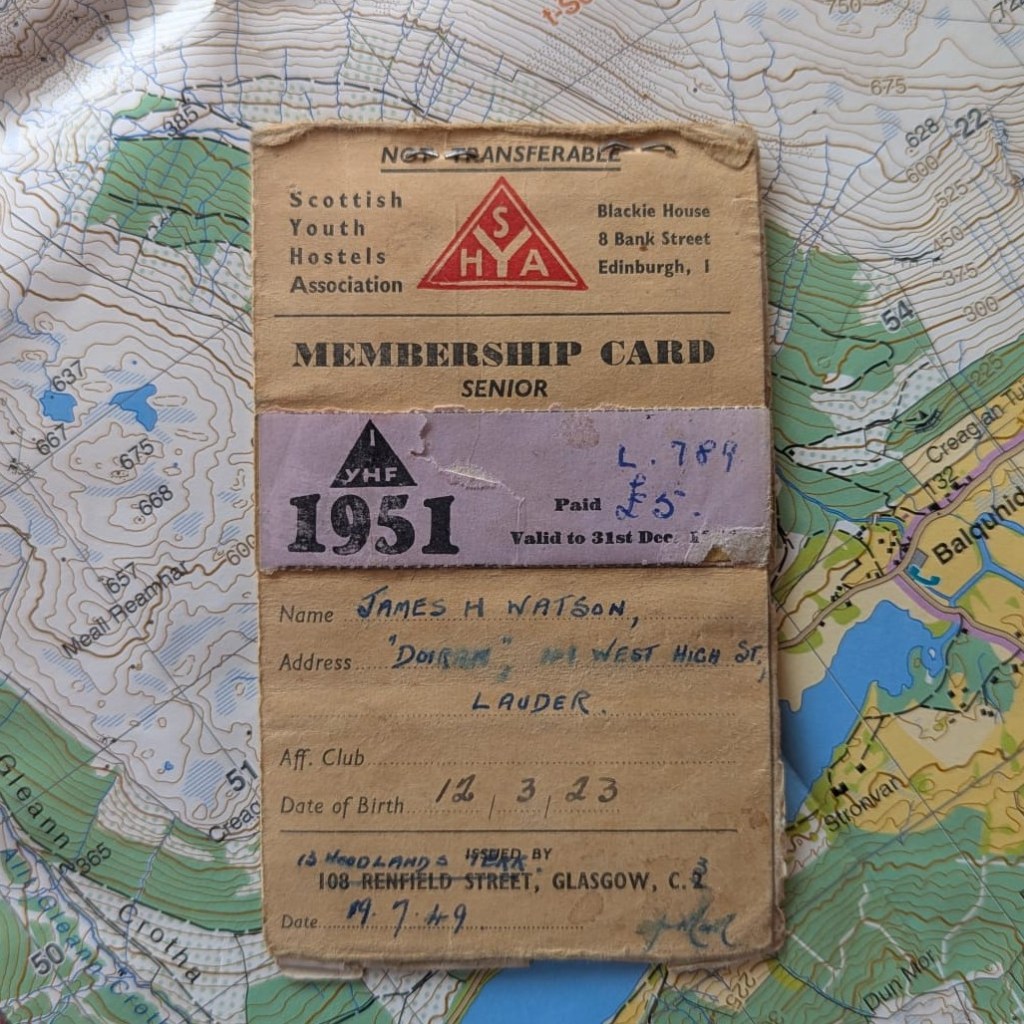
I doubt he’d have told me much anyway, certainly not in terms of anything vaguely touchy-feely. He didn’t even admit his age to us until I was about eleven or twelve, though we knew he was much older than mum. I eventually tricked it out of him, a ploy I never imagined would succeed until it did. He’d kept a violin made for his eldest brother, Bert, the blue-eyed boy who was killed over Norway in the Second World War, a label with a date on it still visible inside. So I asked dad how old he’d been when Bert was given it and he had no trouble in remembering. Finally we knew he’d been born in 1923, which meant he was then in his fifties.
We really didn’t care – adults all seem generically old when you’re a kid. He never told us why he’d been so secretive, but mum did. It summed him up, really. She said he didn’t want to get too close to us since he would no doubt die while we were still quite young. That turned out to be a ridiculously poor excuse. He lived to be ninety-one, dying in 2014 when I was myself almost fifty.
The lateness of his marriage – at thirty-nine – and fatherhood three years later was the war’s fault. Whatever romantic attachments he may have had as a teenager in the late 1930s, the conflict brought them to an abrupt end. And once it was over, the temporary dearth of working-age men meant that, as a junior clerk in the Bank of Scotland, he was sent to branches all over the country to fill in as required. This obviously made it difficult to hold down a relationship, a situation made worse by the fact that he was still expected, as the only surviving son, to go home to the borders every weekend to look after his parents. It had been due to their insistence, too, that he’d gone into the bank in the first place, when his own passion had been to study science at university. But despite their best efforts to keep him at their beck and call, dad’s secondment to a branch in Prestwick south-west of Glasgow finally paid off when he met mum, still in her early twenties. Quite what she saw in this tortured soul, I’m still not entirely sure.
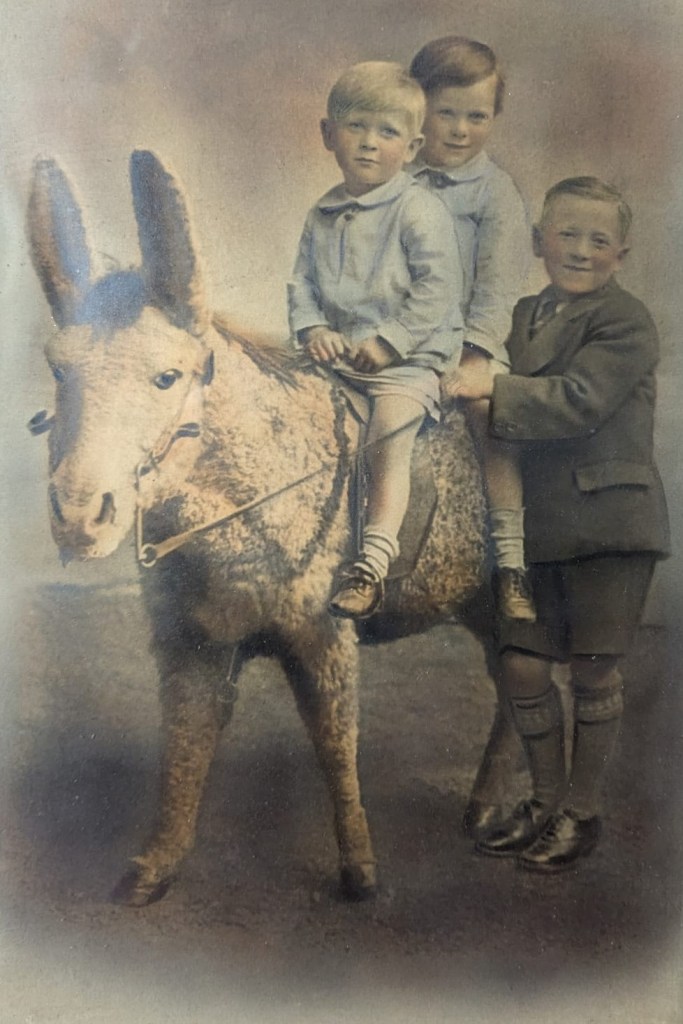
I adored my dad and spent much of my childhood desperately trying to attract his attention. Apart from letting us bounce around on his back between church and Sunday lunch, we mostly saw him from the other side of his newspaper, as was still traditional in the seventies. He took little to do with our upbringing, except – as was also traditional – to dish out a short, sharp smack when we were deemed to be naughty and to administer the final word should a minor outbreak of argument or rowdiness occur at the dining room table. I thought I’d won the lottery when I received a chess set for Christmas, aged fourteen, for surely there was no point in having one if he wasn’t going to play with me? But he didn’t and I soon abandoned any interest in the game. In truth, what I really needed to learn was not to expect very much from him.
It was walking that finally gave us something we could do, just the two of us. The year I left school and went to university, he retired from the bank. That September we headed up to Aviemore with the intention of walking to Braemar through the heart of the Cairngorm mountains. We stayed in the youth hostel and ate at the Hungry Haggis – a fast food place that is, quite remarkably, still there over forty years later – temporarily liberated from mum’s determination to have us eat healthily at all times. The first day was a long one and far more dangerous than I understood back then. There had been a lot of rain and the rivers were high. At least one walker had been killed the week before. But I was with my dad and, so far as I was concerned, he was invincible. And in many ways he still was even at sixty. When we came to a broad, but fast-moving river, he managed to manhandle a tree trunk across it and off we went to Tomintoul, our first stop.
But I suspect the signs that he was aging were already there, however oblivious I was to them. It’s not as if he had done much exercise these last decades other than occasional walks. We (by which I really mean ‘he’) decided not to go on to Braemar after all, but to return to Aviemore along the road in time to enjoy the dubious charms of the latest James Bond film at the local cinema (Moonraker, since you ask). It made no difference to me, that our plans had changed, since the whole point was to spend the time with him. Perhaps he’d been alarmed by the unforgiving conditions in the heart of the mountains. Or he was more tired than he’d imagined. I have no idea. I didn’t even think to ask, just accepted whatever he said, as usual. En route, we chatted about his youth, life in his village, the walks he’d loved before the war, but I’ve forgotten much of it now. Or he’d later contradict what I thought he’d said, leaving my recollections fragmented, unclear.
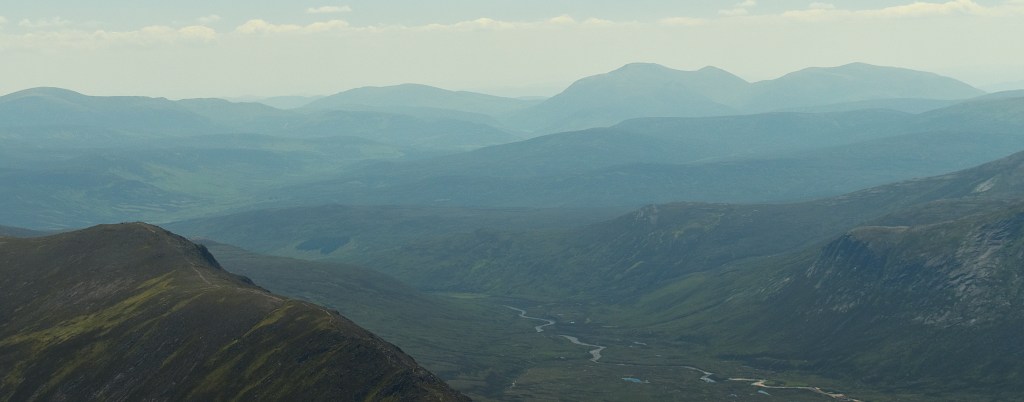
When I went to St Andrews University, it didn’t occur to me to join the mountaineering club, for the simple reason that I had rarely had the opportunity to venture onto the high tops and didn’t really know how I felt about them. And anyway, I didn’t want to spend entire weekends in the wilds of Scotland. But I must have missed being in the hills, because in my fourth year I set up the Breakaway club with a few friends to organise day walks.
Having hired a bus, we were duly driven to the bottom of West Lomond, a small volcanic plug attached via a boggy plateau to East Lomond about twenty miles from St Andrews. The doors swished open and we tumbled out into a violent snowstorm. I was sure our first trip would be our last. Like a mother hen, I kept an apprehensive eye on both ends of the straggling crocodile and especially the smallest of the walkers who was threatening to disappear entirely. Somehow we managed to return with the same numbers as had left. But I don’t think any of us had a map and compass, though my stint in the Girl Guides had made me vaguely familiar with both. Despite this inauspicious start, the club is still going strong, which makes me come over all mother hen once more at the photos of the current generation of young people glowing in the Scottish countryside.
Emboldened by this success, I was ready to plunge into the world of actual mountaineering, this time at Glasgow University. I had high hopes, for I was now a lonely Ph.D. student, the university then being stuffed with Glaswegian students who tended to go home at five o’clock with the friends they’d brought with them from school. So I forced myself along to the introductory meeting of the Glasgow University Mountaineering Club (GUM club for short), supposedly designed to encourage new members to join with short talks on last year’s exploits. Alas, I was grievously disappointed. Slide show after slide show, presented by sinewy young men clad in Lycra that left little to the imagination in terms of just how tough they were (I was going to say ‘hard’, but that could be misconstrued), was a masterclass in how to hang nonchalantly off endless rock faces. I had vertigo just sitting in my seat. Tossers, I thought. Trudging back to my flat, I seriously contemplated giving up on the historical research I loved before I turned into a twenty-two year old Eleanor Rigby.
But I stayed and even screwed my courage to the sticking post a second time, sidling nervously into the Partick Tavern on Dumbarton Road where the club met on a Tuesday night. Sitting around tables in the middle of the room, they were immediately recognisable by their comparative youth, being mostly Ph.D. students like myself, and by the fact they all wore outdoor attire in fetching shades of beige or, at a push, navy-blue, in comparison with the old men in caps and heavy coats hugging the bar. The off-putting Lycra-clad athletes seemed to have vanished and there were even a fair number of women. By the end of the evening, I felt I might belong there.
So I joined the club, heading out of Glasgow every other Friday on the A82 to the north-west Highlands. My Munro count soared. I ventured up Ben Nevis, which had seemed impossible less than a decade before. I went rock climbing, which anyone who knew me as a kid would have found bewildering, given my fear of heights. I still felt the fear and was never particularly good at it, but I tried, even managing a couple of easy routes in the Alps. And I went on a winter safety course, giving me the confidence to use a compass and navigate safely in Scottish hills that might be clear one minute and smothered in cloud/snow/rain/hail the next. At last I’d found my tribe and still have many of the friends I made all those decades ago.
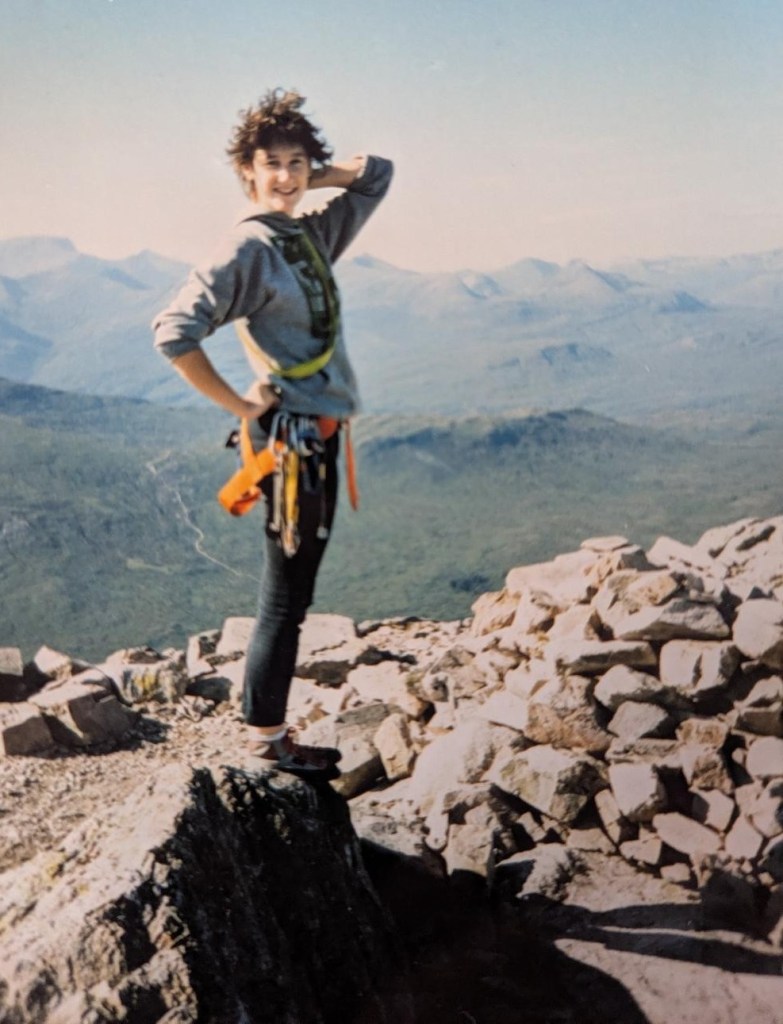
But I could still get it seriously wrong. At Easter of the third year of my Ph.D., some seven years after dad and I made our abortive trip through the Cairngorms, I joined my parents who’d rented a cottage on the island of Skye. The mountaineering club had not long returned from a trip to remote Coruisk bothy nestled beneath the forbidding outline of the Black Cuillin mountains and I suggested we might now retrace some of the route to get there. I knew it would be a long day’s walking north, then east along the coast from Elgol to Loch Coruisk before heading over the lower slopes of Sgurr nan Gillean (the most westerly of the Cuillin peaks) to finish at the Sligachan Inn. But we had plenty of daylight and, apart from the notorious Bad Step (a tricky little traverse across rock perched above the sea) and a bit of a hike up and over to reach the Sligachan river, it was surely no problem to the likes of us. And there was a path all the way.
It was all very lovely for the first few hours, the weather proving kind – this was Skye of the heavy clouds, after all – and the views impressive. Even the Bad Step behaved itself. But as we began the pull up from Loch Coruisk, I could see dad was struggling. It dawned on me that we might run out of daylight and, I blush to think of it, we didn’t have any headtorches. I had reached that unenviable point in the life of any child when a parent is no longer invincible, when I had to become the responsible one whether I felt up to it or not. And anyway, I felt intensely guilty. This was all my fault.
I don’t know how dad felt. But neither do I remember him contributing to the ensuing discussion between myself, mum and my then boyfriend (a mountaineering club bonus). We decided they would go on to the Sligachan Hotel to get help or at least torches, while dad and I would continue slowly. I wracked my brains for more questions to ask him, about his youth, his wartime memories when, being a farming community, contraband eggs were in such good supply they could be used to pelt the teacher’s washing line, anything to take his mind – indeed, my mind – off our current predicament. I doubt he was fooled, but he played along anyway.
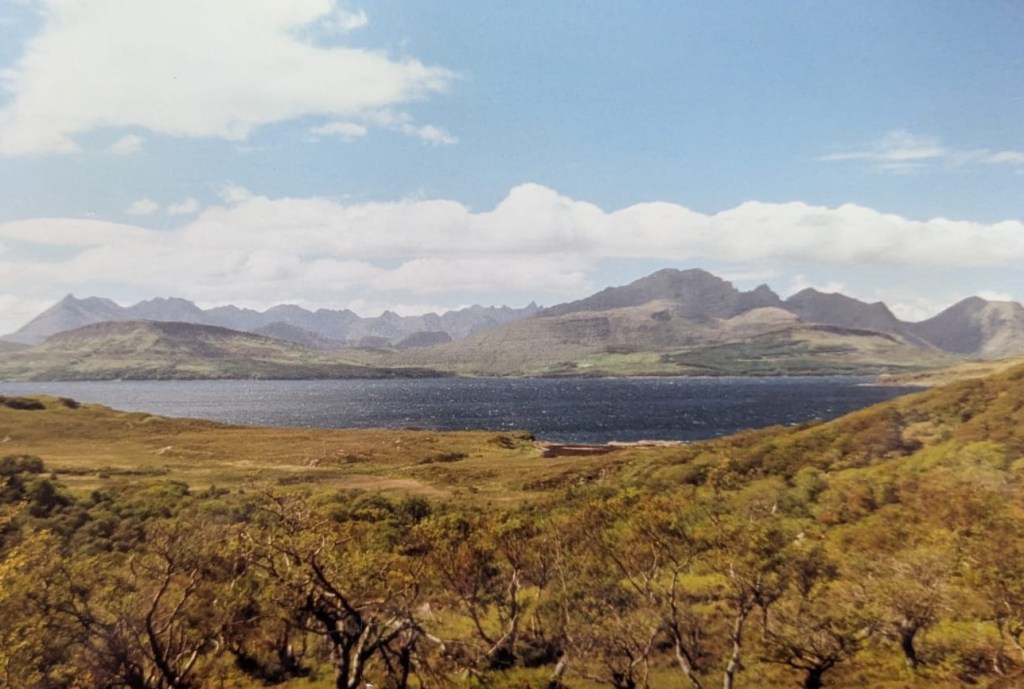
We eventually made it up the slope, the sky turning grey, then dark blue, but the expansive view over the River Sligachan snaking away from us provided a measure of relief. And so too did bobbing pinpricks of light, the unmistakeable sign of headtorches gravitating towards us. Safely ensconced in the pub at last, it all felt like an awfully grand adventure, the unusual and all-too-sudden switch from gruelling but unthreatening walk into something much more problematic receding under the bright lights and the energising influence of a coke and a packet of crisps. And at least this time dad and I had made it all the way, even if we’d had very little choice in the matter. This time it really was the destination that mattered, not the journey, which, after Loch Coruisk, became something to be endured, however much dad and I dressed it up with nostalgia and evocations of the beauty of a highland glen from which the light was slowly being stolen.
But note to self: always, always take a headtorch even if you have loads of time and cannot possibly imagine what would delay you beyond sunset.


Leave a Reply